Loading peptide profile…
Healing Category
THE AMPLIFIER
Des(1-3) IGF-1, IGF-1 DES 1-3
IGF-1 DES is an IGF-1 variant missing its first three amino acids. Cell and rat studies examined binding proteins, growth and protein metabolism. It is not FDA approved.
Bodybuilders targeting specific muscle groups · Athletes seeking localized growth · Those who want faster-acting IGF effects · Experienced users of growth factors
20-50 mcg per injection site
Pre or post-workout, 4-6 week cycles
Clinical team guidance, not medical advice.
Based on what vendors sell, not a recommendation.
Injection
Sold as vials by 12 vendors
By mouth
Not sold by vendors we track
Nasal spray
Not sold by vendors we track
Not FDA approved, research use onlyHow we review these guides5 research sources
In cultured cells, IGF-binding proteins restrained IGF-1 activity more than the shortened variant.
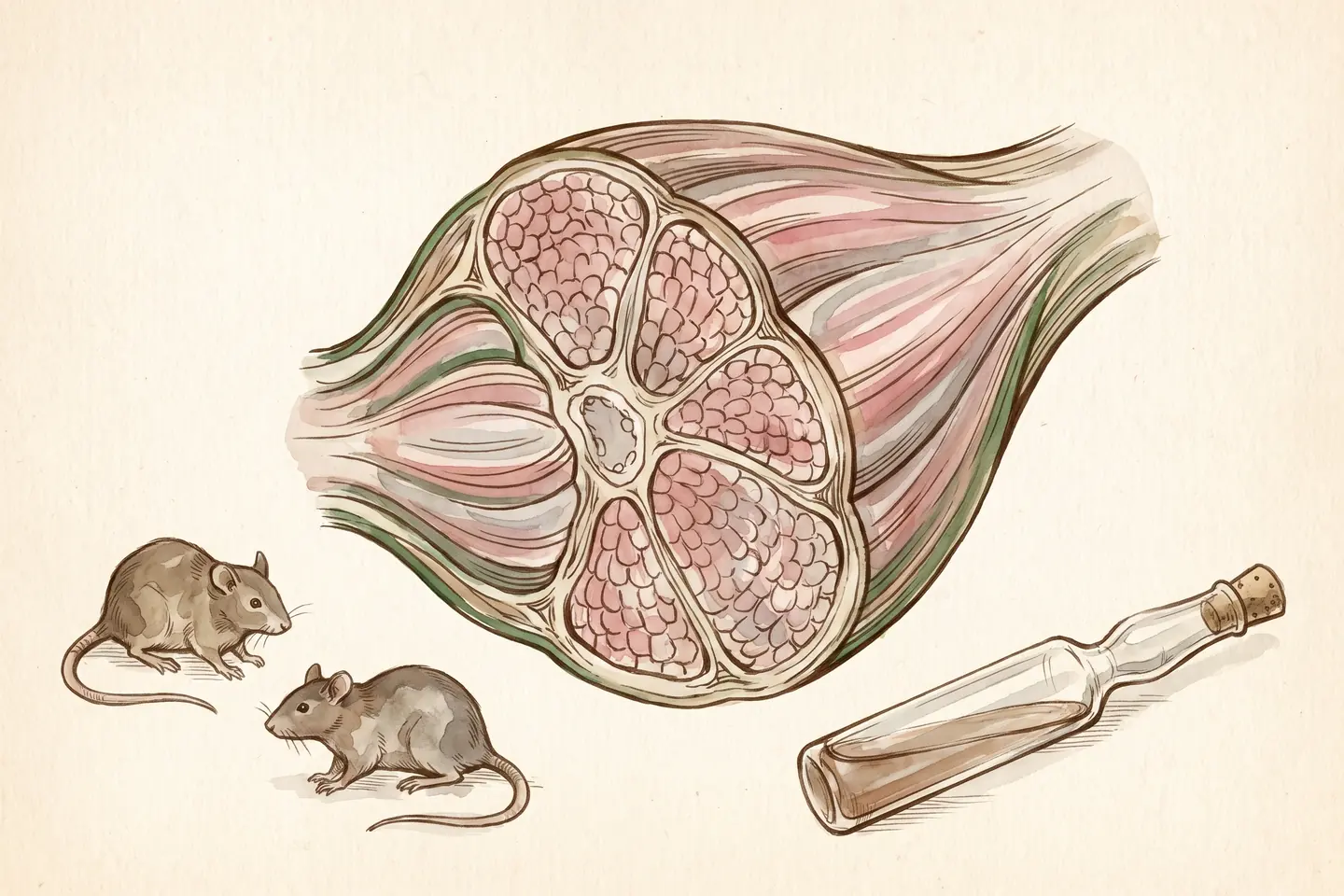
The shortened variant increased weight gain and nitrogen retention in rats with reduced kidney mass. Human outcomes were not studied.
The des(1-3) designation identifies the removal of Gly-Pro-Glu, the first three amino acids of the original IGF-1 chain. Research descriptions have reported this truncated form in biological tissue as well as studying it experimentally. It is a specific change at the beginning of the chain, rather than a generic name for every modified form of IGF-1.
[Des(1-3)IGF-I structural account, 1996](https://pubmed.ncbi.nlm.nih.gov/8930132/)
No. This profile records IGF-1 DES as not FDA approved and for research use only. Review the regulatory and source details on this page for the current context.
Dose: 20-50 mcg per injection site. Schedule: daily. Cycle: Pre or post-workout, 4-6 week cycles. This is clinical-team guidance for reference and does not replace individualized instructions from a licensed clinician.
This guide links to 5 curated or current research sources. Open the research section to inspect the source titles, publication details, study types, and available abstracts directly.
Review the IGF-1 DES research sourcesWe don't list specific side effects for IGF-1 DES.
IGF-1 DES has an editorial safety grade of C (Advanced Use). The cited direct experiments involved cells and rats. They provide no human treatment safety data. Safety findings for approved IGF-1 products cannot establish safety for this variant. Safety depends on dose, sourcing, health history and medical supervision, so this page does not call it safe for personal use.
In-stock prices from 8 vendors, checked Nov 28, 2026.
Market evidence
We found certificates from a few of the IGF-1 DES vendors we track. Based on the certificates our crawler found; vendors may publish more than we index. Research on this page describes the molecule. Vendor certificates concern particular market samples or batches; they do not change the research evidence or establish clinical safety, sterility, or suitability for use.
The clinic network
Request a free connection to a peptide clinic, by telehealth or in person. A licensed clinician decides whether any treatment is right for you. What peptide therapy involves
Investigational amylin receptor agonist in development for obesity
Full profileNº 004 / 006NNMT-blocking small molecule tested in cells and obese mice
from $0.84/mg · 150 vendorsNº 001 / 006Synthetic gastric peptide studied almost entirely in animals
from $1.70/mg · 263 vendorsNº 002 / 006Short-acting GHRH analog without its own human trials
from $2.65/mg · 139 vendorsNº 003 / 006Synthetic pineal tetrapeptide from one research lineage
from $0.45/mg · 179 vendorsNº 005 / 006Mitochondrial peptide studied in mice and cells, not FDA-approved
from $1.14/mg · 269 vendorsNº 006 / 006