Metabolic Category
Tirzepatide
THE TRANSFORMER
Mounjaro, LY3298176
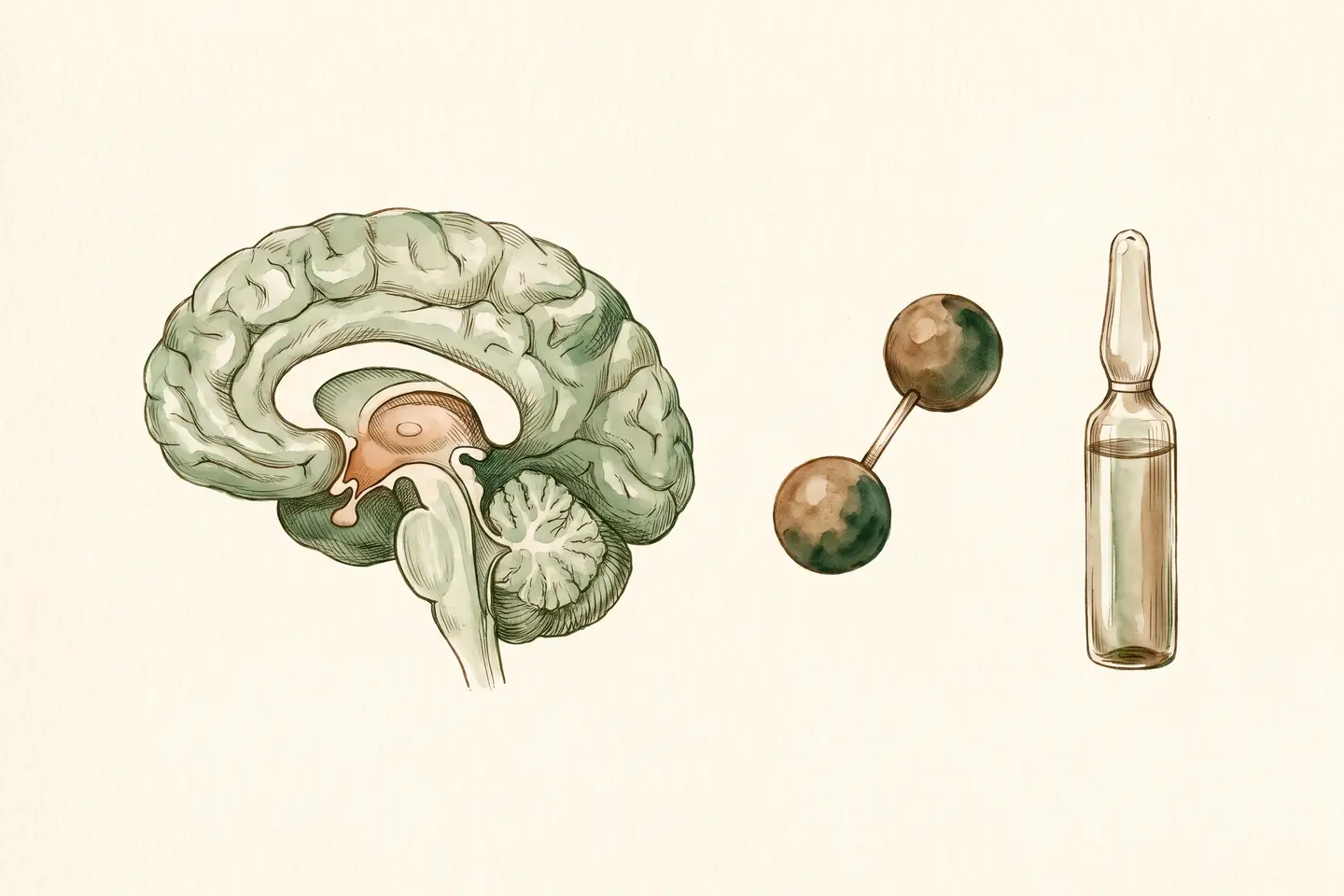
Tirzepatide is a dual peptide that mimics GLP-1 and GIP to powerfully suppress appetite, slow digestion, and improve insulin sensitivity, helping many people lose significant weight and control blood sugar.
Tirzepatide Evidence Snapshot
How these guides are reviewed- Regulatory status
- FDA-approved uses exist
- Dosing guidance
- Reviewed by our clinical team
- Linked evidence
- 5 research sources
- Content updated
- Jul 15, 2026
Dose and schedule recommendations shown below come from The Peptide App Clinical Team. Research links are provided so readers can inspect the supporting evidence directly. Review the sources.
Quick Answers About Tirzepatide
Is Tirzepatide FDA approved?
This profile records Tirzepatide as FDA approved.
More context
Approval can be specific to a formulation, indication, and prescribing context, so review the regulatory and source details on this page.
What dose does The Peptide App Clinical Team recommend for Tirzepatide?
Dose: 2.5 mg weekly, titrating up every 4 weeks.
More context
Schedule: weekly. Cycle: 12-24 weeks per treatment cycle. This is clinical-team guidance for reference and does not replace individualized instructions from a licensed clinician.
What research supports this Tirzepatide guide?
This guide links to 5 curated or current research sources.
More context
Open the research section to inspect the source titles, publication details, study types, and available abstracts directly.
Review the Tirzepatide research sourcesStudied Effects & Mechanisms
Dual Incretin Action
Activates both GLP-1 and GIP receptors for enhanced metabolic effects
Appetite Center Modulation
Stimulates satiety neurons (POMC) and inhibits hunger neurons (AgRP/NPY)
Insulin Enhancement
Increases glucose-dependent insulin secretion while suppressing glucagon
Gastric Slowing
Delays stomach emptying to prolong feelings of fullness
Origin and history
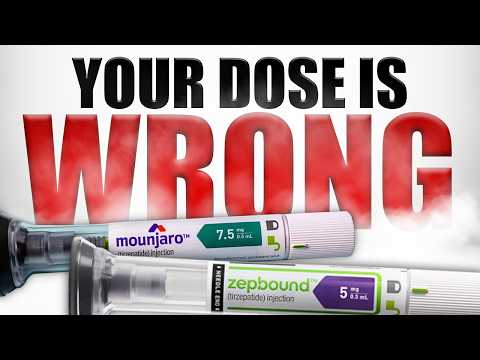
Tirzepatide is a synthetic peptide developed by the pharmaceutical company Eli Lilly, and it was designed rather than discovered in the body. It is a single molecule engineered to act on two separate gut hormone systems at once, the GIP pathway and the GLP-1 pathway, which is why it is described as a dual incretin agonist. Its structure is built around the GIP backbone with modifications, including an attached fatty acid chain that lets it stay in the body long enough for once-weekly use. It reached the market as two branded drugs made by the same company, Mounjaro, cleared by the FDA in 2022 for type 2 diabetes, and Zepbound, cleared in 2023 for chronic weight management and later for obstructive sleep apnea in people with obesity. Both brands contain the exact same drug and differ mainly in labeling and insurance pathways. It arrived as the first approved medicine to combine these two incretin signals in one compound.
What people use it for
The two approved reasons people use tirzepatide are blood sugar control in type 2 diabetes, under the Mounjaro label, and weight loss, under the Zepbound label. Zepbound also carries an approval for obstructive sleep apnea in adults with obesity, reflecting how much weight it can help people lose. In trials of people with obesity, average weight loss at the highest dose was roughly 21 percent of body weight over about 72 weeks, and the large majority of participants lost at least 5 percent. In practice it is discussed heavily as the strongest currently approved option for weight loss, ahead of semaglutide, though newer compounds still in development are expected to go further. It is also the reference point that community discussion of grey-market GLP-1 peptides constantly compares against.
What makes it unusual
What sets tirzepatide apart from earlier drugs like semaglutide is that it works on two hormone pathways instead of one. On the GLP-1 side it prompts the pancreas to release insulin when blood sugar rises, slows how quickly the stomach empties, lowers sugar output from the liver, and signals the brain that you are full, which together curb appetite and steady glucose. On the GIP side it further improves the insulin response after meals and is described as supporting nutrient partitioning, meaning it guides fat and muscle cells to take up nutrients rather than leaving extra sugar and fat circulating. Both GIP and GLP-1 are natural incretin hormones the gut releases after eating, so the drug amplifies signals the body already uses. This combined action is the main explanation offered for why it outperforms single-pathway GLP-1 drugs in head-to-head research. It is worth noting that clinicians caution the dramatic weight loss is not uniquely muscle-sparing, and body-composition scan data does not clearly show that dual action protects lean mass better than other options.
How it is administered
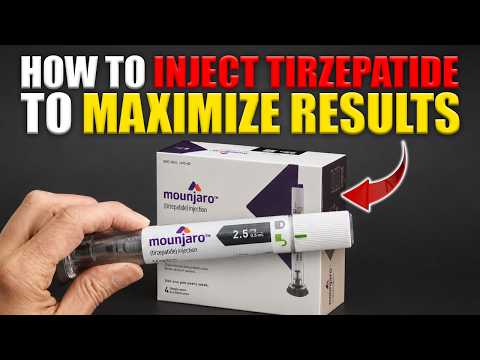
Tirzepatide is given as a once-weekly subcutaneous injection, typically into the fat of the abdomen, thigh, or upper arm, and it is not an oral product. Dosing is generally titrated upward slowly from a low starting dose over months, which is described as a way to let the body adjust and to reduce gut side effects. Some clinicians argue that the lowest dose that maintains results can be a better target than automatically climbing to the maximum, since the highest doses may add only modest extra average weight loss while increasing exposure. There is also practical discussion that needle length and whether the shot lands in fat versus muscle may influence absorption, while the specific rotation between abdomen, thigh, and arm matters less than online threads suggest. This is background on how the compound is used and discussed, not a recommendation on route or dose.
Clinical & Research Context
People struggling with obesity or significant weight loss goals · Those with Type 2 diabetes needing better blood sugar control · Anyone who has plateaued with other weight loss methods · People wanting cardiovascular protection alongside weight loss · Those who prefer weekly injections over daily medications
State of the evidence
Tirzepatide stands apart from most peptides discussed in this space because it rests on a large body of formal human clinical trials rather than animal studies and anecdote. Its diabetes program, run under the SURPASS trials, and its obesity program, run under the SURMOUNT trials, are the basis for its FDA approvals and included direct comparisons showing greater A1c and weight reduction than semaglutide in the settings tested. That said, clinicians point out that trial results are not always directly comparable across different drugs because study designs, doses, and populations differ. Longer-term questions, such as durability of weight loss after stopping, changes in body composition, and rarer side effects, continue to be studied. Overall it is one of the most rigorously evidenced compounds in the weight and metabolic field, which is a meaningful contrast to research-chemical peptides.
Legal and regulatory status
Tirzepatide is an FDA-approved prescription drug, sold as Mounjaro for type 2 diabetes and Zepbound for weight management and obstructive sleep apnea, both made by Eli Lilly. Because it is an approved branded medicine, its regulatory position is different from the unapproved peptides often sold online, and it is meant to be obtained through a prescriber and pharmacy. During an earlier supply shortage, compounding pharmacies were permitted to prepare versions of it, but after the FDA declared the shortage resolved that allowance was wound down, which reshaped access to compounded forms. It is also known by the development code LY3298176 in addition to its brand names. Rules on compounding, availability, and coverage in this area move quickly, so treat any status as a snapshot in time.
Further listening
3 recordingsCommonly Stacked With
Research-Market Price Snapshot
A compact market signal for this profile. The dedicated pricing page owns vendor, vial-size, and price-per-mg comparisons.
Updated Jul 16, 2026
- Vendors
- 25
- Listings
- 75
- Observed range
- $35–$3,090
Tirzepatide Research
Live research temporarily unavailable
The live research feed did not return papers for this page. The curated references below remain available for crawlable source context.
Related Peptides
Tesofensine
THE APPETITE CRUSHERCModerateWeight Management · Appetite & Metabolic ControlMetabolic · Weight ManagementDoseSee guide↻CycleOngoing with medical supervision◷Kicks inWeight loss typically begins within the...Powerful appetite control through brain chemistry
from $1 · 20 vendorsNº 006 / 006Semaglutide
THE APPETITE CONTROLLERBGoodMetabolic Modulator · Weight ManagementMetabolic · Metabolic ModulatorDose250 mcg▲↻CycleOngoing as prescribed◷Kicks inWeight loss typically begins within 2-4...Take control of your appetite and transform your body with proven science.
from $0.12/mg · 56 vendorsNº 004 / 006AICAR
THE EXERCISE MIMETICCModerateMetabolic Modulator · Weight ManagementMetabolic · Metabolic ModulatorDoseSee guide↻Cycle4-6 weeks on, 2-4 weeks off◷Kicks inMetabolic improvements can be measured...Exercise in a molecule - activate your metabolism without the gym
from $0.76/mg · 6 vendorsNº 002 / 006SLU-PP-332
THE EXERCISE PILLDCautionMetabolic Modulator · Weight ManagementMetabolic · Metabolic ModulatorDoseSee guide↻Cycle6 weeks on, 6 weeks off◷Kicks inEndurance improvements may be noticeable...Get exercise benefits without the exercise
from $1.80/mg · 50 vendorsNº 005 / 0065-Amino-1MQ
THE FAT BURNERBGoodMetabolic Modulator · Weight ManagementMetabolic · Metabolic ModulatorDose150 mcg↻Cycle3 weeks on, 1 week off◷Kicks inMost users notice energy improvements within...Boost metabolism and burn fat without changing your diet
from $0.68/mg · 69 vendorsNº 001 / 006MOTS-c
THE METABOLIC MESSENGERBGoodMetabolic Modulator · Mitochondrial SupportMetabolic · Metabolic ModulatorDose5 mg↻Cycle8-12 weeks on, 4 weeks off◷Kicks inMetabolic improvements may be measurable...Exercise in a peptide - boost metabolism without the treadmill
from $0.75/mg · 110 vendorsNº 003 / 006