The Peptide AppThe Peptide App

The Peptide AppField Guide · Healing SeriesField Specimen

Healing Category

Cortexin

THE CORTEX PROTECTOR

Cortical Neurotrophic Peptide

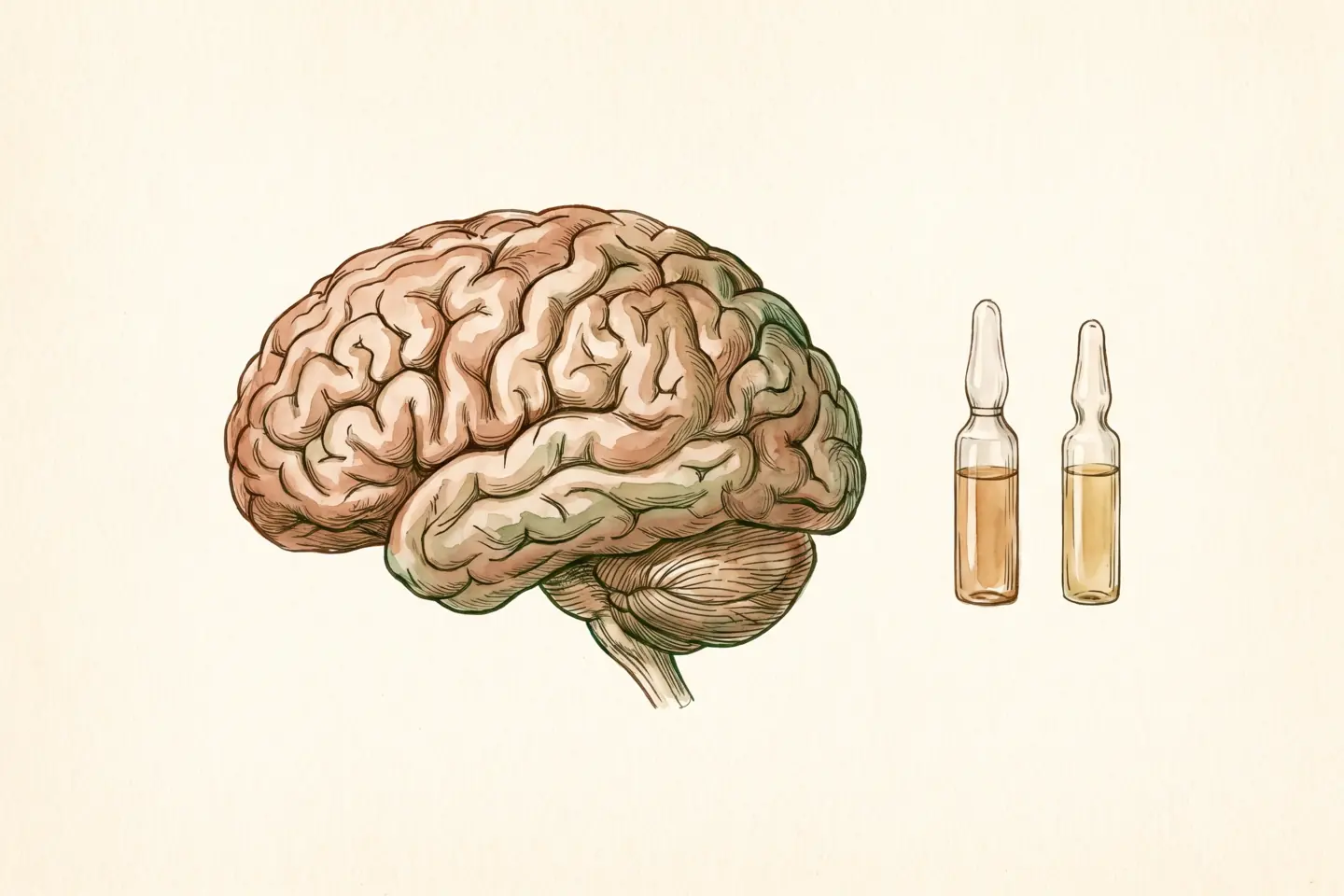
Cortexin is extracted from animal brain cortex and contains a mix of neuropeptides, amino acids, and vitamins. It improves how your brain uses energy, protects neurons from damage, and helps balance neurotransmitters. It's commonly used in Russia for stroke recovery, developmental disorders, and cognitive enhancement.

Cortexin
Cortexin
Cortexin

Cortexin Evidence Snapshot

How these guides are reviewed
Regulatory status
Not FDA approved · research use only
Dosing guidance
Reviewed by our clinical team
Linked evidence
7 research sources
Content updated
May 8, 2026

Dose and schedule recommendations shown below come from The Peptide App Clinical Team. Research links are provided so readers can inspect the supporting evidence directly. Review the sources.

Quick Answers About Cortexin

Is Cortexin FDA approved?

No. This profile records Cortexin as not FDA approved and for research use only.

More context

Review the regulatory and source details on this page for the current context.

What dose does The Peptide App Clinical Team recommend for Cortexin?

Dose: 10 mg daily for 10 days (IM injection).

More context

Schedule: daily. Cycle: 10 days on, 3-6 months off. This is clinical-team guidance for reference and does not replace individualized instructions from a licensed clinician.

What research supports this Cortexin guide?

This guide links to 7 curated or current research sources.

More context

Open the research section to inspect the source titles, publication details, study types, and available abstracts directly.

Review the Cortexin research sources

Studied Effects & Mechanisms

Antioxidant Protection

Neutralizes free radicals and reduces oxidative brain damage

Neurotransmitter Balance

Optimizes dopamine, serotonin, and GABA levels

Brain Energy

Restores mitochondrial ATP production in neurons

Clinical & Research Context

Stroke recovery patients
Children with neurodevelopmental issues
People with cognitive impairment
Those seeking neuroprotection
Anyone recovering from brain injury

Research-Market Price Snapshot

A compact market signal for this profile. The dedicated pricing page owns vendor, vial-size, and price-per-mg comparisons.

Live pricing

The live pricing feed did not return ready in-stock rows for this peptide.

Open the dedicated pricing page →

Cortexin Research

Live PubMed intelligence from the research crawler

PMID 42360215HumanRelevance 87Extracted

[Cortexin in the comprehensive therapy of alcoholic encephalopathy].

Zhurnal nevrologii i psikhiatrii imeni S.S. Korsakova · Jan 1, 2026

OBJECTIVE: To evaluate the efficacy, safety, and dose-dependent effects of Cortexin in the comprehensive therapy of alcoholic encephalopathy (EA). MATERIAL AND METHODS: This study was conducted from April 2025 to November 2025 and included 40 patients (20 females and 20 males), aged 34-72 years (mean age: 52.7±14.2 years). Participants received intramuscular injections of Cortexin at 10 mg (n=20) or 20 mg (n=20) for 10 days. The comprehensive treatment regimen included hepatoprotective, metabolic, and detoxification therapies. Each patient was evaluated over a span of 10 days, which included two clinical visits: a neuropsychological assessment on day 1 (the day of hospital admission) and a follow-up on day 10, using standardized neuropsychological methods, specifically the Mini-Mental State Examination (MMSE), Frontal Assessment Battery (FAB), and Schulte tables. RESULTS: The incorporation of Cortexin, both at 10 mg and 20 mg, into the comprehensive therapy resulted in notable improvements, characterized by a reduction in symptoms and a statistically significant enhancement in neuropsychological test scores: MMSE scores improved from 27.3 to 28.9 points (p<0.01), FAB scores increased from 15.5 to 17.1 points (p<0.01), and performance with the Schulte tables improved from an average of 97.5 seconds to 84.5 seconds (p<0.05) in both patient groups. These findings demonstrate the efficacy of Cortexin in addressing cognitive deficits. CONCLUSION: The implementation of comprehensive therapy with Cortexin at dosages of 10 mg and 20 mg resulted in significant improvements in cognitive function among patients with alcoholic encephalopathy. The pharmacological properties of this medication render it an essential component of comprehensive treatment strategies aimed at the restoration of memory and cognitive capabilities, thereby enhancing the quality of life for patients with alcoholic encephalopathy.

Dosing evidenceSafety evidenceEfficacy evidence
PMID 42133422HumanRelevance 87Extracted

OBJECTIVE: To evaluate the efficacy and safety of Cortexin in the comprehensive treatment of neurological complications in patients with type 2 diabetes mellitus (T2DM). MATERIAL AND METHODS: This multicenter, parallel-group, randomized, clinical trial included 110 patients with neurological complications of T2DM including cognitive impairment, anxiety-depressive states, and a painless diabetic polyneuropathy (DPN). Of the participants, 70.6% were females and 29.4% were males, aged 45 to 70 years (mean age: 60.8±0.71 years). All patients received comprehensive treatment consisting of glycine and B-vitamin complexes for 30 days-administered parenterally for the first 10 days and orally for the subsequent 20 days. The patients were followed up until Day 90. Group 1 (n=55) patients received ten additional doses of Cortexin 10 mg i/m, while Group 2 patients received only comprehensive treatment. Changes in symptoms, glycemic hemoglobin (HbA1c) levels, cognitive deficit scores (Montreal Cognitive Assessment, MoCA), anxiety-depressive disorders (Hospital Anxiety and Depression Scale, HADS), and symptoms related to painless DPN (Neuropathy Symptom Score-9, Central Sensitization Index, CSI) were evaluated. The patients' condition and response to therapy were objectively assessed using the Clinical Global Impression (CGI) scale, and adverse events (AEs) were documented. RESULTS: The regression of cognitive symptoms in group 1 patients was superior to that in group 2 (6.0 times vs. 1.7 times), as confirmed by a 1.2-fold increase in the average MoCA score after 3 months of follow-up (p<0.001). In the Cortexin group, the mean HADS anxiety score decreased by 1.6 times, and the mean depression score decreased by 1.7 times, with minimal changes noted in the control group (p<0.001). Significant reductions in numbness were observed, with a 2.2-fold decrease in the Cortexin group compared to a 1.3-fold decrease in the control group. The mean NTSS-9 score dropped by 2.8 times in group 1 and by 1.3 times in group 2 (p<0.001); while the CSI decreased 1.8 times and 1.2 times, respectively (p<0.001). The reduction in HbA1c was also more significant in the Cortexin group (7.3±0.1% vs 7.8±0.1%, p<0.001). According to the CGI scale, 83.3% of patients in group 1 showed good or very good improvement, and a significant therapeutic effect was noted in 55.6% of patients. The proposed therapy demonstrated a high safety profile, with only 5 AEs reported (3 in Group 1 and 2 in Group 2), none of which were related to the study therapy. CONCLUSION: The comprehensive therapy with Cortexin proved to be highly effective, safe, and well-tolerated in patients with neurological complications of T2DM, and it is recommended for use in general clinical practice.

Dosing evidenceSafety evidenceEfficacy evidence
PMID 41782536HumanRelevance 87Extracted

[Efficacy and safety of Cortexin as additional therapy in patients with depressive disorder].

Zhurnal nevrologii i psikhiatrii imeni S.S. Korsakova · Jan 1, 2026

OBJECTIVE: To study the efficacy and safety of Cortexin as additional therapy in patients with depressive disorder. MATERIAL AND METHODS: The study involved 98 patients (56 women and 42 men) with a mean age of 44.0 (36.0; 52.0) years. They were divided into 2 groups: Group 1 (n=48) received basic antidepressant treatment plus intramuscular Cortexin at a dose of 10 mg once daily (in the morning) for 10 days; Group 2 (n=50) received only basic antidepressant treatment. During three visits (baseline, day 14, and day 28), the severity of depression and its dynamics were analyzed using the Montgomery-Åsberg Depression Rating Scale (MADRS), social functioning was assessed using the Social Adaptation Self-Evaluation Scale (SASS), treatment efficacy was evaluated using the Clinical Global Impression scale (CGI-I at weeks 2 and 4), and adverse events were recorded using the Udvalg for Kliniske Undersøgelser (UKU) Side Effect Rating Scale. RESULTS: At visit 3, a significant reduction in depression severity (MADRS), an improvement in the quality of life of patients with depressive disorder (SASS), and a decrease in adverse events (UKU) were observed, with significant differences between the groups (p=0.001). By the end of the study, a significantly larger proportion of patients in the main group rated the improvement from therapy as «significant» and «substantial» (p=0.001). CONCLUSION: The use of Cortexin as an additional therapy in patients with depressive disorder is effective and safe. Combined antidepressant therapy with Cortexin is superior to antidepressant monotherapy in terms of response rate and health-related quality of life. A more favorable safety profile was also demonstrated for the combination of antidepressants and Cortexin.

Dosing evidenceSafety evidenceEfficacy evidence
PMID 41524350HumanRelevance 87Extracted

OBJECTIVE: Study of the therapeutic equivalence of forms for intramuscular and intravenous administration of the drug Cortexin in patients in the acute and early recovery periods of ischemic stroke (IS). MATERIAL AND METHODS: A multicenter, randomized, double-blind, placebo-controlled, parallel-group clinical trial was conducted. The study included 490 patients with acute IS, male (54.1%) and female (45.9%) aged from 30 to 80 years (average age 63.97+8.5 years), divided into 2 groups: 1 - main (Cortexin intravenous form, n=246), 2 - comparison (Cortexin intramuscular form, n=244). Patients in both groups received 2 courses of therapy lasting 10 days. In the first course: Group 1 - Cortexin 10 mg IV and placebo IM 2 times a day; Group 2 - Cortexin 10 mg IM and placebo IV 2 times a day. After 10 days, patients in both groups received a second course of therapy with Cortexin 10 mg, IM, 2 times a day, 10 days. The period of active treatment and observation for each patient was 90 days. The evaluation of the effectiveness of the studied Cortexin dosage forms was defined as the proportion of patients who reached 0-2 on the modified Rankin scale (mRS) on the 90th day of the study. Additionally, the dynamics of scores on the Stroke Scale of the National Institute of Health (NIHSS) and the Short Mental Status Assessment Scale (MMSE) were evaluated on the days of active treatment and follow-up. Safety was assessed by the frequency of adverse events (AE). RESULTS: The proportion of patients who reached 0-2 on the mRS scale on day 90 was 93.64% and 86.50% in the groups receiving Cortexin intravenously and intramuscularly, respectively. By the end of the follow-up period, the total score on the NIHSS scale decreased by 3.93 and 3.72, respectively, in both groups. According to the MMSE scale, by the day of completion of the study, the overall dynamics of the average score in group 1 was 4.11, in the comparison group 3.88 (p=0.249). The study showed the comparable safety of the two dosage forms of Cortexin. In the main group 1, 74 AES were registered in 60 patients, in the comparison group - 51 AES in 41 people, the number of cases did not differ between the groups (p>0.05). CONCLUSION: The intravenous form of Cortexin administration has been proven to be no less effective than the intramuscular form in restoring functional, neurological and cognitive deficits in patients with acute AI. Both dosage forms have shown a comparable safety profile, are therapeutically equivalent, and can be used in clinical practice at both the hospital and outpatient stages of managing patients with acute cerebral circulatory disorders.

Dosing evidenceSafety evidenceEfficacy evidence
PMID 38147380HumanRelevance 84Extracted

OBJECTIVE: To evaluate the effectiveness of complex therapy with Cortexin and Neuromexol in patients with chronic cerebral ischemia (CCI) and cognitive impairment (CI). MATERIAL AND METHODS: We examined 801 patients with CCI on the background of arterial hypertension and atherosclerosis with confirmed CI: 329 (41.1%) men and 472 (58.9%) women aged 30 to 80 years (mean age 64±10 years), who were examined. Cortexin and Neuromexol. Examination - Mini-Mental State Examination (MMSE) scale, hour-long drawing test (HDT) and severity of depressive states (Brief Geriatric Depression Scale, Mini Geriatric Depression Scal, MGDS). In 30 patients receiving Cortexin and Neuromexol (main group, MG) and 30 patients in the comparison group (CG), biomarkers of ischemic brain damage (NSE, antibodies to NR2, VEGFA) were determined. The examination was carried out before the start of treatment and after 30 days. RESULTS: During therapy with Cortexin and Neuromexol, characteristic signs of a decrease in the severity of CI were noted (p<0.05). A positive correlation was revealed between the performance indicators of the MMSE and TFC tests, both before and after treatment (r=0.5 and r=0.6, respectively; p<0.05). A positive effect of therapy on the emotional background of patients was noted, in particular, a decrease in the severity of depressive symptoms on the MGDS scale. During therapy, a 2-fold decrease in the NSE level (p<0.05) was detected in the MG, which indicates a decrease in the structural and functional parameters of biomembrane neurons in the brain. The concentration of antibodies to NR2 decreased compared to the baseline level in both groups (p<0.05), and VEGFA decreased only in the MG (p<0.05). CONCLUSION: The results of the study allow us to recommend the complex prescription of Cortexin 10 mg/day for 10 days and Neuromexol tablets 125 mg (375-750 mg/day) for 30 days for chronic CVD. Complex therapy with Cortexin and Neuromexol is effective and safe in patients with CCI and CI.

Dosing evidenceSafety evidenceEfficacy evidence
PMID 39690562HumanRelevance 83Extracted

OBJECTIVE: Assessing the effectiveness of using a complex that includes the use of the drug Cortexin and classes using the mobile application Aphasia.No (Afaziyam.Net) in working with speech disorders in patients with acute stroke. MATERIAL AND METHODS: The study involved 71 patients aged from 40 to 85 years with diagnoses of the ONCM group (I63-I64), as well as complications aphasia, 50 of them consented to neuropsychological rehabilitation using the application Aphasia.No (Afaziyam.Net) and received the drug Cortexin as a peptide drug at a dose of 10 mg 2 times a day intramuscularly (IG). 21 patients made up the comparison group. To assess the effectiveness of the rehabilitation complex, the following psychodiagnostic methods were used: MoCA, MMSE, a set of tasks for the study of speech, writing, reading, and the HADS scale. RESULTS: The average score based on the results of a comprehensive study of speech, writing and reading in the group on day 2 in the hospital was: speech - 141.8±21.6 (normal - 262 points); writing - 20.5±4.23 (normal - 44 points); reading - 14.5±1.87 (normal - 29 points) points. An examination before discharge in IG showed the following results: speech - 214.3±15.9; writing - 31.5±4.5; reading - 24.4±4.7 points. The differences compared to the baseline and the 2nd group were statistically significant. CONCLUSION: The complex treatment used in the work can be recommended as an effective tool in working with speech disorders in patients with acute stroke. In addition, the program has a positive effect on the psycho-emotional state.

Dosing evidenceSafety evidenceEfficacy evidence

Related Peptides

BPC-157

THE HEALER
AHigh
Accelerated Healing · Neurological SupportHealing · Accelerated HealingDose250 mcgCycle4-8 weeks on, then equal breakKicks inGut issues often improve faster - many...

Accelerates healing of tendons, ligaments, gut, and muscles throughout your body.

from $1.99/mg · 122 vendorsNº 001 / 006

DSIP

THE SLEEP INDUCER
BGood
Neurological Support · Sleep RegulationCognitive · Neurological SupportDoseSee guideCycleAs needed for sleep supportKicks inSleep quality improvements often noticed...

Natural sleep peptide for deep rest and stress relief

from $3.15/mg · 49 vendorsNº 002 / 006

Epitalon

THE LONGEVITY FACTOR
AHigh
Neurological Support · Sleep RegulationHealing · Neurological SupportDose1 mgCycle10-30 days on, 4-6 months offKicks inSleep improvements within days; telomere...

Supports cellular longevity and circadian rhythm for optimal sleep-based brain repair.

from $1.40/mg · 78 vendorsNº 003 / 006

GHK-Cu

THE RESTORER
AHigh
Accelerated Healing · Neurological SupportHealing · Accelerated HealingDose500 mcgCycleVariable - topical ongoing, injectable cycledKicks inSkin improvements within 2-4 weeks; hair...

Turn back the clock on your skin, hair, and body.

from $0.04/mg · 120 vendorsNº 004 / 006

Pinealon

THE DREAMWEAVER
AHigh
Neurological Support · Sleep RegulationCognitive · Neurological SupportDose1 mgCycle4 weeks on, 8 weeks offKicks inSleep improvements often noticed within the...

Sleep like you mean it and wake up mentally sharp.

from $0.90/mg · 45 vendorsNº 005 / 006

PT-141

THE DESIRE ACTIVATOR
CModerate
Neurological Support · Sexual & Reproductive HealthHealing · Neurological SupportDose1.5 mgCycleAs needed, max 1 dose per 24 hours, max 8...Kicks inEffects typically begin 45-60 minutes after...

FDA-approved desire enhancement that works through the brain

from $1.85/mg · 65 vendorsNº 006 / 006