Cognitive Category
DSIP
THE SLEEP INDUCER
Delta Sleep-Inducing Peptide
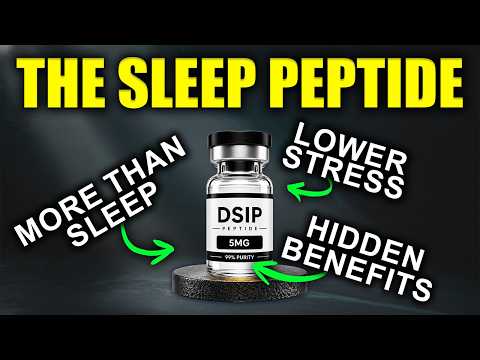
DSIP (Delta Sleep-Inducing Peptide) is a nine-amino-acid peptide naturally found in your hypothalamus. It promotes deep, restorative delta-wave sleep, reduces pain perception, helps manage stress hormones, and can even assist with withdrawal symptoms. It works with your body's natural sleep systems rather than forcing sedation.
DSIP Evidence Snapshot
How these guides are reviewed- Regulatory status
- Not FDA approved · research use only
- Dosing guidance
- Reviewed by our clinical team
- Linked evidence
- 9 research sources
- Content updated
- Jul 13, 2026
Dose and schedule recommendations shown below come from The Peptide App Clinical Team. Research links are provided so readers can inspect the supporting evidence directly. Review the sources.
Quick Answers About DSIP
Is DSIP FDA approved?
No. This profile records DSIP as not FDA approved and for research use only.
More context
Review the regulatory and source details on this page for the current context.
What dose does The Peptide App Clinical Team recommend for DSIP?
Dose: 100 mcg every 2-3 days (subcutaneous or IV).
More context
Schedule: daily. Cycle: As needed for sleep support. This is clinical-team guidance for reference and does not replace individualized instructions from a licensed clinician.
What research supports this DSIP guide?
This guide links to 9 curated or current research sources.
More context
Open the research section to inspect the source titles, publication details, study types, and available abstracts directly.
Review the DSIP research sourcesStudied Effects & Mechanisms
Delta Sleep Promotion
Increases deep, restorative delta-wave sleep
Pain Reduction
Enhances endogenous opioid peptides for natural pain relief
Stress Hormone Balance
Modulates cortisol and other stress hormones
Neurotransmitter Balance
Stabilizes dopamine and serotonin signaling
Origin and history
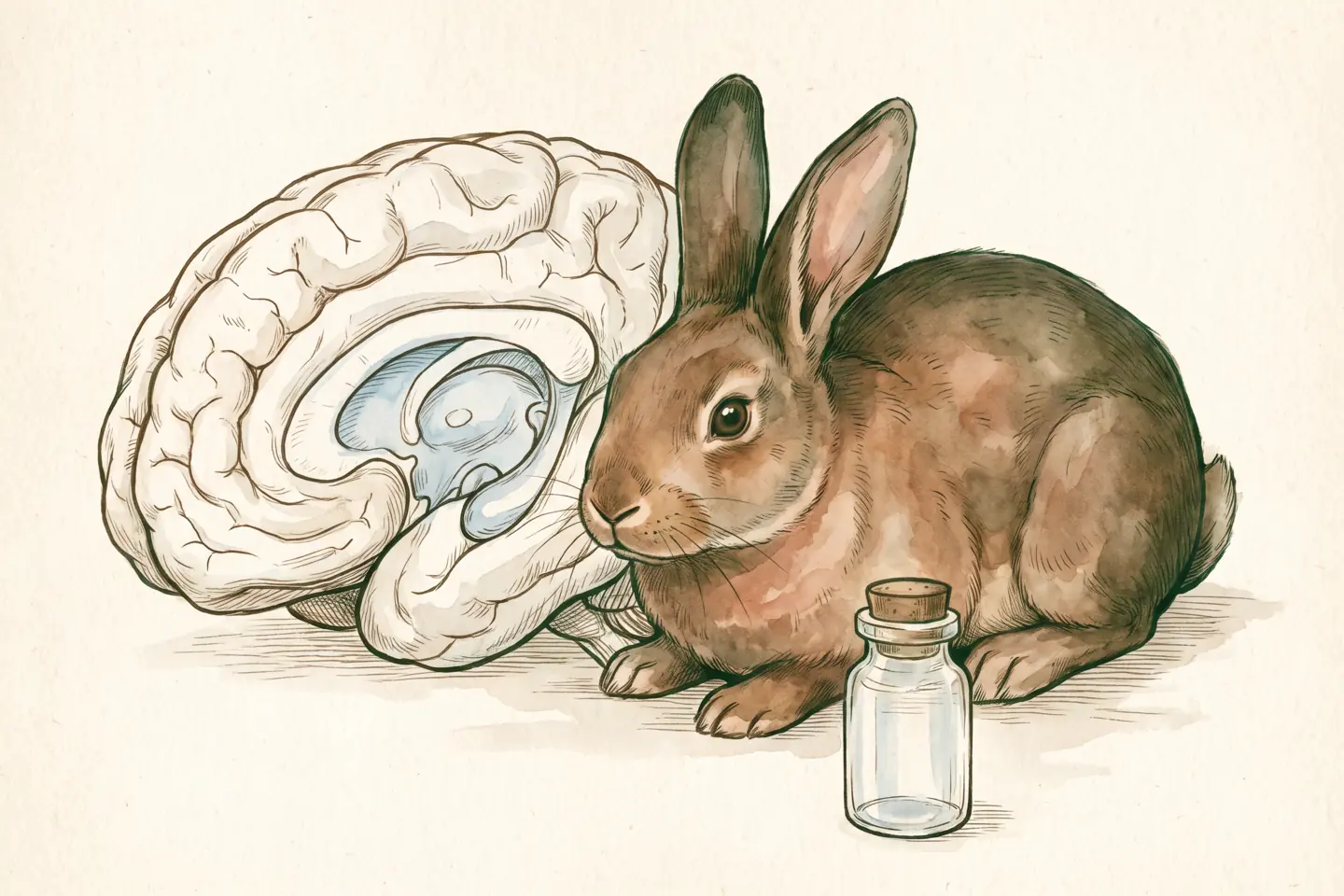
DSIP is a small naturally occurring peptide, a nonapeptide made of nine amino acids with the sequence Trp-Ala-Gly-Gly-Asp-Ala-Ser-Gly-Glu. It was first described in 1977 by the Swiss researchers Guido Schoenenberger and Marcel Monnier at the University of Basel, who were running cross-circulation experiments in rabbits. When they took blood from the brain of rabbits that had been electrically nudged into sleep and infused a dialyzed fraction of it into awake rabbits, the recipients showed more of the slow delta-wave EEG activity that marks deep sleep, and the peptide responsible was named for that effect. It is found naturally in the brain and elsewhere in the body, but decades later its normal physiological role is still not settled. That early rabbit work is the reason DSIP has been studied for sleep at all, and much of the foundational research traces back to a small circle of labs rather than a broad field.
What people use it for
The headline reason people look into DSIP is sleep, and specifically the depth or quality of sleep rather than simply the number of hours in bed. Creators who discuss it, including Jacob Nachinson and Hunter Williams, tend to frame it as something that helps a person hold on to deep, restorative sleep rather than something that knocks you out at bedtime, so it is often described as more useful for staying asleep and reaching slow-wave sleep than for initial drowsiness. Beyond sleep, the older literature also explored DSIP for stress and cortisol regulation, for chronic pain, and as an aid for people coming off opioids or alcohol. In peptide-community stacks it is sometimes paired with growth-hormone secretagogues such as CJC-1295, ipamorelin, or tesamorelin, on the logic that those target the growth-hormone rhythm while DSIP is aimed at sleep architecture directly. It is generally talked about as a short-term tool for a rough patch rather than something to run indefinitely.
What makes it unusual
The unusual thing about DSIP is that it carries a very specific name, delta sleep-inducing peptide, yet its mechanism has never been cleanly pinned down. A widely cited 2006 review by Kovalzon literally called it a still unresolved riddle, noting that it does not behave like a reliable, dedicated sleep switch. What researchers can say is that it appears to influence neurotransmitter signaling and the body's own internal opioid system, and to touch the stress axis that governs cortisol and the fight-or-flight response. It is important to be precise here, because interacting with the internal opioid system does not make it an opioid drug, and in fact it was studied as an aid for withdrawal rather than as something habit-forming. The distinctive framing you hear from clinicians like Dr. Jones is that DSIP is not sedation, it seems to work with the brain's own machinery to deepen sleep, though the exact receptors it acts on remain unmapped.
How it is administered
In the original human studies DSIP was usually given intravenously, which is not how it circulates in today's peptide community. There it is typically discussed as a subcutaneous injection, and some people describe intranasal use, with dosing generally timed to the evening or shortly before bed to line up with the target of deeper night-time sleep. The peptide is short-acting, so the framing is about supporting a single night rather than building a long steady blood level. Commentators repeatedly stress running it as a short cycle, on the order of a couple of weeks to a month or two, largely because long-term data simply does not exist. None of this should be read as a protocol; it is a description of how people report using it, and the timing and route questions are exactly the ones a knowledgeable clinician would weigh case by case.
Clinical & Research Context
People with sleep disorders or insomnia · Those dealing with chronic pain · Anyone with high stress or anxiety · People recovering from addiction · Shift workers needing sleep regulation
State of the evidence
The evidence base for DSIP is old, thin, and genuinely mixed, which is unusual for a compound with such a confident name. Some small human studies were encouraging: an early trial giving synthetic DSIP intravenously to a handful of chronic insomniacs reported longer, less interrupted sleep without daytime grogginess, and a small open study described normalized sleep lasting months after a short course of injections. But controlled trials failed to reproduce a consistent, meaningful benefit, and researchers such as Monti were unable to replicate the strongest claims, with at least one review concluding the sleep improvement was of little clinical significance. Almost all of this work is decades old and involved very few subjects, and there is little modern high-quality human safety or efficacy data. Much of what circulates today is anecdotal, including self-tracked wearable readouts of deep sleep, so DSIP should be treated as an interesting but largely unproven peptide rather than an established therapy.
Legal and regulatory status
DSIP is not approved by the FDA for any medical use in the United States, and it is most often sold under research-use-only or not-for-human-consumption labeling, which means purity and identity can vary from one supplier to another. It also appears under the name Emideltide in some regulatory and pharmacy contexts. The compounding picture has been in flux: reporting in 2026 described DSIP being moved off an FDA list that had restricted its compounding, with further review expected, so its status is a fast-moving target rather than a fixed fact. In sport, DSIP is not specifically named on the current World Anti-Doping Agency prohibited list, but WADA rules change and broad catch-all categories can apply, so any competitive athlete should verify the current status before assuming it is permitted. Because both the legal and regulatory landscape here is shifting quickly, anything stated today should be double-checked against current guidance.
Further listening
2 recordingsResearch-Market Price Snapshot
A compact market signal for this profile. The dedicated pricing page owns vendor, vial-size, and price-per-mg comparisons.
Updated Jul 16, 2026
- Vendors
- 40
- Listings
- 48
- Observed range
- $17–$305
DSIP Research
Live PubMed intelligence from the research crawler
DSIP in the treatment of withdrawal syndromes from alcohol and opiates.
European neurology · Jan 1, 1984
The hypothesis for this therapeutic use of delta sleep-inducing peptide (DSIP) was based on several animal studies conducted by Tissot. He showed that morphine, alcohol, pentobarbital as well as DSIP, when injected directly into the bulbo-mesencephalo-thalamic recruiting system, induced slow-wave sleep with numerous spindles. In all cases, this effect was reversed by Naloxone. Thus, it has been postulated that DSIP possesses an agonistic activity on opiate receptors and might be of value in the treatment of withdrawal syndromes. Therefore, DSIP was administered intravenously to 107 inpatients presenting with symptoms of alcohol (n = 47) or opiate (n = 60) withdrawal. The assessment of effect was based on the clinical evaluation by the physician and the nursing staff. Approximately 13% of the patients from the first and 22% from the second group did not fulfil the requirements for the evaluation of treatment. In, respectively, 97 and 87% of opiate and alcohol addicts, the clinical symptoms and signs disappeared after DSIP administration or improved markedly and rapidly. Anxiety, however, was slower to decrease. On the average, the clinical symptomatology had a more prolonged course and a higher number of DSIP injections were required for opiate addicts than for alcoholics. Tolerance to the DSIP treatment was good, aside from headaches reported by a few patients.
The influence of synthetic DSIP (delta-sleep-inducing-peptide) on disturbed human sleep.
Experientia · Jan 1, 1981
The effects of acute intravenous administration of synthetic DSIP, 25 nmoles/kg b.wt, on disturbed human sleep were tested in 6 middle-aged chronic insomniacs. The results were: longer sleep duration and a higher quality of sleep with fewer interruptions; slightly more REM-sleep, but no day-time sedation or other side effects though the sleep enhancing capacity was seen for up to 6 h of night sleep. Sleep-promoting effects occurred only in the second hour after injection, in the first hour a slight arousing effect was indicated. The study corroborates the findings of previous investigations in healthy subjects and shows that DSIP has a normalizing influence on human sleep regulation.
Acute and delayed effects of DSIP (delta sleep-inducing peptide) on human sleep behavior.
International journal of clinical pharmacology, therapy, and toxicology · Aug 1, 1981
A first study of DSIP (= synthetic delta sleep-inducing peptide) application to humans was carried out in six normal volunteers (four males and two females) under extensive psychophysiologic observations and measurements in a double-blind cross-over design. DSIP was applied as slow intravenous infusions at a dosage of 25 nmol/kg in the morning. The subjects immediately reported a feeling of sleep pressure, and sleep increased by 59% (median of total sleep time) within a 130-min interval after the treatment as compared with placebo. Delayed effects on subsequent night sleep were shorter sleep onset, reduced percentage of stage 1, and better sleep efficiency. Nevertheless, sophisticated behavioral and EEG analyses revealed no sedation in the classic pharmacologic way. The results suggest that DSIP in humans is also efficacious by sustaining natural sleep functions. The compound was well-tolerated and no psychologic, physiologic, or biochemical side effects were observed.
Therapeutic effects of delta-sleep-inducing peptide (DSIP) in patients with chronic, pronounced pain episodes. A clinical pilot study.
European neurology · Jan 1, 1984
Experimental results suggested a modulation or 'programming' interaction of delta sleep-inducing peptide (DSIP) with endogenous opioid-peptidergic systems and exogenous intracerebrally or systemically administered morphine and amphetamine. The induction of cerebral MAO-A activity, a pronounced influence on the circadian rhythms of locomotion and intracerebral neurotransmitter as well as plasma protein and cortisol concentrations has been reported. DSIP was also shown to counteract experimentally induced stress situations in animals. An improvement of the psychomotor performance and the concentration capacity in humans beside sleep normalization and pronounced effects on withdrawal symptoms including pain states in alcoholics and opiate addicts was discovered. This encouraged a pilot study for a possible action of the peptide in humans suffering from chronic pronounced pain episodes. We investigated the therapeutic effect in 7 patients with migraine episodes and vasomotor headaches, chronic tinnitus and psychogenic pain attacks. The anamnestic (baseline) values were statistically compared with the katamnestic control period. DSIP lowered significantly the pain levels of 6 out of 7 patients after intravenous administration on 5 consecutive days followed by 5 injections every 48-72 h. Remarkably, a simultaneous significant reduction of the concomitantly occurring depressive states was observed.
The delta EEG (sleep)-inducing peptide (DSIP). XI. Amino-acid analysis, sequence, synthesis and activity of the nonapeptide.
Pflugers Archiv : European journal of physiology · Sep 6, 1978
A peptide which induces slow-wave EEG (sleep) after intraventricular infusion into the brain has been isolated from the extracorporeal dialysate of cerebral venous blood in rabbits submitted to hypnogenic electrical stimulation of the intralaminar thalamic area. It was shown by amino-acid analysis and sequence determination to be Trp-Ala-Gly-Gly-Asp-Ala-Ser-Gly-Glu and named "Delta Sleep-Inducing Peptide" (DSIP). This compound was synthesized as well as 5 possible metabolic products (1--8, 2--9, 2--8, 1--4 and 5--9), 2 nonapeptide analogues (with one and two amino-acids exchanged) and a related tripeptide (Trp-Ser-Glu). All 9 synthetic peptides were infused intraventricularly in rabbits (6 nmol/kg in 0.05 ml of CSF-like solution over 3.5 min) and tested under double-blind conditions. A total of 61 rabbits including controls were used. The EEG from the frontal neocortex and the limbic archicortex were subjected to direct fast-Fourier transformation and analyzed by an 1108 computer system. A highly specific delta and spindle EEG-enhancing effect of the synthetic DSIP could be demonstrated. The mean increase of EEG delta activity reached 35% in the neocortex and limbic cortex as compared to control animals receiving CSF-like solution or any of the other 8 peptides. The final chemical characterization of the synthetic DSIP revealed that only the pure alpha-aspartyl peptide is highly active in contrast to its beta-Asp isomer. A neurohumoral modulating and programming activity was suggested.
DSIP in insomnia.
European neurology · Jan 1, 1984
This paper summarizes different investigations into effects of delta sleep-inducing peptide (DSIP) injections on insomnia. Two different studies showed improvement of sleep following single injections of 25 nmol/kg b.w. before sleep. Repeated administrations indicated a buildup with normalization of sleep structure after four administrations. Repeated injections in the morning - besides increasing daytime activity - still had a strong positive effect on night sleep, but not so two doses daily. A case of insomnia in organic brain disease responded well to higher doses. The results are discussed as to the mode of action of DSIP and its possible therapeutic use in insomnia.
Research references
Related Peptides
BPC-157
THE HEALERAHighAccelerated Healing · Neurological SupportHealing · Accelerated HealingDose250 mcg↻Cycle4-8 weeks on, then equal break◷Kicks inGut issues often improve faster - many...Accelerates healing of tendons, ligaments, gut, and muscles throughout your body.
from $1.99/mg · 122 vendorsNº 001 / 006Epitalon
THE LONGEVITY FACTORAHighNeurological Support · Sleep RegulationHealing · Neurological SupportDose1 mg↻Cycle10-30 days on, 4-6 months off◷Kicks inSleep improvements within days; telomere...Supports cellular longevity and circadian rhythm for optimal sleep-based brain repair.
from $1.40/mg · 78 vendorsNº 003 / 006Pinealon
THE DREAMWEAVERAHighNeurological Support · Sleep RegulationCognitive · Neurological SupportDose1 mg↻Cycle4 weeks on, 8 weeks off◷Kicks inSleep improvements often noticed within the...Sleep like you mean it and wake up mentally sharp.
from $0.90/mg · 45 vendorsNº 005 / 006Semax
THE FOCUS ENHANCERAHighNeurological Support · NootropicHealing · Neurological SupportDose600 mcg↻Cycle6 weeks on, 6 weeks off◷Kicks inCognitive enhancement often noticed within...Powerfully enhances focus, memory, and learning by optimizing brain chemistry.
from $1.11/mg · 70 vendorsNº 006 / 006Dermorphin
THE PAIN ELIMINATORDCautionPain Management · Neurological SupportLongevity · Pain ManagementDoseSee guide↻CycleShort-term use only◷Kicks inPain relief is rapid but carries serious...Frog-derived painkiller 40x stronger than morphine
from $14.73/mg · 2 vendorsNº 002 / 006Orexin A and Orexin B
THE WAKEFULNESS PROMOTERBGoodNeurological Support · Sleep RegulationMetabolic · Neurological SupportDoseSee guide↻Cycle4 weeks on, 4 weeks off◷Kicks inAlertness improvements typically noticed...Master regulators of wakefulness, appetite, and energy
from $52.42/mg · 2 vendorsNº 004 / 006