
Healing Category
Thymosin Beta-4
THE FULL-SPECTRUM HEALER
TB4, Tβ4, Thymosin β-4
Thymosin Beta-4 is a 43-amino-acid peptide that your body naturally produces to orchestrate healing. It promotes blood vessel formation, reduces scarring (fibrosis), and protects tissues from damage. It's particularly valued for heart recovery after injury and reducing inflammation throughout the body. TB-500 is a fragment of this full-length peptide.
Thymosin Beta-4 Evidence Snapshot
How these guides are reviewed- Regulatory status
- Not FDA approved · research use only
- Dosing guidance
- No established regimen
- Linked evidence
- 3 research sources
- Content updated
- Sep 15, 2026
Research links are provided so readers can inspect the supporting evidence directly.
Studied Effects & Mechanisms
Anti-Fibrotic Action
Ac-SDKP fragment suppresses TGF-β1 signaling to reduce scarring and fibrosis
Cardiac Protection
AGES fragment protects heart cells and promotes cardiomyocyte survival after injury
Antioxidant Defense
Tβ4(1-15) fragment increases protective Bcl-2/Bax ratio and activates survival pathways
Angiogenesis
Promotes formation of new blood vessels to support tissue repair
Who is this for
People recovering from heart issues or cardiac injury · Those with fibrotic conditions (lung, liver, kidney) · Anyone dealing with chronic inflammation · Post-surgery recovery support · Athletes needing full-body tissue repair
Commonly Stacked With
Blends, stacks and comparisons
Comparisons
Thymosin Beta-4 price snapshot
In-stock prices from 9 vendors, checked Oct 14, 2026.
- Vendors
- 9
- Listings
- 11
- Observed range
- $33–$150
Market evidence
Thymosin Beta-4 product testing and COAs
We found certificates from some of the Thymosin Beta-4 vendors we track. Based on the certificates our crawler found; vendors may publish more than we index. Research on this page describes the molecule. Vendor certificates concern particular market samples or batches; they do not change the research evidence or establish clinical safety, sterility, or suitability for use.
The clinic network
Want a clinician's view on Thymosin Beta-4?
Request a free connection to a peptide clinic, by telehealth or in person. A licensed clinician decides whether any treatment is right for you. What peptide therapy involves
Thymosin Beta-4 — Frequently Asked Questions
What is the molecular weight of Thymosin Beta-4?
Full-length Thymosin Beta-4 (Tβ4) is a 43-amino-acid protein with average molecular weight approximately 4963 Da (monoisotopic mass ~4960 Da). This corresponds to UniProt entry P62328. Some sources report ~5053 Da for the N-acetylated mature form. Products labeled TB-500 may contain either this full-length protein or a much smaller fragment (~889 Da); verify identity from the mass spectrometry line, not the product title.
PubChem: Thymosin Beta-4What's the difference between TB-500 and Thymosin Beta-4?
Thymosin Beta-4 (Tβ4) is the full 43-amino-acid protein with molecular weight ~4963 Da. TB-500 is a vendor name that has been applied to both the full-length protein and a 7-amino-acid fragment (Ac-LKKTETQ, ~889 Da). The fragment was characterized by Esposito et al. (Drug Testing and Analysis, 2012) in products marketed as TB-500. The two are not interchangeable. Read the MS or identity line on the COA to know which molecule you have.
See the TB-500 vs Thymosin Beta-4 comparisonIs Thymosin Beta-4 the same as TB-4?
Yes, TB-4 is an abbreviation for Thymosin Beta-4 (Tβ4). Both refer to the same 43-amino-acid protein. TB-500, however, is a vendor name that may refer to either the full-length protein or a 7-residue fragment. The mass spectrometry result on a COA distinguishes them.
What are the side effects of Thymosin Beta-4?
Reported side effects of Thymosin Beta-4 include Injection site redness, Mild allergic reaction, and Temporary fatigue. They are reported or occasional reactions, not a prediction of what any one person will experience.
Is Thymosin Beta-4 safe?
Thymosin Beta-4 has an editorial safety grade of B (Good Safety). Well-studied with good safety profile. Most side effects are mild and temporary. Safety depends on dose, sourcing, health history and medical supervision, so this page does not call it safe for personal use.
How does the tandem thymosin beta-4 form (tTB4) differ from standard thymosin beta 4?
In structural modeling, the tandem form (tTB4) was found to be able to simultaneously bind and sequester two G-actin molecules, which gave it a mechanistic advantage over standard TB4 in enhancing actin polymerization. In a murine alkali-induced corneal injury model, tTB4 promoted corneal wound healing and reduced scarring with greater efficacy than TB4. Because tTB4 can be produced by bacterial fermentation, its synthesis is described as simplified and more cost-effective than that of TB4.
Did thymosin beta 4 improve fat graft survival in animal studies?
In animal studies, thymosin beta 4 (Tβ4) was investigated for enhancing fat graft survival by facilitating mitochondrial transfer from adipose-derived stem cells to adipocytes and newly formed blood vessels within the grafts via tunneling nanotubes. In these animal studies, the Tβ4-driven mitochondrial transfer was reported to mitigate oxidative stress, reduce apoptosis, and promote revascularization, thereby improving the quality and volume retention of fat grafts.
Has thymosin beta 4 been studied for Alzheimer's disease?
In a cell-based (in vitro) study, thymosin beta 4 was identified as a neuroprotective factor that may mitigate altered neurogenesis and Alzheimer's disease pathology. In an animal study, thymosin beta 4 had beneficial effects in 5xfAD model mice.
Related Peptides
BPC-157
THE HEALERAHighAccelerated Healing · Neurological SupportHealing · Accelerated HealingDose250 mcg↻Cycle4-8 weeks on, then equal break◷Kicks inRecovery improvements often noticed within...Accelerates healing of tendons, ligaments, gut, and muscles throughout your body.
from $1/mg · 388 vendorsNº 003 / 006TB-500
THE REGENERATORBGoodAccelerated Healing · Anti-InflammatoryHealing · Accelerated HealingDose1.5 mg↻Cycle4-8 weeks on, 4 weeks off◷Kicks inHealing improvements often noticed within...Promotes new blood vessel growth and reduces inflammation for stubborn injuries.
from $2.60/mg · 260 vendorsNº 006 / 006SS-31
THE MITOCHONDRIAL OPTIMIZERBGoodCardiovascular Support · Neurological SupportHealing · Cardiovascular SupportDose5 mg↻CycleNo clinically established cycle for this...◷Kicks inEnergy improvements may be noticed within...Directly target and repair your mitochondria
from $1.35/mg · 190 vendorsNº 005 / 006Apelin-12
THE HEART OPTIMIZERBGoodCardiovascular Support · Metabolic ModulatorMetabolic · Cardiovascular SupportDoseSee guide↻CycleNo established SubQ dosing cycle.◷Kicks inCardiovascular improvements can be measured...Heart-boosting peptide for better blood flow and energy
Full profileNº 001 / 006B7-33
THE SCARLESS HEALERBGoodAccelerated Healing · Cardiovascular SupportHealing · Accelerated HealingDose250 mcg↻Cycle1 week on, 1 week off◷Kicks inAnti-fibrotic effects develop over weeks;...Fight scarring and fibrosis with this relaxin-based peptide
from $9.53/mg · 8 vendorsNº 002 / 006Sigumir
THE JOINT REBUILDERAHighAccelerated Healing · Growth Hormone & Musculoskeletal SupportHealing · Accelerated HealingDoseSee guide↻CycleNo established SubQ dosing cycle.◷Kicks inJoint improvements may be gradual over 2-4...Rebuild your cartilage and relieve joint pain
Full profileNº 004 / 006Read the research in more depth

BPC-157 and TB-500
TB-500 is a fragment of thymosin beta-4, the protein tested in trials
TB-500 is a short synthetic fragment, not full-length thymosin beta-4. Every human trial in this family tested the 43-amino-acid protein, not the fragment.
Compound evidence
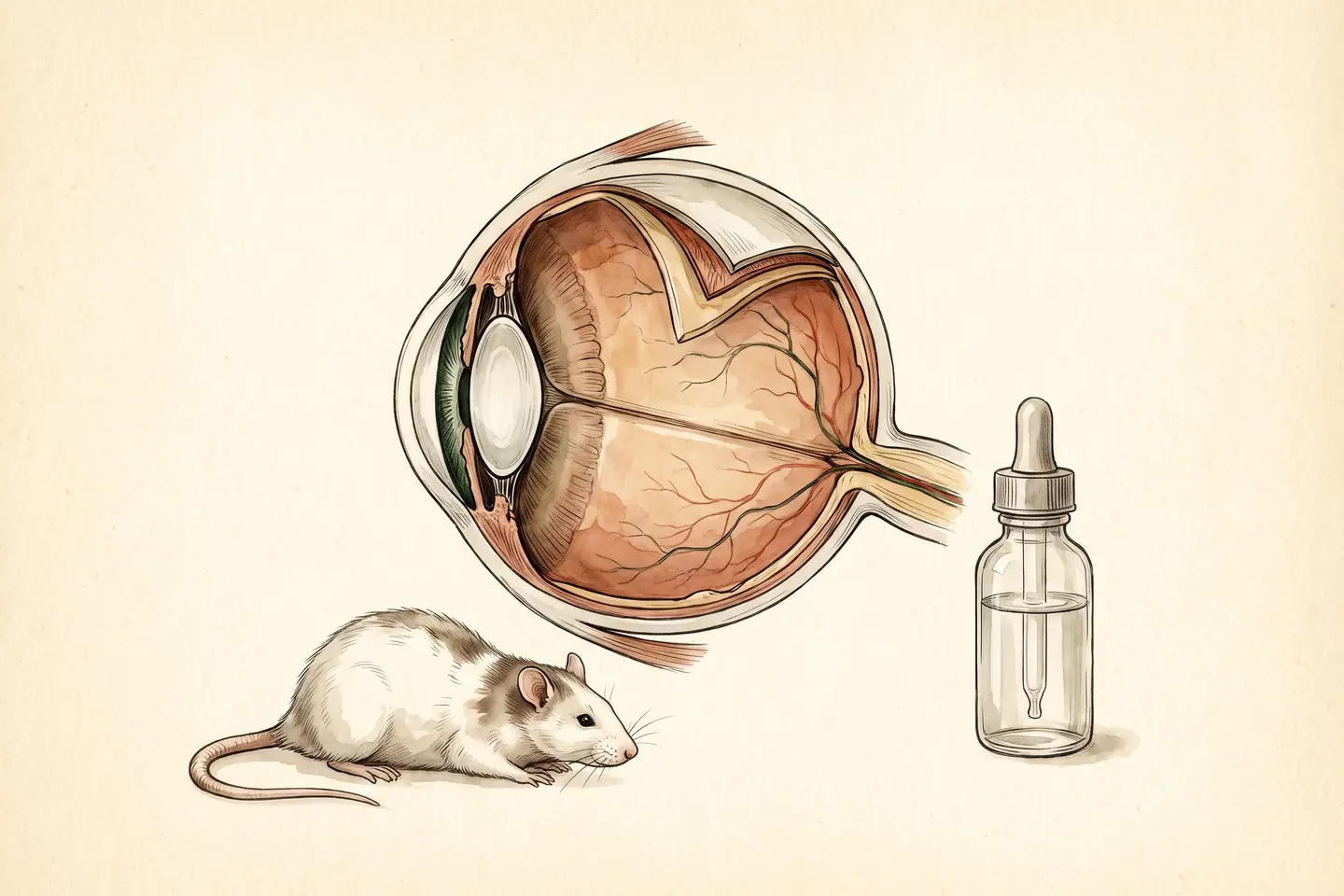
Thymosin Beta-4 sped rat wound healing; human trials were topical
Thymosin Beta-4 sped skin wound healing in rats, and its eye-drop and ulcer trials gave mixed results. No human trial has tested it for tendon injury.