Healing Category
P21
THE NEUROGENESIS BOOSTER
Neurotrophic Peptide P21; CNTF Analog
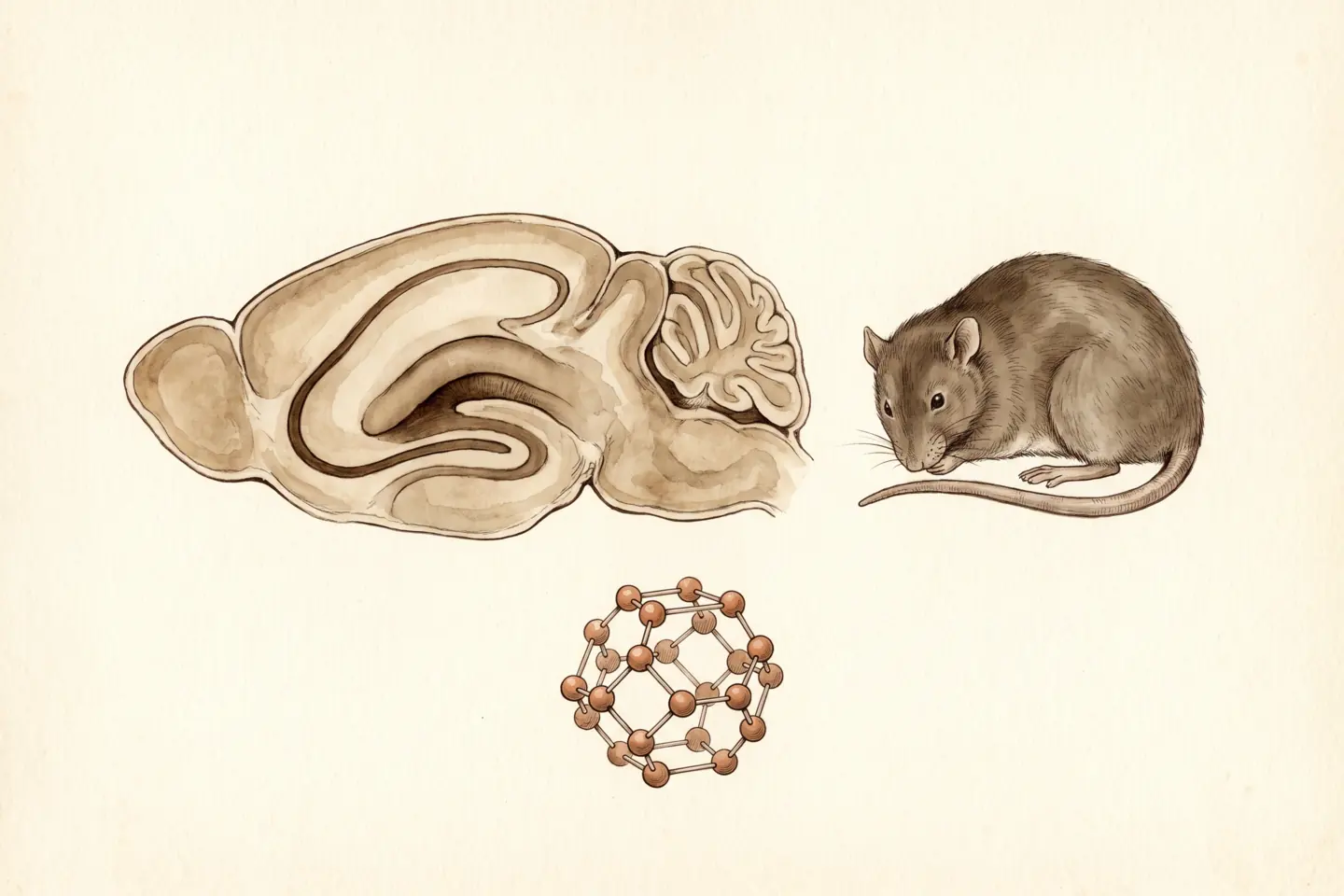
P21 is an engineered peptide based on ciliary neurotrophic factor (CNTF) that can cross the blood-brain barrier and promote neurogenesis - the growth of new brain cells. It boosts BDNF (brain-derived neurotrophic factor) and has shown promise for cognitive enhancement, Alzheimer's prevention, and stroke recovery. It's one of the most interesting peptides for brain health.
P21 Evidence Snapshot
How these guides are reviewed- Regulatory status
- Not FDA approved · research use only
- Dosing guidance
- Reviewed by our clinical team
- Linked evidence
- 7 research sources
- Content updated
- May 8, 2026
Dose and schedule recommendations shown below come from The Peptide App Clinical Team. Research links are provided so readers can inspect the supporting evidence directly. Review the sources.
Quick Answers About P21
Is P21 FDA approved?
No. This profile records P21 as not FDA approved and for research use only.
More context
Review the regulatory and source details on this page for the current context.
What dose does The Peptide App Clinical Team recommend for P21?
Dose: 10 mg daily (subcutaneous, intramuscular, or oral).
More context
Schedule: daily. Cycle: 8 weeks on, 8 weeks off. This is clinical-team guidance for reference and does not replace individualized instructions from a licensed clinician.
What research supports this P21 guide?
This guide links to 7 curated or current research sources.
More context
Open the research section to inspect the source titles, publication details, study types, and available abstracts directly.
Review the P21 research sourcesStudied Effects & Mechanisms
Neurogenesis
Promotes growth of new neurons in the hippocampus
BDNF Boost
Upregulates brain-derived neurotrophic factor
Anti-Amyloid
Reduces amyloid-beta and tau pathology
Synaptic Plasticity
Enhances NMDA receptor activity for learning
Clinical & Research Context
Those concerned about cognitive decline · People wanting to enhance memory and focus · Those with family history of Alzheimer's · Stroke recovery patients · Anyone interested in brain optimization
Research-Market Price Snapshot
A compact market signal for this profile. The dedicated pricing page owns vendor, vial-size, and price-per-mg comparisons.
Updated Jul 16, 2026
- Vendors
- 4
- Listings
- 5
- Observed range
- $62–$151
P21 Research
Live PubMed intelligence from the research crawler
Ultrasound-Assisted Radiopharmaceutical Investigation of GNL1-Mediated AKT-P53-P21 Axis Activation in Cervical Cancer Progression.
Cancer biotherapy & radiopharmaceuticals · Apr 9, 2026
BACKGROUND: Cervical cancer is a leading cause of cancer death in women worldwide, and the outcomes for advanced or recurrent disease remain poor. Ultrasound-assisted delivery could increase intratumoral uptake of radiopharmaceuticals, but prospective clinical evidence and risk data are limited. METHODS: In a single-center pilot (n = 30), patients with advanced cervical cancer underwent paired PET/CT sessions 60 min after identical intravenous radiopharmaceutical injections: control (no ultrasound) and ultrasound-assisted delivery using 1 MHz focused ultrasound (FUS) for 10 min with microbubble cavitation monitoring. Uptake (SUVmax) and tumor-to-background ratio (TBR) were compared within patient; response used RECIST 1.1, and adverse events (AEs) used CTCAE v5.0. Paired biopsies quantified GNL1, phospho-AKT, p53, and p21 (H-score). RESULTS: Ultrasound increased median index-lesion SUVmax by ∼28% (p < 0.001) with improved TBR. The objective response rate was 26.7% and the disease control rate was 76.7%. Median progression-free survival was 8.5 months (95% confidence interval, 6.2-11.8) and the 12-month overall survival was 75% (median not reached). Most AEs were Grades 1-2; 20% were Grade ≥3, with no treatment-related deaths. Post-ultrasound biopsies showed decreased GNL1 and phospho-AKT with increased p53 and p21, and Δp21 correlated with uptake gain. CONCLUSIONS: Nonablative FUS can safely enhance radiopharmaceutical uptake in cervical cancer and is associated with biomarker shifts consistent with p53/p21 pathway activation.
c-Myc inhibition and p21 modulation contribute to unsymmetrical bisacridines-induced apoptosis and senescence in pancreatic cancer cells.
Pharmacological reports : PR · Feb 1, 2025
BACKGROUND: Pancreatic cancer (PC) is one of the most aggressive cancers and is the seventh leading cause of cancer-related death worldwide. PC is characterized by rapid progression and resistance to conventional treatments. Mutations in KRAS, CDKN2A, TP53, SMAD4/DPC4, and MYC are major genetic alterations associated with poor treatment outcomes in patients with PC. Therefore, optimizing PC therapy is a tremendous challenge. Unsymmetrical bisacridines (UAs), synthesized by our group, are new promising compounds that have exhibited high cytotoxicity and antitumor activity against several solid tumors, including pancreatic cancer. METHODS: The cellular effects induced by UAs in PC cells were evaluated by MTT assay (cell growth inhibition), flow cytometry, and fluorescence and light microscopy (cell cycle distribution, apoptosis, and senescence detection). Analysis of the effects of UAs on the levels of proteins (c-Myc, p53, SMAD4, p21, and p16) was performed by Western blotting. RESULTS: Apoptosis was the main triggered mechanism of death after UAs treatment, and induction of the SMAD4 protein can facilitate this process. c-Myc, which is one of the molecular targets of UAs, can participate in the induction of cell death in a p53-independent manner. Moreover, UAs can also induce accelerated senescence through the upregulation of p21. Notably, senescent cells can die via apoptosis after prolonged exposure to UAs. CONCLUSIONS: UAs have emerged as potent anticancer agents that induce apoptosis by inhibiting c-Myc protein and triggering cellular senescence in a dose-dependent manner by increasing p21 levels. Thus, UAs exhibit desirable features as promising candidates for future pancreatic anticancer therapies.
Patients with disseminated metastatic disease from breast cancer are likely to have liver involvement in >50% of cases at some point during disease progression. These patients have a poor prognosis; and, when treated with the standard of care systemic therapy they have a median survival of <9-months. Increasing survival in breast cancer patients will likely require the administration of better therapies that are specifically targeted to treat distant metastases. One approach to increasing treatment efficacy for breast cancer liver metastases is through the application locoregional therapies. Locoregional therapies are an appealing interventional approach for breast cancer patients with liver metastases since these tumor lesions are accessible via minimally invasive procedures that can be administered using either ultrasound or CT imaging. Current locoregional therapies to treat breast cancer liver metastases are non-specific and have not produced significant increases in survival. The goal of this study was to design and test a targeted locoregional therapeutic intervention for breast cancer liver metastases. The lead candidate, a fixed-dose small-molecule drug called MBC-005, was tested in vitro and then the efficacy was evaluated in a BALB/c mouse liver metastases model. A novel formulation of N-allyl noroxymorphone hydrochloride incorporated into an alginate-based gel overcomes many of the limitations associated with the administration of small-molecule drugs, which include solubility, off-target toxicity, and enzymatic degradation. In vitro results demonstrated that MBC-005 mediated its anti-tumorigenic effect through a p21-dependent mechanism via a novel molecular pathway, in which N-allyl noroxymorphone component of MBC-005 stimulated the opioid growth factor receptor to increase p21 expression. Intratumoral administration of MBC-005 increased survival 3.9-fold in mice and significantly decreased tumor volume 4-fold. While many cytotoxic therapies increase p21 expression as a response to DNA damage, MBC-005 increased p21 expression independent cytotoxic DNA damage. MBC-005 did not induce off-target toxicity; and, as such, would be amenable to multiple rounds of administration. Nevertheless, it is notable that the positive effects of MBC-005 treatment on increasing survival and decreasing tumor volume in mice was achieved using a single dose.
AQB improves carboplatin sensitivity in endometrial cancer through dual DNA repair modulation: suppression of the p21-E2F1-RAD51 and ATF3-HDAC1-BRCA1 signaling.
Cell death & disease · Dec 6, 2025
Endometrial cancer (EC) is an increasingly common malignancy among women, and associated mortality rates continue to rise. Preferred treatment options for advanced or recurrent EC patients include a combination of carboplatin and paclitaxel, with modest clinical outcomes. Chemoresistance and drug toxicity are important factors that significantly affect the clinical efficacy of carboplatin. Therefore, there is an urgent need for therapeutic strategies that enhance carboplatin sensitivity, reduce its dose while maintaining efficacy, and ensure treatment safety. This study identified the novel small-molecule inhibitor AC1Q3QWB (AQB) as a potent enhancer of carboplatin efficacy. AQB disrupts the binding of HOTAIR to EZH2 and upregulates a series of tumor suppressor genes, such as CDKN1A, ATF3, and BBC3, thereby epigenetically suppressing the homologous recombination repair (HRR) pathway in EC, causing cell cycle arrest and inducing apoptosis. AQB inhibits carboplatin-induced RAD51 expression via the p21-E2F1 axis. Additionally, AQB epigenetically silences BRCA1 via ATF3-HDAC1 interactions at the BRCA1 promoter. In vivo studies using subcutaneous xenografts and a stage IV EC patient-derived xenograft (PDX) model demonstrated that AQB enhanced carboplatin's antitumor effects, reduced the required carboplatin dose, and alleviated associated toxicity. The combination of AQB with standard chemotherapy holds promise for improving outcomes in patients with advanced or recurrent EC. The schematic diagram illustrates the mechanism by which AQB enhances the sensitivity of EC cells to CBPt.
Camptothecin Triggers Apoptosis in Human and Mouse Drug-resistant Glioblastoma Cells via ROS-mediated Activation of the p53-p21-CD1/CDK2-E2F1-Bcl-xL Signaling Axis.
Anticancer research · Feb 1, 2025
BACKGROUND/AIM: Glioblastoma multiforme (GBM) is the most aggressive brain tumor. Temozolomide (TMZ) is the first-line treatment for GBM. However, most patients with GBM develop drug resistance. Our previous study showed the effects of camptothecin (CPT) and CRLX101, a nanoparticle of CPT, in suppressing GBM growth by targeting drug-sensitive glioblastoma cells. This study evaluated the effects of CPT on drug-resistant glioblastoma cells and explored the underlying molecular mechanisms. MATERIALS AND METHODS: Expression of type I topoisomerase (Topo-1) gene in GBM was analyzed using the UALCAN database. Human U87MG-R and mouse GL261-R TMZ-resistant glioblastoma cells were developed. After CPT treatment, apoptotic events were successively determined. The role of the p53-p21-cyclin D1 (CD1)/cyclin-dependent kinase 6 (CDK6)-E2F1-Bcl-xL signaling axis was subsequently investigated. RESULTS: The expression of Topo-1 gene was up-regulated in human GBM compared to normal human brains. Treatment of human U87MG-R cells with CPT decreased cell viability. Sequentially, exposure to CPT led to activation of caspase-3, fragmentation of chromosomal DNA, and cell apoptosis. Furthermore, intracellular reactive oxygen species (iROS) were augmented following CPT treatment. Suppression of iROS production concurrently alleviated CPT-triggered apoptotic insults. CPT enhanced the levels of p53, phosphorylated p53, and p21. In contrast, levels of CDK6, CD1, E2F1, and Bcl-xL were decreased by CPT. Attenuating p53 transactivation activity using pifithrin-α also mitigated the CPT-induced apoptosis. The effects of CPT on killing drug-resistant glioblastoma cells were further confirmed in mouse GL261-R cells. CONCLUSION: CPT could effectively induce apoptosis in drug-resistant glioblastoma cells via iROS-mediated activation of the p53-p21-CD1/CDK6-E2F1-Bcl-xL axis.
Targeting p21-Positive Senescent Chondrocytes via IL-6R/JAK2 Inhibition to Alleviate Osteoarthritis.
Advanced science (Weinheim, Baden-Wurttemberg, Germany) · Mar 1, 2025
Osteoarthritis (OA) is an age-related degenerative joint disease, prominently influenced by the pro-inflammatory cytokine interleukin-6 (IL-6). Although elevated IL-6 levels in joint fluid are well-documented, the uneven cartilage degeneration observed in knee OA patients suggests additional underlying mechanisms. This study investigates the role of interleukin-6 receptor (IL-6R) in mediating IL-6 signaling and its contribution to OA progression. Here, significantly elevated IL-6R expression is identified in degenerated cartilage of OA patients. Further, in vivo experiments reveal that intra-articular injection of recombinant IL-6R protein or activation of gp130 (Y757F mutation) accelerates OA progression. Conversely, knockout of IL-6R or JAK2, as well as treatment with a JAK inhibitor, alleviates OA symptoms. Mechanistically, chondrocytes derived from degenerative cartilage exhibit impaired nuclear localization of SOX9, a key regulator of cartilage homeostasis. JAK inhibition stabilizes SIRT1, reduces SOX9 acetylation, and thereby facilitates SOX9 nuclear localization, promoting cartilage repair. Additionally, the JAK inhibitor-induced apoptosis in p21-positive senescent cells, and their targeted clearance successfully alleviates OA in p21-3MR mice. In conclusion, these findings reveal a novel mechanism by which inhibiting the IL-6R/JAK2 pathway can alleviate OA. Furthermore, this study proposes targeting p21-positive senescent cells as a new therapeutic strategy for OA.
Research references
Related Peptides
Cerluten
THE NEURAL REJUVENATORAHighNeurological Support · Cognitive EnhancementCognitive · Neurological SupportDoseSee guide↻Cycle4 weeks on, 12 weeks off◷Kicks inCognitive improvements develop over the full...Restore youthful brain function at the genetic level
Full profileNº 002 / 006Epitalon
THE LONGEVITY FACTORAHighNeurological Support · Sleep RegulationHealing · Neurological SupportDose1 mg↻Cycle10-30 days on, 4-6 months off◷Kicks inSleep improvements within days; telomere...Supports cellular longevity and circadian rhythm for optimal sleep-based brain repair.
from $1.40/mg · 78 vendorsNº 003 / 006GHK-Cu
THE RESTORERAHighAccelerated Healing · Neurological SupportHealing · Accelerated HealingDose500 mcg↻CycleVariable - topical ongoing, injectable cycled◷Kicks inSkin improvements within 2-4 weeks; hair...Turn back the clock on your skin, hair, and body.
from $0.04/mg · 120 vendorsNº 004 / 006Pinealon
THE DREAMWEAVERAHighNeurological Support · Sleep RegulationCognitive · Neurological SupportDose1 mg↻Cycle4 weeks on, 8 weeks off◷Kicks inSleep improvements often noticed within the...Sleep like you mean it and wake up mentally sharp.
from $0.90/mg · 45 vendorsNº 005 / 006SS-31
THE MITOCHONDRIAL OPTIMIZERBGoodCardiovascular Support · Neurological SupportHealing · Cardiovascular SupportDose5 mg↻Cycle6 weeks on, 8 weeks off◷Kicks inEnergy improvements may be noticed within...Directly target and repair your mitochondria
from $1.60/mg · 53 vendorsNº 006 / 006Cerebrolysin
THE BRAIN REBUILDERBGoodNeurological Support · Cognitive EnhancementHealing · Neurological SupportDoseSee guide↻Cycle10-21 days on, then 3-6 month break◷Kicks inCognitive improvements often noticed within...Brain-derived growth factors for cognitive repair and protection
from $0.17/mg · 6 vendorsNº 001 / 006