Metabolic Category
Humanin
THE CELLULAR GUARDIAN
Mitochondrial-Derived Peptide (MDP)
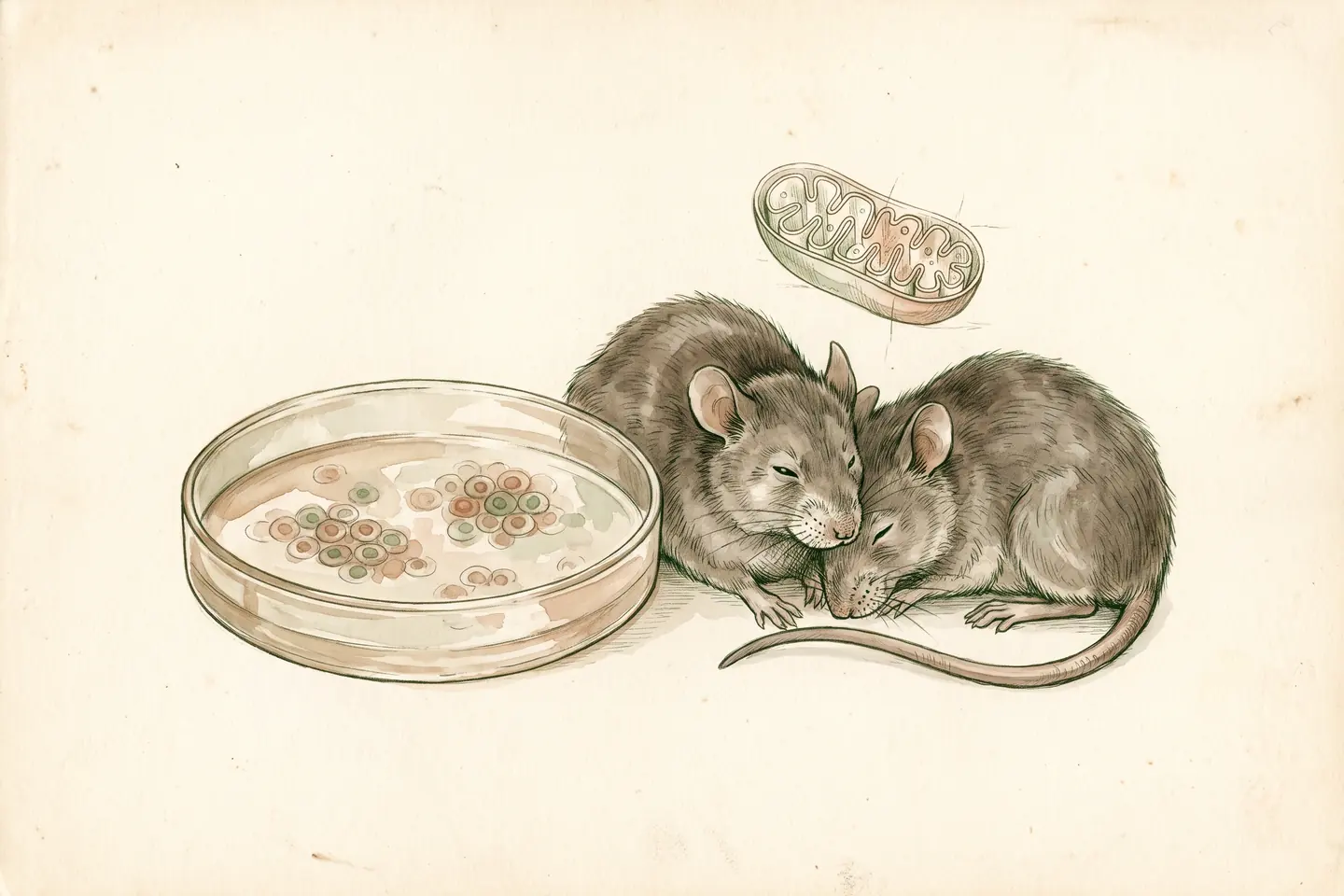
Humanin is a tiny peptide encoded in your mitochondrial DNA that protects cells from death. It was discovered in Alzheimer's research and found to protect neurons, heart cells, and other tissues from damage. Your humanin levels drop by about 30% by age 40, making supplementation attractive for anti-aging.
Key Benefits & Mechanisms
Anti-Apoptotic
Blocks pro-death proteins to prevent cell death
Neuroprotection
Protects neurons from Alzheimer's-related damage
Mitochondrial Support
Improves mitochondrial function and reduces oxidative stress
Who Is This For
Longevity-focused individuals · Those concerned about Alzheimer's · People wanting cardiovascular protection · Anyone seeking metabolic health · Anti-aging enthusiasts
Humanin Research Use Only Market Pricing
View all Humanin price observationsUpdated Jun 12, 2026
Vendors
4
Listings
7
Low Price
$70
High Price
$169
Common Vial Sizes
Humanin Research
Live PubMed intelligence from the research crawler
Redox-sensitive miRNAs and Humanin could mediate effects of exercise and astaxanthin on oxidative stress and inflammation in type 2 diabetes.
Scientific reports · Nov 17, 2025
Type 2 diabetes mellitus (T2DM) is driven by oxidative stress (OS) and inflammation (IF), accelerating disease progression. This study examined whether combined aerobic and resistance training (CT) and astaxanthin (AST) supplementation synergistically improve oxidant and inflammatory status as well as metabolic indices in T2DM, focusing on the mediatory role of Humanin (HN) and microRNAs (miRNA-122, miRNA-126-3p, and miRNA-146a). Ninety women with T2DM were randomly assigned to six groups (n = 15 each): control (C), placebo (P), AST supplementation (S), combined training (CT), CT + placebo (CT + P), and CT + AST supplementation (CT + S). CT, CT + P and CT + S groups underwent an 8-week training program (eight exercises, three sessions per week). Groups and CT + S groups received 8 mg/day of AST. OS markers, inflammatory cytokines, HN levels, miRNAs expression, fasting blood glucose (FBG), insulin resistance (HOMA-IR), lipid profile, and hemoglobin A1c (HbA1c) were assessed. Both CT and AST enhanced antioxidant defenses and reduced IF, with CT + S showing the best effects. HN levels increased significantly in CT and CT + S (p < 0.05). MiRNA-126-3p and miRNA-146a were upregulated, while miRNA-122 was downregulated in CT + S compared to other groups. Lipid profile improved with both interventions, with CT + S yielding the highest increases in HDL and triglycerides. FBG, IR, and HbA1c improved significantly in CT groups but remained unchanged with S group. The metabolic and anti-inflammatory benefits of CT and AST in T2DM may mediated by the effects of HN on mitochondrial function and insulin signaling, together with miRNA-mediated regulation of lipid metabolism, endothelial health, and innate immunity. Targeting these molecular pathways may improve therapeutic strategies for diabetes management.
Exploring the therapeutic potential of MOTS-c in age-related macular degeneration: from cellular responses to patient-derived cybrids.
Human cell · Feb 17, 2025
Age-related macular degeneration (AMD), the leading cause of irreversible vision loss in the US, is on the rise among the elderly. Uncontrolled mitochondria-derived peptide production from mtDNA disruption and 16S or 12S rRNA damage could worsen AMD. Our previous work has shown that Humanin G possesses cytoprotective effects in retinal pigment epithelial (RPE) cells. However, MOTS-c, a highly efficient mitochondrial peptide, has yet to be evaluated on retinal cell survival. In this study, we show that there are differences in effects between wild-type (wt-) and differentiated ARPE19 cells (diff-ARPE19), implying that the cellular differentiation status may influence how cells respond to MOTS-c. MOTS-c has dose-dependent effects on apoptosis, inflammation, and mitochondrial biogenesis in diff-ARPE19 cells. Lower doses (500 nM) have more significant impacts than 5 µM concentrations. In diff-ARPE19 cells, a lower dose of MOTS-c can reduce the negative impact of hypoxia on cellular survival and gene expression, including apoptosis (CASP3, CASP9), mitochondrial biogenesis (TFAM, PGC-1α), and metabolic sensor (AMPK). However, it had no significant effect on ROS levels or NRF1 expression, regardless of MOTS-c dose. Exposing diff-ARPE19 cells to varied MOTS-c dosages before and after therapy in a chemically induced hypoxic environment yields no extra benefits as compared to MOTS-c treatment alone. MOTS-c had different effects on the expression of genes linked with apoptosis, mitochondrial biogenesis, and antioxidant activity in AMD patients versus age-matched control cybrids. The MOTS-c peptide appears to enhance cellular metabolism and regulate gene expression, which could potentially provide therapeutic benefits in AMD.
Humanin activates integrin αV-TGFβ axis and leads to glioblastoma progression.
Cell death & disease · Jun 28, 2024
The role of mitochondria peptides in the spreading of glioblastoma remains poorly understood. In this study, we investigated the mechanism underlying intracranial glioblastoma progression. Our findings demonstrate that the mitochondria-derived peptide, humanin, plays a significant role in enhancing glioblastoma progression through the intratumoral activation of the integrin alpha V (ITGAV)-TGF beta (TGFβ) signaling axis. In glioblastoma tissues, humanin showed a significant upregulation in the tumor area compared to the corresponding normal region. Utilizing multiple in vitro pharmacological and genetic approaches, we observed that humanin activates the ITGAV pathway, leading to cellular attachment and filopodia formation. This process aids the subsequent migration and invasion of attached glioblastoma cells through intracellular TGFβR signaling activation. In addition, our in vivo orthotopic glioblastoma model provides further support for the pro-tumoral function of humanin. We observed a correlation between poor survival and aggressive invasiveness in the humanin-treated group, with noticeable tumor protrusions and induced angiogenesis compared to the control. Intriguingly, the in vivo effect of humanin on glioblastoma was significantly reduced by the treatment of TGFBR1 inhibitor. To strengthen these findings, public database analysis revealed a significant association between genes in the ITGAV-TGFβR axis and poor prognosis in glioblastoma patients. These results collectively highlight humanin as a pro-tumoral factor, making it a promising biological target for treating glioblastoma.
Impact of Radiation Therapy on Serum Humanin and MOTS-c Levels in Patients with Lung or Breast Cancer.
Current radiopharmaceuticals · Jan 1, 2024
BACKGROUND: Lung and breast cancer are the most frequent causes of death from cancer globally. The objectives of this research were to evaluate the serum mitochondrial open reading frame of the 12S rRNA-c (MOTS-c) and humanin levels in lung or breast cancer patients, and investigate the impacts of radiation therapy on the circulating levels of these peptides. METHODS: 35 lung cancer patients, 34 breast cancer patients, and healthy volunteers as a control group were recruited in this prospective observatory research. Lung cancer patients with stage IIIA/IIIB were treated with paclitaxel-based chemotherapy plus radiotherapy (2 Gy per day, 30 times, 60 Gy total dose). Breast cancer stage IIA/IIB patients were treated with postoperative locoregional radiation therapy (2 Gy per day, 25 times, 50 Gy total dose). The ELISA method was used to detect serum humanin and MOTS-c levels during, before, and after radiotherapy. RESULTS: We observed marked elevations in circulating MOTS-c, but not humanin levels in patients with lung cancer (P < 0.001). Radiation therapy led to a marked augmentation in MOTS-c levels in these patients (P < 0.001). On the other hand, there was a marked decline in humanin, but not MOTS-c, levels in breast cancer patients (P < 0.001). CONCLUSION: Our research has shown, for the first time, that increased MOTS-c and decreased humanin levels play a role in lung cancer and breast cancer, respectively. Additionally, radiotherapy modifies MOTS-c levels in patients with lung, but not breast cancer.
Circulating humanin is lower in coronary artery disease and is a prognostic biomarker for major cardiac events in humans.
Biochimica et biophysica acta. General subjects · Jan 1, 2022
BACKGROUND: Humanin is an endogenous mitochondria-derived peptide that plays critical roles in oxidative stress, inflammation and CAD. In this study, we measured the levels of circulating humanin, markers of oxidative stress and inflammation in patients with unstable angina and MI and studied the relationship between these parameters and major adverse cardiac events (MACE). METHODS: A total of 327 subjects were recruited from the inpatient department at First Hospital of Jilin University and divided into 3 groups [control, angina and myocardial infarction (MI)] based on the clinical data and the results of the angiography. Serum humanin and thiobarbituric acid reactive substances (TBARS) were measured at the time of initial admission. The hospitalization data and MACE of all patients were collected. RESULTS: Circulating humanin levels were lower in the angina group compared to controls [124.22 ± 63.02 vs. 157.77 ± 99.93 pg/ml, p < 0.05] and even lower in MI patients [67.17 ± 24.35 pg/ml, p < 0.05 vs controls] and oxidative stress marker were higher in MI patients compared to the control and angina groups [12.94 ± 4.55 vs. 8.26 ± 1.66 vs. 9.06 ± 2.47 umol/ml, p < 0.05]. Lower circulating humanin levels was an independent risk factor of MI patients. Circulating humanin levels could be used to predict MACE in angina group. CONCLUSIONS: Lower circulating humanin levels was an independent risk factor for CAD, and a potential prognostic marker for mild CAD. GENERAL SIGNIFICANCE: Humanin may become a new index for the diagnosis and treatment of CAD.
The neuroprotective role of Humanin in Alzheimer's disease: The molecular effects.
European journal of pharmacology · Jul 5, 2025
Humanin (HN) is an endogenous micropeptide also known as a mitochondria-derived peptide. It has a neuroprotective effect against Alzheimer's disease (AD) and other neurodegenerative diseases by improving hippocampal acetylcholine and attenuating the development of oxidative stress and associated neurotoxicity. HN protects the neuron from the toxic effects of amyloid beta (Aβ). HN is regarded as a biomarker of mitochondrial stress. Interestingly, aging reduces brain expression of HN, leading to cognitive impairment and elevating the risk of neurodegeneration, including AD. However, in old subjects and AD patients, circulating HN levels increase as a compensatory mechanism to reduce neurodegeneration and mitochondrial dysfunction in AD. Conversely, other studies demonstrated a reduction in circulating HN levels in AD. These findings indicated controversial points regarding the precise mechanistic role of HN in AD. Therefore, the aim of this review was to discuss the exact role of HN in AD neuropathology and also to discuss the molecular mechanisms of HN in AD.
Research references
Related Peptides
SS-31
THE MITOCHONDRIAL OPTIMIZERBGoodCardiovascular Support · Neurological SupportHealing · Cardiovascular SupportDose5 mg↻Cycle6 weeks on, 8 weeks off◷Kicks inEnergy improvements may be noticed within...Directly target and repair your mitochondria
from $35 · 53 vendorsNº 006 / 006AICAR
THE EXERCISE MIMETICCModerateMetabolic Modulator · Weight ManagementMetabolic · Metabolic ModulatorDoseSee guide↻Cycle4-6 weeks on, 2-4 weeks off◷Kicks inMetabolic improvements can be measured...Exercise in a molecule - activate your metabolism without the gym
from $36 · 6 vendorsNº 001 / 006L-Carnitine
THE FAT TRANSPORTERAHighMetabolic Modulator · Mitochondrial SupportMetabolic · Metabolic ModulatorDoseSee guide↻CycleOngoing or as needed◷Kicks inEnergy improvements often noticed within 1-2...Fat-burning amino acid for energy and mitochondrial health
from $36 · 7 vendorsNº 003 / 006Epitalon
THE LONGEVITY FACTORAHighNeurological Support · Sleep RegulationHealing · Neurological SupportDose1 mg↻Cycle10-30 days on, 4-6 months off◷Kicks inSleep improvements within days; telomere...Supports cellular longevity and circadian rhythm for optimal sleep-based brain repair.
from $23 · 77 vendorsNº 002 / 006MOTS-c
THE METABOLIC MESSENGERBGoodMetabolic Modulator · Mitochondrial SupportMetabolic · Metabolic ModulatorDose5 mg↻Cycle8-12 weeks on, 4 weeks off◷Kicks inMetabolic improvements may be measurable...Exercise in a peptide - boost metabolism without the treadmill
from $23 · 109 vendorsNº 004 / 006NAD+
THE ENERGIZERBGoodMetabolic Modulator · Mitochondrial SupportHealing · Metabolic ModulatorDose50 mg↻Cycle8 weeks on, 8 weeks off (for injections)◷Kicks inEnergy improvements often noticed within the...Get back the energy and mental clarity you had at 25.
from $25 · 60 vendorsNº 005 / 006