
Peptide light damage depends on sequence and sustained exposure
Light damage concentrates in peptides with tryptophan, tyrosine, phenylalanine, cysteine, or methionine. In one protein study, damage came from weeks of light.

By Jay Spall, chemist and biochemist
Disclosure: Jay is a co-founder of The Peptide App. This article is educational and includes links to the app’s tools. Research on one compound or formulation does not establish the safety or stability of a different product.
On this page
- Which amino acids make a peptide sensitive to light?
- Why does a peptide without those residues resist light?
- How long did light take to damage a therapeutic protein?
- What does the rhVEGF light study prove about peptides?
- Does drawing a dose under room light damage a peptide?
- How should peptides be stored to avoid light damage?
- Does a cloudy or clear vial show light damage?
- Does travel expose peptides to enough light to matter?
- Is there a safe number of minutes under light for a peptide?
- Sources
Key facts
| Question | Direct answer |
|---|---|
| Does "keep away from light" do anything real for peptides? | Yes, but not equally for every peptide. The chemistry is real, and the risk concentrates in sequences containing tryptophan, tyrosine, phenylalanine, cysteine, or methionine, the residues whose side chains absorb light or feed reactive oxygen species. |
| Does the minute spent drawing a dose under kitchen light matter? | Not by the documented evidence. The damage measured in a light-exposure study of a therapeutic protein came from continuous fluorescent light over one to four weeks, not brief handling [3]. |
| Does a cloudy vial mean light damaged it? | Not necessarily. Turbidity usually signals aggregation, precipitation, or microbial growth, which are distinct from photo-oxidation, and photochemical damage can lower biological activity without making the solution look different [3]. |
| Can I tell from the vial whether my peptide is light-sensitive? | No. That information lives in the amino acid sequence, not in the packaging or the liquid's appearance. |
| Is dark storage worth it if I don't know my peptide's sequence? | Yes. Dark storage costs nothing and covers the vulnerable sequences, so it is a reasonable default without doing the residue analysis yourself. |
| Do a few hours in a travel bag damage a peptide? | No cited study measured travel-length exposure. The documented oxidation came from cumulative, weeks-long exposure [3], and a short transit under indirect light is a different order of magnitude. |
3 sources cited. View sources
Which amino acids make a peptide sensitive to light?
Tryptophan, tyrosine, phenylalanine, cysteine, and methionine make a peptide sensitive to light. Their aromatic rings (tryptophan, tyrosine, phenylalanine) and sulfur-containing side chains (cysteine, methionine) have electron structures that interact with UV-range light.
Light damages peptides in two main ways: direct absorption of light energy by certain side chains, and reactive oxygen species generated when a light-absorbing molecule passes that energy on to oxygen. A peptide built without the sensitive residues has, mechanistically, far less for light to act on. The residue logic is textbook photochemistry, not the finding of a single trial.
The sequence holds the answer, so neither the packaging nor the liquid's appearance reveals whether a peptide is light-sensitive. The oxidation chemistry itself is covered in how peptides degrade.
Why does a peptide without those residues resist light?
A peptide without an absorbing residue resists light because it lacks the chemical antenna, a chromophore, that light needs in order to act. That protection comes from chemistry, not luck.
Light interacts with molecules in a tunable, wavelength-dependent way, precise enough that researchers exploit it deliberately. Caged prodrugs and light-responsive delivery vehicles are built to control when a drug becomes active [1], and light-induced membrane disruption has been used to help protein-based therapeutics escape into cells [2]. Both applications work only because light's effect depends on a chromophore being present to absorb it.
How long did light take to damage a therapeutic protein?
In a single controlled study, two weeks of fluorescent light oxidized recombinant human VEGF without measurably changing its receptor binding, and four weeks cut receptor binding to 73% of baseline [3].
Researchers exposed a liquid formulation of recombinant human VEGF (rhVEGF) to fluorescent light at 2×10^4 lux for up to four weeks and tracked oxidation using tryptic digest and HPLC [3]. After two weeks, oxidation across the protein's six methionine residues ranged from 8% to 40%, distributed unevenly, with some methionines oxidizing far more readily than others. That two-week exposure did not measurably change receptor-binding activity [3].
By four weeks, oxidation at two of the methionines had increased further, and receptor binding capacity dropped to 73% of baseline [3].
What does the rhVEGF light study prove about peptides?
The rhVEGF study shows that photo-oxidation is real, residue-specific, dose- and time-dependent, and able to measurably affect biological function, but it sets no timeline for peptides. It is one study on one protein, at one light intensity, over defined timeframes, using chemical oxidants as a comparator.
The study establishes no universal thresholds for peptides in general. The evidence does not support extrapolating its exact percentages to a shorter peptide with a different residue profile.
Does drawing a dose under room light damage a peptide?
Mixing powder with diluent and drawing a dose exposes a peptide solution to ambient light for at most a few minutes. Nothing in the evidence makes that window comparable to the weeks-long fluorescent exposure that produced measurable oxidation [3].
A few minutes under room light is not the exposure the warning label is written for, and the data do not call for rushing the process out of light anxiety.
How should peptides be stored to avoid light damage?
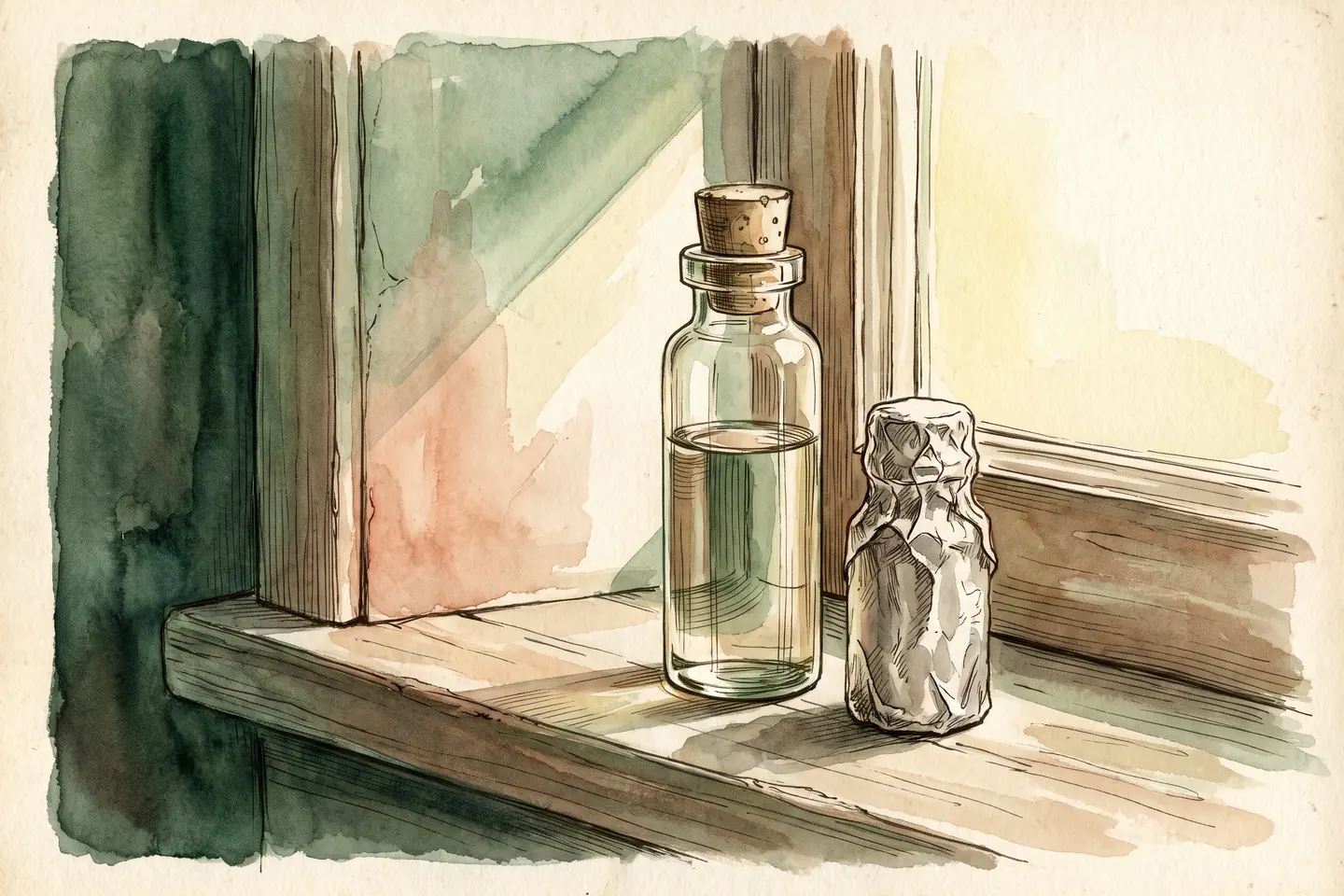
Store peptides in an opaque container or a foil wrap, which removes the variable entirely. The light exposure that matters is cumulative and sustained: a sunlit windowsill, an unshielded fluorescent-lit shelf, or days spent with a clear vial pressed against a bag lining that does not block light.
Dark storage costs nothing and covers the vulnerable sequences. Checking a specific peptide's residue composition is more effort than most people will do, so wrapping the vial is a reasonable default regardless of sequence.
Does a cloudy or clear vial show light damage?
Neither appearance shows light damage: cloudiness is a separate phenomenon from photo-oxidation, and a peptide can be meaningfully oxidized by light while looking completely clear [3].
Cloudiness typically reflects physical aggregation, precipitation, contamination, or microbial growth, not the residue-level chemical change light causes. Light oxidation happens at specific side chains rather than as a shift in solution turbidity [3]. Clear is not proof of intact. The causes of haze are sorted out in what cloudiness in an injectable vial means.
Does travel expose peptides to enough light to matter?
Brief transit through indirect light, such as a security line or a cooler bag, is not the scenario the documented damage models [3]. No cited study has quantified travel-length light exposure specifically.
Multi-day exposure to direct sunlight through a car window or an outer bag pocket sits much closer to the sustained-exposure conditions that produced measurable oxidation. A full travel storage plan is in how to travel with peptides.
Is there a safe number of minutes under light for a peptide?
No measured "safe minutes under light" figure exists for any peptide; the strongest cited evidence comes from one protein studied at one light intensity [3]. Anyone offering a precise figure is extrapolating past the evidence, not reporting a measured result.
- Short peptides versus folded proteins. No cited study establishes how a short peptide with only one or two sensitive residues behaves compared with a larger folded protein with six methionines spread across its structure.
- Intensity and wavelength. No cited study establishes how changing light intensity or wavelength shifts the damage timeline.
- Indoor light versus sunlight. No cited study compares ordinary indoor light with direct sunlight in controlled photostability terms for peptide drugs specifically.
Sources
Last updated

Written by
Chemist and biochemist. Co-founder and author, The Peptide App.
Jay is a chemist, biochemist and entrepreneur whose work connects scientific research with consumer health products. He has held Chief Science Officer and product development leadership roles and previously served as Chief Revenue Officer at Minicircle.
Keep reading
Storage and handling
Peptide degradation depends on water, time and sequence, not just heat
Peptides degrade mainly through deamidation and oxidation, water-dependent reactions set by sequence. Time in solution and pH matter alongside temperature.
Storage and handling
Vial cloudiness has at least four causes; two are quality failures
Vial cloudiness can mean air, undissolved solid, aggregation, or contamination, and only some warrant discarding. Clarity proves neither sterility nor potency.
Storage and handling
Gentle swirling dissolves peptide powder; shaking whips in air
Shaking makes large proteins unfold and clump at the air-water surface. Lab tests skipped short peptides, which have little folded structure to lose.
Profiles and tools

The Peptide App
Track protocols, doses, and reconstitution in one place.
Save your calculations, set reminders, log doses, and keep outcome notes — free to start.
 or scan the QR code →