What is BPC-157?
BPC-157 (Body Protection Compound-157) is a synthetic peptide of 15 amino acids based on a sequence identified in human gastric juice. It is studied in preclinical research for tissue repair and is sold only as a research chemical, not as an approved medicine.
What does BPC-157 do?
In animal (preclinical) studies, BPC-157 has been investigated for effects on tendon, ligament, muscle, and gut-lining healing and on the formation of new blood vessels (angiogenesis). Its effects in humans have not been established by controlled clinical trials.
Is BPC-157 FDA approved?
No. The U.S. Food and Drug Administration has not approved BPC-157 for any medical use. In 2023, FDA identified BPC-157 as a bulk drug substance with potential safety risks. The Pharmacy Compounding Advisory Committee (PCAC) recommended BPC-157 for the 503A bulks list in July 2026, but a recommendation is not a final rule.
Is BPC-157 compoundable?
As of this writing, BPC-157 is not on the FDA Section 503A bulk drug substances list. PCAC voted in July 2026 to recommend its inclusion, but a committee recommendation is not a final rule. FDA must complete notice-and-comment rulemaking before BPC-157 can be listed. Until then, it is not a 503A-eligible bulk.
See the research peptide vs compounding pharmacy guide→Is BPC-157 legal?
BPC-157 is not a controlled substance in the United States, but it is not an approved drug or dietary supplement either. It is typically sold labeled "for research use only," and its regulatory status varies by country.
Is BPC-157 banned in sport?
Yes. The World Anti-Doping Agency (WADA) lists BPC-157 as a prohibited substance under category S0 (non-approved substances), meaning it is banned at all times for athletes subject to anti-doping testing.
What is BPC-157 often compared to?
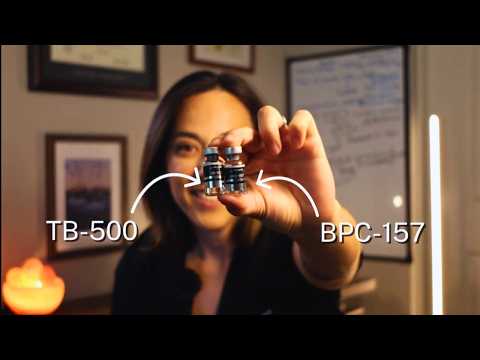
BPC-157 is frequently discussed alongside TB-500, another peptide studied for recovery in preclinical research. The two are sometimes referenced together, but they are distinct compounds with different sequences and study histories.
See the BPC-157 vs TB-500 comparison→Where can you find BPC-157 vendor prices?
The Peptide App tracks observed BPC-157 vendor listings by vial size, total price, and price per milligram. Prices reflect what vendors publish and change frequently.
Compare BPC-157 prices→What are the side effects of BPC-157?
We don't list specific side effects for BPC-157.
Is BPC-157 safe?
BPC-157 has an editorial safety grade of A (Excellent Safety). BPC-157 has been tested extensively in animals and is considered very safe. No lethal dose (LD50) has ever been established, even at amounts far beyond what anyone would use. Safety depends on dose, sourcing, health history and medical supervision, so this page does not call it safe for personal use.
Is BPC 157 legal?
The facts do not describe BPC 157's legal status in any specific country. A review states that BPC-157 has no approved formulation, no validated dosing regimen, and no completed Phase II clinical trial. The same review describes BPC-157 as an unapproved peptide sold on the unregulated (illicit) market, and says it lacks an established human safety profile.
What is needed before BPC 157 could be considered for clinical use?
According to a review, independent blinded replication, dose-response and therapeutic-window studies, pharmacokinetic/pharmacodynamic characterization, rigorous toxicology, and ultimately controlled human studies would be required before clinical translation of BPC 157 could be considered. The same review concludes that BPC 157 is supported as a hypothesis-generating investigational candidate for further preclinical ischemia-reperfusion injury research rather than as an established therapy.
How does BPC 157 work?
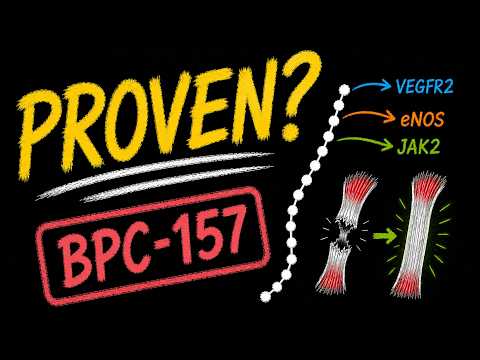
In animal studies, BPC 157 was reported to support new blood vessel formation (angiogenesis), collagen production (collagen synthesis), fibroblast activity, and modulation of nitric oxide pathways. These effects were described as contributing to enhanced healing of muscle, tendon, ligament, bone, and gastrointestinal tissue in those animal studies. In a laboratory study using human arterial tissue, BPC 157 induced concentration-dependent vasorelaxation, predominantly mediated via an endothelium-dependent nitric oxide pathway.
Does BPC 157 work in people?
A review of human clinical studies of the reviewed peptides, including BPC-157, found that such studies were limited to a handful of investigations, most lacking robust controls or rigorous study designs. The same review stated that the claimed benefits of emerging peptide supplements, including BPC-157, for musculoskeletal recovery and performance remain unsubstantiated by current human trials.
How did nitric oxide pathways affect BPC 157's effects on human arterial tissue in lab studies?
In in vitro studies using human arteries, endothelial integrity markedly enhanced the maximal vasorelaxation produced by BPC 157. This advantage was largely abolished after NOS inhibition. In human internal mammary artery rings studied in vitro, the NOS inhibitor L-NAME increased contractile responsiveness in intact rings. L-NAME also attenuated BPC 157-induced relaxation in these intact human arterial rings.
What is BPC 157?
BPC-157, also called Bpc-157, is a synthetic pentadecapeptide derived from gastric proteins. It has shown notable reparative and anti-inflammatory properties across diverse preclinical models. A separate study describes it as a gastric pentadecapeptide and investigated its inhibitory potential alongside two newly designed hybrid analogs, CIARA-1 and CIARA-2.
Is there a validated pharmaceutical-grade formulation of BPC 157?
A review states that BPC-157 has no approved formulation, no validated dosing regimen, and no completed Phase II clinical trial. The same review states that no pharmaceutical-grade formulation of BPC-157 has been developed or validated. The review also notes that the peptide lacks BCS classification data, permeability characterization, and formal excipient compatibility studies.
What does BPC 157 do in animal studies?
In preclinical animal studies, BPC 157 was reported to support angiogenesis, collagen synthesis, fibroblast activity, and modulation of nitric oxide pathways. These effects were described as contributing to enhanced healing of muscle, tendon, ligament, bone, and gastrointestinal tissue in those studies. In animal studies, BPC 157 was proposed to protect skeletal muscle against ischemia-reperfusion injury by attenuating oxidative stress, modulating apoptosis, reducing inflammation, and supporting angiogenic activity.
Is BPC 157 safe for people?
A review states that independent blinded replication, dose-response and therapeutic-window studies, pharmacokinetic/pharmacodynamic characterization, rigorous toxicology, and ultimately controlled human studies would be required before clinical translation of BPC 157 could be considered. The same review describes BPC-157 as an unapproved peptide sold on the unregulated (illicit) market, and states that it lacks an established human safety profile.
Can BPC 157 be detected in dried blood spots, serum or plasma?
In the study, a streamlined analytical workflow was developed to detect 54 prohibited peptidic and non-peptidic compounds in dried blood spots, serum and plasma, and BPC-157 was among the compounds detected by this workflow. Sample preparation for this workflow used a single microextraction step with 500 µL of a methanol/water (8:2, v/v) mixture, followed by detection using liquid chromatography coupled with high-resolution mass spectrometry.
What did studies find about BPC 157 in gentamicin-treated rats?
In a rat gentamicin nephrotoxicity model, BPC 157 was applied at 10 µg/kg or 10 ng/kg, either in drinking water or daily intraperitoneally. In these rats, BPC 157 counteracted the gentamicin-increased malondialdehyde (MDA) levels in kidney tissue. BPC 157 also counteracted the gentamicin-decreased nitric oxide (NO) and superoxide dismutase (SOD) levels in kidney tissue of these rats.
Has BPC 157 been characterized as an acetylcholinesterase inhibitor?
Yes, in an in vitro study, BPC-157 was described as a reversible competitive acetylcholinesterase (AChE) inhibitor. The study also reported that BPC-157's hybrid analogs act the same way, with enhanced activity seen in structurally modified derivatives. Enzyme kinetics of BPC-157 and its analogs were evaluated in this in vitro work using a modified Ellman assay with Lineweaver-Burk analysis to determine the inhibition parameters.