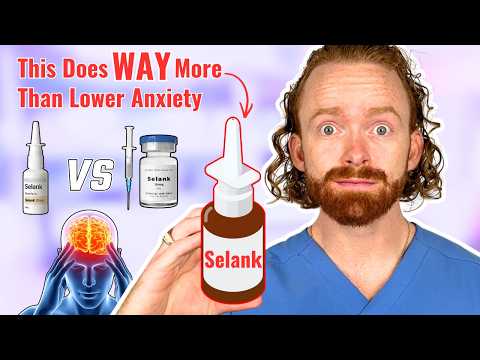
The Peptide AppThe Peptide App

The Peptide AppField Guide · Cognitive SeriesField Specimen

Cognitive Category

Selank

THE ANXIETY REDUCER

TP-7; N-acetyl Selank Amidate

Selank is an anxiety-reducing peptide that modulates GABA and the brain's immune signaling to calm the mind without sedation, while supporting focus and steady mood.

Selank
Selank
Selank

Selank Evidence Snapshot

How these guides are reviewed
Regulatory status
Not FDA approved · research use only
Dosing guidance
Reviewed by our clinical team
Linked evidence
3 research sources
Content updated
Jul 13, 2026

Dose and schedule recommendations shown below come from The Peptide App Clinical Team. Research links are provided so readers can inspect the supporting evidence directly. Review the sources.

Quick Answers About Selank

Is Selank FDA approved?

No. This profile records Selank as not FDA approved and for research use only.

More context

Review the regulatory and source details on this page for the current context.

What dose does The Peptide App Clinical Team recommend for Selank?

Dose: 400-600 mcg per nostril, 2-3 times daily (intranasal) OR 300-1000 mcg daily (subcutaneous).

More context

Schedule: daily. Cycle: 6 weeks on, 6 weeks off. This is clinical-team guidance for reference and does not replace individualized instructions from a licensed clinician.

What research supports this Selank guide?

This guide links to 3 curated or current research sources.

More context

Open the research section to inspect the source titles, publication details, study types, and available abstracts directly.

Review the Selank research sources

Studied Effects & Mechanisms

GABA Enhancement

Increases GABA-A receptor affinity for calming

BDNF Boost

Activates ERK/PI3K/Akt for neurogenesis

Enkephalin Preservation

Inhibits enkephalinase to maintain endogenous opioids

Immune Modulation

Shifts cytokines toward anti-inflammatory IL-10

Origin and history

Selank is a synthetic heptapeptide, meaning a chain of seven amino acids, developed in the 1980s and 1990s at the Institute of Molecular Genetics of the Russian Academy of Sciences. It was designed as a more stable version of tuftsin, a naturally occurring four amino acid fragment that is cleaved from immunoglobulin G, the most common antibody in human blood. Because tuftsin normally helps regulate the immune response, its creators added three extra amino acids to slow the molecule's breakdown, and the resulting peptide still carries the full tuftsin sequence and some of its immune activity. On the strength of Russian animal and human studies, Selank was approved in Russia as a prescription anxiety drug in 2009 and reclassified for over the counter sale in 2017. It also appears on Russia's official list of vital and essential medicines, yet it remains largely unknown and unapproved in the West.

What people use it for

The main reason people look into Selank is anxiety. In its home market it is positioned as an alternative to benzodiazepines such as Xanax or Ativan, and Russian trials reported reductions in generalized anxiety and in adjustment disorder, where someone reacts to a stressor out of proportion. A second draw is cognition, with users reporting steadier focus and mental clarity rather than sedation, which is part of why some pair it with Semax, a related Russian nootropic peptide, for a mood and focus stack. Because it descends from the immune fragment tuftsin, it is also discussed for immune modulation and for gut related effects, though these uses rest on much thinner evidence. In fitness and biohacking circles it is often framed more loosely as a tool for social confidence and reduced anticipatory anxiety, a framing that is largely anecdotal.

What makes it unusual

What sets Selank apart is that it appears to calm anxiety through the same GABA system as benzodiazepines without behaving like one. GABA is the brain's primary inhibitory, or calming, signal, and Russian studies describe Selank as helping GABA bind its GABA-A receptor, which is thought to be its chief anti-anxiety action. Reviewers note it also touches the glutamate system, which acts more like the brain's accelerator, and that it helps balance monoamine neurotransmitters such as serotonin, norepinephrine, and dopamine, all of which are tied to anxiety and mood. At least one rat study found it influenced BDNF, a protein important for brain plasticity and the growth of new neurons. The distinctive part is what the trials did not find: unlike benzodiazepines, Selank was reported to ease anxiety without the heavy sedation, cognitive dulling, or physical dependence that those drugs can cause after even a month of use.

How it is administered

Selank is used in two main forms, an intranasal spray or drops and subcutaneous injection. The nasal route is the traditional one and is how the approved Russian product is delivered, which appeals to people who prefer to avoid needles. There is some debate about how much of an intranasal dose actually reaches the bloodstream, though the extra amino acids that make Selank more stable than tuftsin may also protect it from being broken down in the nasal cavity, allowing some systemic absorption. Selank is metabolized quickly and has a very short half-life in the blood, so reported protocols tend to describe frequent dosing, sometimes several administrations across the day, with the assumption that its effects on the brain outlast its brief window in plasma. None of this should be read as a protocol; it is a description of how the compound is reported to be used, not guidance to use it.

Clinical & Research Context

Those with anxiety who want to stay alert
People seeking cognitive enhancement
Anyone wanting stress resilience
Those interested in immune support
People wanting non-addictive anxiolytic effects

State of the evidence

The honest picture is that Selank is approved in Russia but poorly proven by Western standards. The publicly available human trials are small, with none appearing to exceed roughly 70 participants, and many are not blinded, not well randomized, and often not placebo controlled. Russia's regulatory framework leans more on smaller studies, biological plausibility, and anecdotal experience than on the large phase three randomized controlled trials that the FDA and EU require, which is how Selank cleared approval there but nowhere near enough to clear it here. Some findings are genuinely interesting, such as the reported anxiety reduction comparable to benzodiazepines without their side effect profile, but several key claims, including certain immune, gut, and BDNF effects, trace to single studies or to animal work. Much of the supporting literature also originates from the same Russian research community that developed the peptide, so independent replication is limited and confidence in the conclusions, especially on long term safety, should stay modest.

Legal and regulatory status

Selank is not approved by the FDA and is not an approved drug in the United States or the European Union, where it is typically sold only as a research chemical rather than a medicine. In Russia it is a fully approved product, available over the counter since 2017 and listed among the country's vital and essential medicines, which is a sharp contrast to its unregulated status elsewhere. Material bought outside Russia is not manufactured or verified to pharmaceutical standards, so identity, purity, and dose can vary between suppliers. It is sometimes discussed alongside its sister peptide Semax, which sits in the same Russian-approved, Western-unapproved category. Regulatory treatment of research peptides can change quickly, so anyone tracking its status should confirm current rules in their own jurisdiction rather than relying on older information.

Further listening

2 recordings

Research-Market Price Snapshot

A compact market signal for this profile. The dedicated pricing page owns vendor, vial-size, and price-per-mg comparisons.

Updated Jul 16, 2026

Vendors
52
Listings
63
Observed range
$19$1,380
Compare all Selank prices →

Selank Research

Live research temporarily unavailable

The live research feed did not return papers for this page. The curated references below remain available for crawlable source context.

Related Peptides

Semax

THE FOCUS ENHANCER
AHigh
Neurological Support · NootropicHealing · Neurological SupportDose600 mcgCycle6 weeks on, 6 weeks offKicks inCognitive enhancement often noticed within...

Powerfully enhances focus, memory, and learning by optimizing brain chemistry.

from $1.11/mg · 70 vendorsNº 005 / 006

DSIP

THE SLEEP INDUCER
BGood
Neurological Support · Sleep RegulationCognitive · Neurological SupportDoseSee guideCycleAs needed for sleep supportKicks inSleep quality improvements often noticed...

Natural sleep peptide for deep rest and stress relief

from $3.15/mg · 49 vendorsNº 003 / 006

KPV

THE INFLAMMATION ERASER
AHigh
Antimicrobial & Antiviral · Accelerated HealingHealing · Antimicrobial & AntiviralDose500 mcgCycle4-8 weeks or as neededKicks inInflammation reduction often noticed within...

Anti-inflammatory tripeptide for gut healing and skin

from $1.60/mg · 73 vendorsNº 004 / 006

Thymosin Alpha-1

THE IMMUNE SUPERCHARGER
AHigh
Accelerated Healing · Anti-InflammatoryHealing · Accelerated HealingDose1 mgCycle4 weeks on, 4 weeks offKicks inImmune enhancement often measurable within...

Supercharge your immune system against infections and cancer

from $3/mg · 70 vendorsNº 006 / 006

Bonomarlot

THE BLOOD BUILDER
AHigh
Immune System Modulation · Cellular RegenerationHealing · Immune System ModulationDoseSee guideCycle4 weeks on, 12 weeks offKicks inBlood count improvements typically seen...

Rejuvenate your blood factory for stronger immunity

Full profileNº 001 / 006

Crystagen

THE IMMUNE BALANCER
AHigh
Immune System Modulation · Anti-InflammatoryLongevity · Immune System ModulationDoseSee guideCycle10-30 days on, 4-6 months offKicks inImmune improvements develop over the full...

Tripeptide immune booster for T-cell support and inflammation control

from $2.93/mg · 5 vendorsNº 002 / 006