Healing Category
Dihexa
THE MEMORY AMPLIFIER
DiHexa; PNB-0408; N-hexanoic-Tyr-Ile-(6)-amino-hexanoic amide
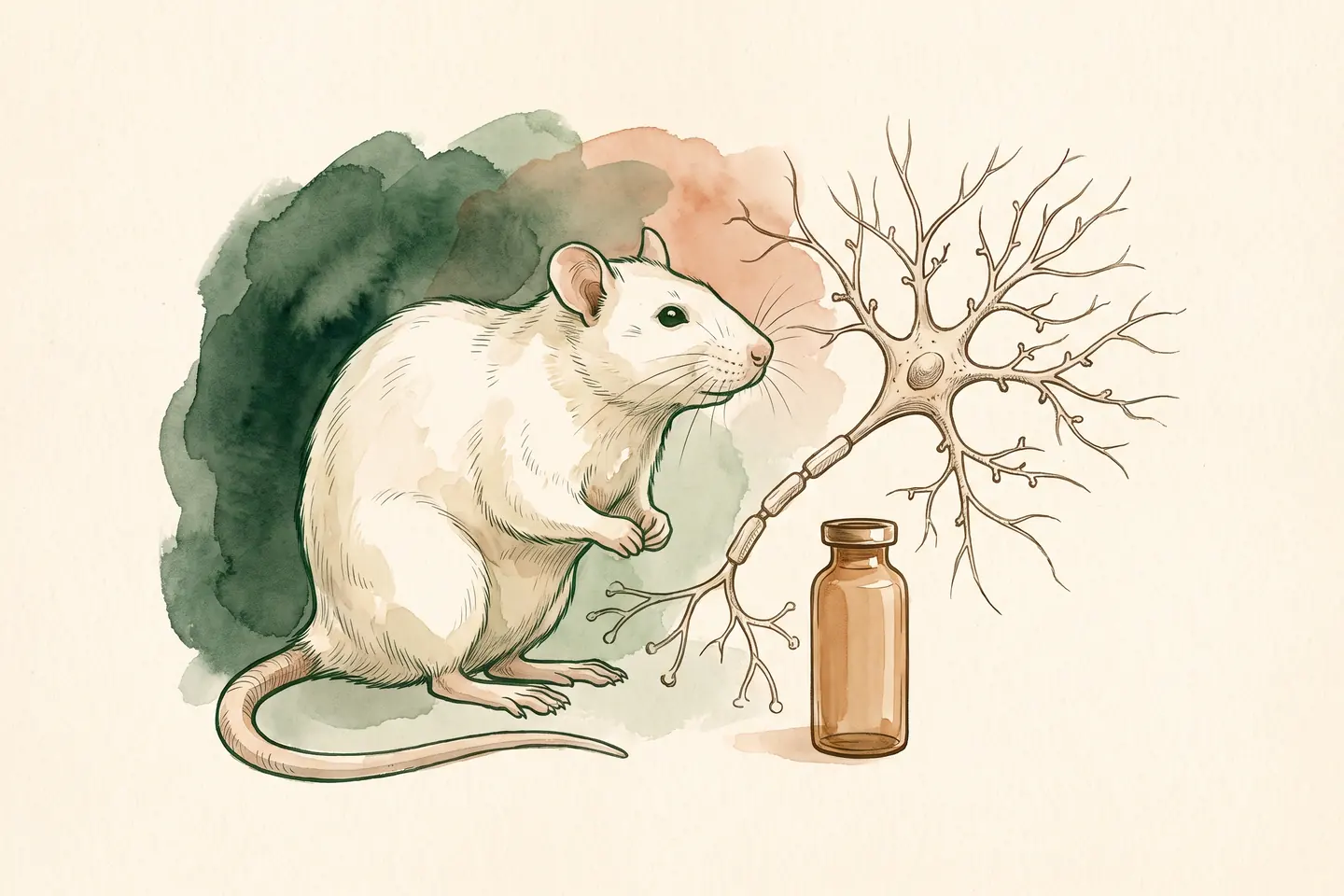
Dihexa is a synthetic peptide derived from angiotensin IV that's been called one of the most powerful cognitive enhancers ever developed. It activates the HGF/c-Met pathway - the same system that helps your brain repair itself - and does so millions of times more potently than BDNF. It promotes new synapse formation and may help with Alzheimer's and Parkinson's.
Dihexa Evidence Snapshot
How these guides are reviewed- Regulatory status
- Not FDA approved · research use only
- Dosing guidance
- Reviewed by our clinical team
- Linked evidence
- 7 research sources
- Content updated
- May 8, 2026
Dose and schedule recommendations shown below come from The Peptide App Clinical Team. Research links are provided so readers can inspect the supporting evidence directly. Review the sources.
Quick Answers About Dihexa
Is Dihexa FDA approved?
No. This profile records Dihexa as not FDA approved and for research use only.
More context
Review the regulatory and source details on this page for the current context.
What dose does The Peptide App Clinical Team recommend for Dihexa?
Dose: 10-20 mg daily (oral or transdermal).
More context
Schedule: daily. Cycle: 6 weeks on, 6 weeks off. This is clinical-team guidance for reference and does not replace individualized instructions from a licensed clinician.
What research supports this Dihexa guide?
This guide links to 7 curated or current research sources.
More context
Open the research section to inspect the source titles, publication details, study types, and available abstracts directly.
Review the Dihexa research sourcesStudied Effects & Mechanisms
HGF/c-Met Activation
Powerfully activates brain growth and repair pathways
Synaptogenesis
Promotes formation of new brain connections
Anti-Inflammatory
Reduces neuroinflammation and microglial overactivation
Clinical & Research Context
People with cognitive decline · Those seeking powerful nootropic effects · Alzheimer's or Parkinson's patients (research) · Anyone wanting enhanced learning and memory · Researchers studying neuroregeneration
Research-Market Price Snapshot
A compact market signal for this profile. The dedicated pricing page owns vendor, vial-size, and price-per-mg comparisons.
Updated Jul 16, 2026
- Vendors
- 12
- Listings
- 13
- Observed range
- $20–$169
Dihexa Research
Live PubMed intelligence from the research crawler
AngIV-Analog Dihexa Rescues Cognitive Impairment and Recovers Memory in the APP/PS1 Mouse via the PI3K/AKT Signaling Pathway.
Brain sciences · Nov 11, 2021
The renin-angiotensin system (RAS) is a paracrine RAS within the central nervous system (CNS) and is closely related to Alzheimer's disease (AD). The endogenous hexapeptide angiotensin IV (Ang IV), an important component of the brain RAS, was found to rescue cognitive impairment and recover memory in previous studies. In our study, we used different doses of Dihexa, which can be orally administered and cross the BBB in APP/PS1 mice. We found that the amount of AngIV in mouse tissue increased after the administration of Dihexa compared to that in the WT group. Meanwhile, Dihexa restored spatial learning and cognitive functions in the Morris water maze test. Dihexa increased the neuronal cells and the expression of SYP protein in APP/PS1 mice in Nissl staining. Furthermore, Dihexa decreased the activation of astrocytes and microglia, markedly reduced levels of the pro-inflammatory cytokines IL-1β and TNF-α and increased the levels of the anti-inflammatory cytokine IL-10. Dihexa activated the PI3K/AKT signaling pathway, while PI3K inhibitor wortmannin significantly reversed the anti-inflammatory and anti-apoptotic effects of APP/PS1 mice. These findings highlight the brain AngIV/PI3K/AKT axis as a potential target for the treatment of AD.
Stem cell, Granulocyte-Colony Stimulating Factor and/or Dihexa to promote limb function recovery in a rat sciatic nerve damage-repair model: Experimental animal studies.
Annals of medicine and surgery (2012) · Nov 1, 2021
BACKGROUND: Optimizing nerve regeneration and re-innervation of target muscle/s is the key for improved functional recovery following peripheral nerve damage. We investigated whether administration of mesenchymal stem cell (MSC), Granulocyte-Colony Stimulating Factor (G-CSF) and/or Dihexa can improve recovery of limb function following peripheral nerve damage in rat sciatic nerve transection-repair model. MATERIALS AND METHODS: There were 10 experimental groups (n = 6-8 rats/group). Bone marrow derived syngeneic MSCs (2 × 10⁶; passage≤6), G-CSF (200-400 μg/kg b.wt.), Dihexa (2-4 mg/kg b.wt.) and/or Vehicle were administered to male Lewis rats locally via hydrogel at the site of nerve repair, systemically (i.v./i.p), and/or to gastrocnemius muscle. The limb sensory and motor functions were assessed at 1-2 week intervals post nerve repair until the study endpoint (16 weeks). RESULTS: The sensory function in all nerve boundaries (peroneal, tibial, sural) returned to nearly normal by 8 weeks (Grade 2.7 on a scale of Grade 0-3 [0 = No function; 3 = Normal function]) in all groups combined. The peroneal nerve function recovered quickly with return of function at one week (∼2.0) while sural nerve function recovered rather slowly at four weeks (∼1.0). Motor function at 8-16 weeks post-nerve repair as determined by walking foot print grades significantly (P < 0.05) improved with MSC + G-CSF or MSC + Dihexa administrations into gastrocnemius muscle and mitigated foot flexion contractures. CONCLUSIONS: These findings demonstrate MSC, G-CSF and Dihexa are promising candidates for adjunct therapies to promote limb functional recovery after surgical nerve repair, and have implications in peripheral nerve injury and limb transplantation. IACUC No.215064.
The Brain Hepatocyte Growth Factor/c-Met Receptor System: A New Target for the Treatment of Alzheimer's Disease.
Journal of Alzheimer's disease : JAD · Jan 1, 2015
Alzheimer's disease (AD) is a progressive neurodegenerative disease increasing in frequency as life expectancy of the world's population increases. There are an estimated 5 million diagnosed AD patients in the U.S. and 16 million worldwide with no adequate treatment presently available. New therapeutic approaches are needed to slow, and hopefully reverse, disease progression. This review summarizes available information regarding an overlooked therapeutic target that may offer a treatment to slow and hopefully halt AD, namely the hepatocyte growth factor (HGF)/c-Met receptor system. Activation of the c-Met receptor stimulates mitogenesis, motogenesis, morphogenesis, the ability to mediate stem cell differentiation and neurogenesis, and protects against tissue insults in a wide range of cells including neurons. This growth factor system has recently been shown to induce dendritic arborization and synaptogenesis when stimulated by a newly developed angiotensin-based analogue, N-hexanoic-Tyr-Ile-(6) amino hexanoic amide (Dihexa). This small molecule was derived from the pre-prototype molecule Nle1-angiotensin IV and has shown promise in facilitating the formation of new functional synaptic connections and augmenting memory consolidation in animal models of AD. Dihexa is a first-in-class compound that is orally active, penetrates the blood-brain barrier, and facilitates memory consolidation and retrieval. This angiotensin-based small molecule may be efficacious as a treatment for AD.
Effects of an Angiotensin IV Analog on 3-Nitropropionic Acid-Induced Huntington's Disease-Like Symptoms in Rats.
Journal of Huntington's disease · Jan 1, 2024
BACKGROUND: Huntington's disease (HD) is a neurodegenerative disorder characterized by motor, cognitive, and psychiatric dysfunction caused by a mutant huntingtin protein. Compromised metabolic activity resulting from systemic administration of the mitochondrial toxin, 3-nitropropionic acid (3-NP), is known to mimic the pathology of HD and induce HD-like symptoms in rats. N-hexanoic-Tyr-Ile-(6)-amino hexanoic amide (PNB-0408), also known as Dihexa, has been shown to have neuroprotective and procognitive properties in animal models of Alzheimer's and Parkinson's diseases. Given the mechanism of action and success in other neurodegenerative diseases, we felt it an appropriate compound to investigate further for HD. OBJECTIVE: The present study was designed to test if PNB-0408, an angiotensin IV analog, could attenuate 3-NP-induced HD-like symptoms in rats and serve as a potential therapeutic agent. METHODS: Forty male Wistar rats were randomized into three groups consisting of a "vehicle" group, a "3-NP" group, and a "3-NP + PNB-0408" group. PNB-0408 was administered along with chronic exposure to 3-NP. Animal body weight, motor function, and cognitive abilities were measured for five weeks, before euthanasia and histopathological analysis. RESULTS: Exposure to 3-NP decreased the amount of weight rats gained, impaired spatial learning and memory consolidation, and led to marked motor dysfunction. From our observations and analysis, PNB-0408 did not protect rats from the deficits induced by 3-NP neurotoxicity. CONCLUSIONS: Our findings suggest that PNB-0408 may not be an efficacious treatment strategy for preventing 3-NP-induced HD-like symptoms in a preclinical model. These data highlight the need for further research of this compound in alternate models and/or alternative approaches to managing this disorder.
Therapeutic Peptides in Orthopaedics: Applications, Challenges, and Future Directions.
Journal of the American Academy of Orthopaedic Surgeons. Global research & reviews · Jan 1, 2026
Therapeutic peptides are emerging as promising adjuncts in the management of orthopaedic injuries, grounded in their ability to modulate molecular signaling networks central to cellular medicine. By acting on key pathways such as PI3K/Akt, mTOR, MAPK, TGF-β, and AMPK, peptides exert influence over tissue regeneration, inflammation resolution, and neuromuscular recovery. Wound-healing peptides such as BPC-157, TB-500, and GHK-Cu promote angiogenesis, integrin-mediated extracellular matrix remodeling, and fibroblast activation, whereas growth hormone secretagogues like ipamorelin, CJC-1295, tesamorelin, sermorelin, and AOD-9604 activate IGF-1 signaling and satellite cell repair. Recovery-enhancing agents such as epithalon, delta sleep-inducing peptide, and pinealon target circadian and mitochondrial regulators, and neuroactive peptides like selank, semax, and dihexa enhance brain-derived neurotrophic factor and HGF/c-Met pathways critical to neuroplasticity. Although preclinical studies are promising, there is a current lack of clinical trials. This review integrates current mechanistic insights with orthopaedic relevance, emphasizing safety, efficacy, and future directions for responsible integration into musculoskeletal care.
The development of small molecule angiotensin IV analogs to treat Alzheimer's and Parkinson's diseases.
Progress in neurobiology · Feb 1, 2015
Alzheimer's (AD) and Parkinson's (PD) diseases are neurodegenerative diseases presently without effective drug treatments. AD is characterized by general cognitive impairment, difficulties with memory consolidation and retrieval, and with advanced stages episodes of agitation and anger. AD is increasing in frequency as life expectancy increases. Present FDA approved medications do little to slow disease progression and none address the underlying progressive loss of synaptic connections and neurons. New drug design approaches are needed beyond cholinesterase inhibitors and N-methyl-d-aspartate receptor antagonists. Patients with PD experience the symptomatic triad of bradykinesis, tremor-at-rest, and rigidity with the possibility of additional non-motor symptoms including sleep disturbances, depression, dementia, and autonomic nervous system failure. This review summarizes available information regarding the role of the brain renin-angiotensin system (RAS) in learning and memory and motor functions, with particular emphasis on research results suggesting a link between angiotensin IV (AngIV) interacting with the AT4 receptor subtype. Currently there is controversy over the identity of this AT4 receptor protein. Albiston and colleagues have offered convincing evidence that it is the insulin-regulated aminopeptidase (IRAP). Recently members of our laboratory have presented evidence that the brain AngIV/AT4 receptor system coincides with the brain hepatocyte growth factor/c-Met receptor system. In an effort to resolve this issue we have synthesized a number of small molecule AngIV-based compounds that are metabolically stable, penetrate the blood-brain barrier, and facilitate compromised memory and motor systems. These research efforts are described along with details concerning a recently synthesized molecule, Dihexa that shows promise in overcoming memory and motor dysfunctions by augmenting synaptic connectivity via the formation of new functional synapses.
Research references
Related Peptides
Semax
THE FOCUS ENHANCERAHighNeurological Support · NootropicHealing · Neurological SupportDose600 mcg↻Cycle6 weeks on, 6 weeks off◷Kicks inCognitive enhancement often noticed within...Powerfully enhances focus, memory, and learning by optimizing brain chemistry.
from $1.11/mg · 70 vendorsNº 006 / 006DNSP-11
THE DOPAMINE PROTECTORBGoodNeurological Support · NootropicLongevity · Neurological SupportDoseSee guide↻Cycle3 weeks on, then assess◷Kicks inDopamine system improvements may take...Protect and restore dopamine neurons for brain aging and neurological health.
from $4/mg · 2 vendorsNº 002 / 006FGL-L
THE SYNAPSE ENHANCERBGoodNeurological Support · NootropicPerformance · Neurological SupportDoseSee guide↻CycleAs needed for research◷Kicks inMemory and learning improvements observed in...NCAM-mimetic peptide for memory and brain plasticity
from $8.83/mg · 4 vendorsNº 004 / 006MIF-1
THE MOOD MODULATORAHighNeurological Support · Mood RegulationCognitive · Neurological SupportDoseSee guide↻Cycle4-8 weeks on, 4 weeks break◷Kicks inMood improvements often noticed within the...Natural mood enhancement through dopamine modulation
from $2.40/mg · 2 vendorsNº 005 / 006BPC-157
THE HEALERAHighAccelerated Healing · Neurological SupportHealing · Accelerated HealingDose250 mcg↻Cycle4-8 weeks on, then equal break◷Kicks inGut issues often improve faster - many...Accelerates healing of tendons, ligaments, gut, and muscles throughout your body.
from $1.99/mg · 122 vendorsNº 001 / 006DSIP
THE SLEEP INDUCERBGoodNeurological Support · Sleep RegulationCognitive · Neurological SupportDoseSee guide↻CycleAs needed for sleep support◷Kicks inSleep quality improvements often noticed...Natural sleep peptide for deep rest and stress relief
from $3.15/mg · 49 vendorsNº 003 / 006