Healing Category
Cardiogen
THE CARDIAC REGENERATOR
AEDR tetrapeptide; H-Ala-Glu-Asp-Arg-OH
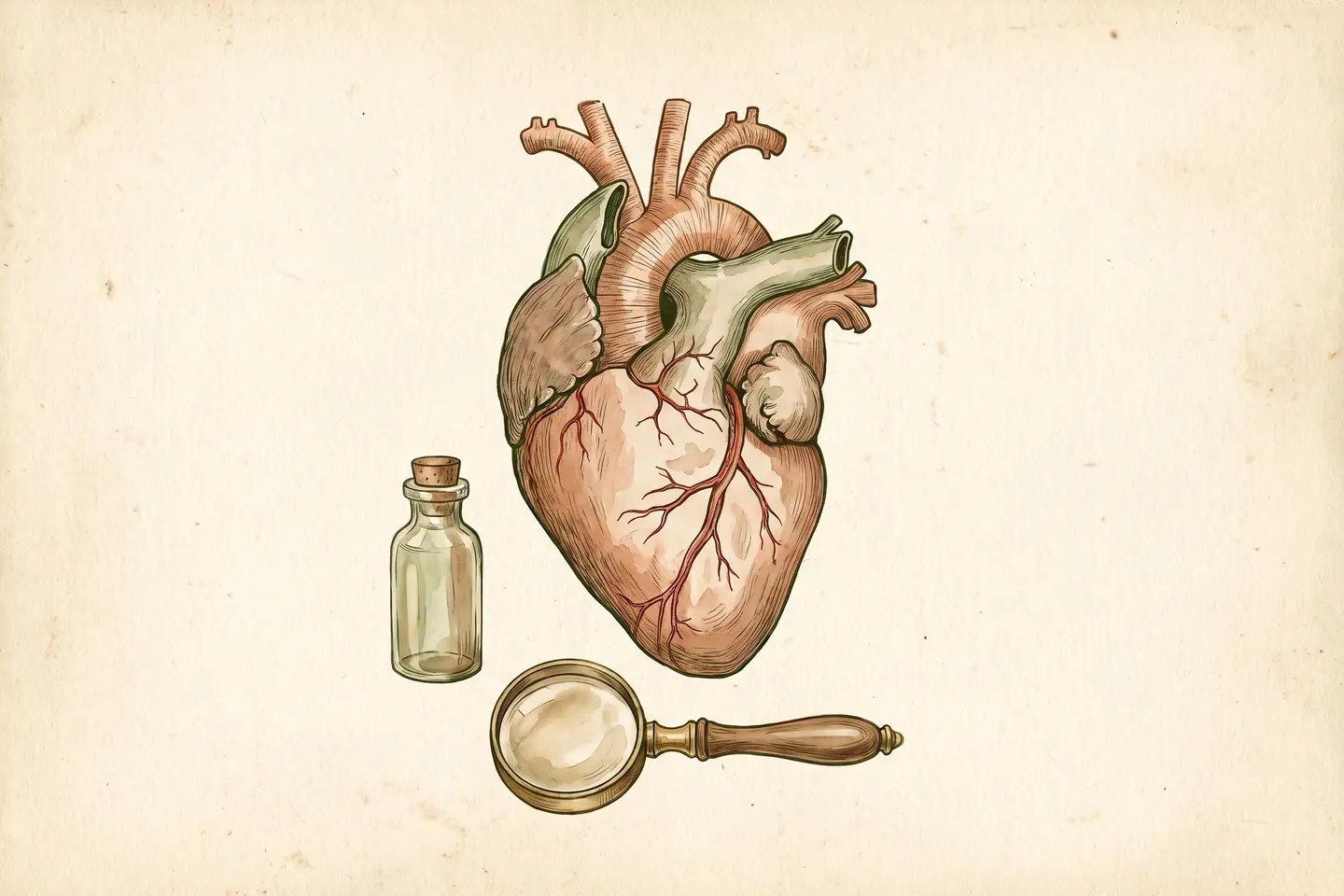
Cardiogen is a synthetic tetrapeptide (AEDR) from the Khavinson family designed to support heart health. It stimulates cardiac progenitor cells to repair damaged heart tissue, reduces scarring after heart attacks, and may even have tumor-inhibiting properties. It's being studied for myocardial recovery and anti-aging.
Cardiogen Evidence Snapshot
How these guides are reviewed- Regulatory status
- Not FDA approved · research use only
- Dosing guidance
- Reviewed by our clinical team
- Linked evidence
- 7 research sources
- Content updated
- May 8, 2026
Dose and schedule recommendations shown below come from The Peptide App Clinical Team. Research links are provided so readers can inspect the supporting evidence directly. Review the sources.
Quick Answers About Cardiogen
Is Cardiogen FDA approved?
No. This profile records Cardiogen as not FDA approved and for research use only.
More context
Review the regulatory and source details on this page for the current context.
What dose does The Peptide App Clinical Team recommend for Cardiogen?
Dose: 2 mg daily for 2 weeks (subcutaneous).
More context
Schedule: daily. Cycle: 2 weeks on, 12 weeks off. This is clinical-team guidance for reference and does not replace individualized instructions from a licensed clinician.
What research supports this Cardiogen guide?
This guide links to 7 curated or current research sources.
More context
Open the research section to inspect the source titles, publication details, study types, and available abstracts directly.
Review the Cardiogen research sourcesStudied Effects & Mechanisms
Cardiac Stem Cells
Stimulates heart progenitor cells to regenerate damaged tissue
Anti-Fibrotic
Reduces scar tissue formation in the heart
Anti-Apoptotic
Protects heart cells from programmed death
Clinical & Research Context
People recovering from heart events · Those with cardiac fibrosis or scarring · Aging individuals focused on heart health · Athletes wanting cardiac support · Anyone concerned about heart aging
Research-Market Price Snapshot
A compact market signal for this profile. The dedicated pricing page owns vendor, vial-size, and price-per-mg comparisons.
Updated Jul 16, 2026
- Vendors
- 13
- Listings
- 13
- Observed range
- $31–$75
Cardiogen Research
Live PubMed intelligence from the research crawler
Cardiogenetics and uncertainty: Evaluation of professional vulnerability in France.
European journal of medical genetics · Apr 1, 2025
Scientific advances in genomics are transforming healthcare and prevention. However, they also increase situations of uncertainty, which in turn increase vulnerability not only for patients and their families but also for professionals. Cardiogenetics plays a crucial role in preventing sudden death in young individuals, but it can pose complex challenges for healthcare teams. To study professionals' perspectives and experiences regarding cardiogenetics-related vulnerability, a national online survey was conducted in France to gather insight from professionals involved in the care pathway of individuals with cardiogenetic conditions. The survey targeted clinical geneticists, genetic counselors, cardiologists, nurses, and psychologists, in collaboration with the CARDIOGEN network. Out of 86 respondents, the majority (64%) reported experiencing vulnerability, which was not correlated with their profession, experience, or the organization of their clinics. Acknowledged vulnerabilities were mainly related to uncertainties regarding incomplete penetrance, variable expression, and genotype-phenotype disparities in cardiogenetics, exacerbated by the evolving interpretation of genetic data, due to the increased access to genomics. Additionally, the implications of these issues, particularly in cases of unexplained sudden deaths that necessitated genetic investigations and family follow up recommendations, raised further concerns. The reported vulnerabilities encompassed both the need for specialized knowledge and the structural complexities of teams combining skills in genetics and cardiology. In addition, the professionals' capacity to empathize can add a degree of vulnerability. Finally, it seems important to focus on how cardiogenetics teams are organized, particularly through close collaboration among genetics and cardiology units, which could help reduce this feeling of vulnerability.
Influence of L-carnitine and its derivatives on myocardial metabolism and function in ischemic heart disease and during cardiopulmonary bypass.
Cardiovascular research · Jul 1, 2001
Carnitine and its derivatives have recently been shown to protect cardiac metabolism and function in ischemic heart disease and other clinical conditions of myocardial ischemia. Potential mechanisms of this effect include an increase in glucose metabolism, a reduction of toxic effects of long-chain acyl-CoA and acyl-carnitine in myocytes, an increase in coronary blood flow and anti-arrhythmic effect. It has also been shown that propionyl-L-carnitine which penetrates faster than carnitine into myocytes is effective in inhibiting production of free radicals. Beneficial effects of carnitine supplementation have been demonstrated under a variety of clinical conditions such as acute cardiac ischemia, during extracorporeal circulation, in carnitine-dependent cardiomyopathy as well as in patients with chronic circulatory failure and in cardiogenic shock. However, further studies are required before carnitine administration could be recommended as a routine procedure in ischemic heart disease or before cardiopulmonary bypass.
[Cardiomyopathy and ion channel diseases registry: the Szeged CardioGen Registry].
Orvosi hetilap · Jan 1, 2017
The Szeged cardiomyopathy and ion channel diseases registry aims to establish a representative disease-specific registry based on the recruitment of patients with different cardiomyopathies and ion channel diseases followed at the Cardiology Center, University of Szeged. The registry collects patient data on the main forms of primary cardiomyopathies (hypertrophic, dilated, restrictive, arrhythmogenic right ventricular, left ventricular non-compact, tako-tsubo cardiomyopathy) and ion channel diseases (long QT syndrome, short QT syndrome, Brugada syndrome, catecholaminergic polymorphic ventricular tachycardia). Patients with hypertrophic cardiomyopathy (388 patients) make up the largest group of patients in the registry. Patients with dilated cardiomyopathy (310 patients) and patients with the long QT syndrome (111 patients) form two other sizable groups. Analyzed data of the group of patients with hypertrophic cardiomyopathy indicate similar figures with regard to disease related mortality and morbidity and clinical parameters. Orv. Hetil., 2017, 158(3), 101-105.
L-carnitine in cardiogenic shock therapy: pharmacodynamic aspects and clinical data.
International journal of clinical pharmacology research · Jan 1, 1993
Following our previous work on biochemical and clinical aspects of cardiogenic shock, we carried out an open study on 27 patients hospitalized in shock condition and investigated for the entire period of permanence in intensive care units (ICU). The subjects were treated with high doses of L-carnitine following previous results on the use of this molecule in conditions of oxidative damage due to acute cellular hypoxia. When compared with the data reported in the literature, the results obtained in this study show a surprisingly positive trend for the carnitine-treated patients in terms of survival rate to the cardiogenic shock. This finding and statistical analysis of the clinical parameters confirm the suggestion that L-carnitine could be credited with a new and interesting role in the therapy of cardiogenic shock.
L-carnitine increases survival in a murine model of severe verapamil toxicity.
Academic emergency medicine : official journal of the Society for Academic Emergency Medicine · Nov 1, 2011
OBJECTIVES: L-carnitine is an essential compound involved in cellular energy production through free fatty acid metabolism. It has been theorized that severe verapamil toxicity "shifts" heart energy production away from free fatty acids and toward other sources, contributing to profound cardiogenic shock. The primary study objective was to determine whether intravenous (IV) L-carnitine affects survival in severe verapamil toxicity. Secondary objectives were to determine the effects on hemodynamic parameters. The authors hypothesized that IV L-carnitine would increase both survival and hemodynamic parameters in severe verapamil toxicity. METHODS: This was a controlled, blinded animal investigation. Sixteen male rats were anesthetized, ventilated, and instrumented to record mean arterial pressure (MAP) and heart rate. Verapamil toxicity was achieved by a constant infusion of 5 mg/kg/hr. After 5 minutes a bolus of 50 mg/kg of either L-carnitine or normal saline was given. The experiment concluded when either 10% of baseline MAP was achieved or 150 minutes had elapsed. The data were analyzed using Kaplan-Meier analysis, log rank test, and analysis of variance. RESULTS: The median survival for the animals in the L-carnitine group was 140.75 minutes (interquartile range [IQR] = 98.6 to 150 minutes), and for those in the normal saline group it was 49.19 minutes (IQR = 39.02 to 70.97 minutes; p = 0.0001). At 15 minutes the MAP was 20.45 mm Hg greater in the animals in the L-carnitine group than in the animals in the normal saline group (95% confidence interval [CI] = 0.25 to 40.65; p = 0.047). CONCLUSIONS: When compared with saline, IV L-carnitine increases survival and MAP in a murine model of severe verapamil toxicity.
Oxytocin-mediated neuroprotection in ischemic stroke: molecular mechanisms, therapeutic potential and clinical translational prospects.
Metabolic brain disease · Nov 20, 2025
Ischemic stroke (IS), also known as ischemic cerebrovascular accident, is a serious consequence of cerebral ischemia characterized by high morbidity, disability, and mortality. The primary causes of IS include atherosclerosis, cardiogenic embolism, large artery occlusion, and small artery disease. The occurrence of IS involves multiple cellular death mechanisms such as vascular obstruction, inflammatory response, excitotoxicity, oxidative stress, as well as neuronal apoptosis, necroptosis, and pyroptosis. Despite the application of current drugs and therapeutic strategies in the treatment of IS, their efficacy remains limited, and they are often accompanied by adverse effects. Therefore, identifying novel and more effective treatment strategies is of critical importance. In recent years, oxytocin (OT) has attracted widespread attention due to its multiple biological effects in the central nervous system, especially its neuroprotective effects. OT can reduce ischemic damage by stabilizing the blood-brain barrier (BBB), inhibiting neuroinflammation, alleviating oxidative stress, regulating excitotoxicity, and calcium overload. Additionally, OT promotes neurovascular remodeling via the VEGF/BDNF axis and modulates Na⁺/K⁺-ATPase activity, GABA signaling pathways, and DNA methylation, thereby contributing to recovery after stroke. However, the pharmacokinetic characteristics of OT, limitations in delivery methods, and the challenges of individualized treatment restrict its clinical application. This review will summarize the mechanisms of OT in IS, discuss the challenges and limitations in its clinical application, and explore future development directions, including optimization of nasal delivery systems, development of nanodrug carriers, use of perfusion-weighted imaging to determine the therapeutic window, and personalized treatment strategies based on genetic profiling. The aim is to provide theoretical support and guidance for further research on OT and its clinical application.
Research references
Related Peptides
SS-31
THE MITOCHONDRIAL OPTIMIZERBGoodCardiovascular Support · Neurological SupportHealing · Cardiovascular SupportDose5 mg↻Cycle6 weeks on, 8 weeks off◷Kicks inEnergy improvements may be noticed within...Directly target and repair your mitochondria
from $1.60/mg · 53 vendorsNº 004 / 006Apelin-12
THE HEART OPTIMIZERBGoodCardiovascular Support · Metabolic ModulatorMetabolic · Cardiovascular SupportDoseSee guide↻CycleOngoing or as needed◷Kicks inCardiovascular improvements can be measured...Heart-boosting peptide for better blood flow and energy
Full profileNº 001 / 006L-Carnitine
THE FAT TRANSPORTERAHighMetabolic Modulator · Mitochondrial SupportMetabolic · Metabolic ModulatorDoseSee guide↻CycleOngoing or as needed◷Kicks inEnergy improvements often noticed within 1-2...Fat-burning amino acid for energy and mitochondrial health
from $0.03/mg · 9 vendorsNº 002 / 006Ventfort
THE ARTERY RESTORERBGoodCardiovascular Support · Anti-Aging & LongevityLongevity · Cardiovascular SupportDoseSee guide↻Cycle4 weeks on, 12 weeks off◷Kicks inCirculation improvements typically noticed...Restore arterial health and vascular flexibility
Full profileNº 005 / 006Vesugen
THE VESSEL PROTECTORBGoodCardiovascular Support · Anti-Aging & LongevityCognitive · Cardiovascular SupportDoseSee guide↻Cycle4 weeks on, 12 weeks off◷Kicks inVascular improvements typically noticed...Protect and restore your blood vessel lining
from $1.60/mg · 13 vendorsNº 006 / 006Pinealon
THE DREAMWEAVERAHighNeurological Support · Sleep RegulationCognitive · Neurological SupportDose1 mg↻Cycle4 weeks on, 8 weeks off◷Kicks inSleep improvements often noticed within the...Sleep like you mean it and wake up mentally sharp.
from $0.90/mg · 45 vendorsNº 003 / 006