Loading peptide profile…
Healing Category
THE FAT BURNER
FTPP, FTTP, Prohibitin-Targeting Peptide
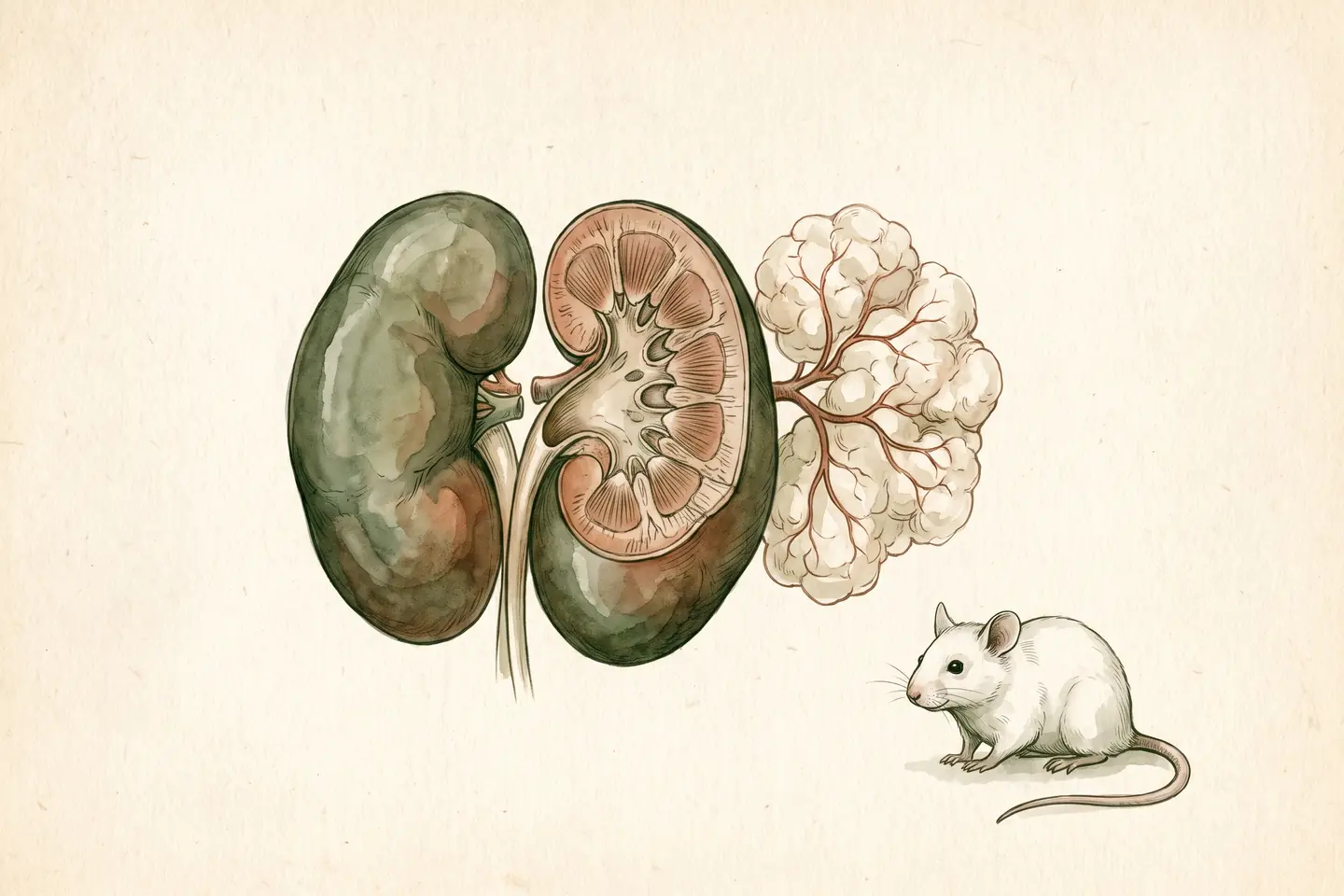
Adipotide is a chimeric peptidomimetic joining a sequence that binds prohibitin on white fat blood vessels to a sequence that triggers cell death. In obese mice it reversed obesity, and in obese monkeys body weight fell about 11% with white fat volume down about 39%. The listed studies are all in animals.
Those seeking aggressive fat loss · People who haven't responded to other methods · Those comfortable with experimental compounds
Based on what vendors sell, not a recommendation.
Injection
Sold as vials by 18 vendors
By mouth
Not sold by vendors we track
Nasal spray
Not sold by vendors we track
Not FDA approved, research use onlyHow we review these guides6 research sources
A CKGGRAKDC sequence binds prohibitin on the blood vessel lining of white fat, which is how the construct concentrates in that tissue in animal studies.
A linked pro-apoptotic sequence kills endothelial cells in vessels feeding white fat. The animal findings attribute the fat loss to that step, not to action on fat cells.
White fat shrank once its blood supply was destroyed: obesity reversed in obese mice, and white fat volume fell about 39% in obese monkeys by imaging.
The 2011 report by Barnhart and colleagues at the University of Texas MD Anderson Cancer Center describes adipotide as a joined peptide construct. It combines the CKGGRAKDC targeting sequence, a two-glycine linker, and two copies of KLAKLAK made with D-amino acids. This domain-based construction is the basis of its description as a chimeric peptidomimetic.
[Barnhart and colleagues, adipotide construct, 2011](https://pmc.ncbi.nlm.nih.gov/articles/PMC3666164/)
No. This profile records Adipotide as not FDA approved and for research use only. Review the regulatory and source details on this page for the current context.
This guide links to 6 curated or current research sources. Inspect the research section and the citations beneath the research answers for their supporting sources.
Review the Adipotide research sourcesWe don't list specific side effects for Adipotide.
Adipotide has an editorial safety grade of C (Experimental). No human safety findings appear in the listed studies, which are all in animals. In obese monkeys, kidney tubule injury was the main toxicity and tracked the same exposures that produced the largest fat loss. Safety depends on dose, sourcing, health history and medical supervision, so this page does not call it safe for personal use.
In animal studies, adipotide was evaluated in obese Old World monkeys. In these monkeys, monkeys from three different species showed predictable and reversible changes in renal proximal tubule function at experimentally determined optimal doses of adipotide. The facts do not name the specific monkey species used, so they can only be described as Old World monkeys from three different species.
Adipotide is a ligand-directed peptidomimetic with the sequence CKGGRAKDC-GG-(D)(KLAKLAK)(2), and it was evaluated in obese Old World monkeys. It is a bioconjugate made of the prohibitin-targeting peptide and the proapoptotic peptide KLA.
In-stock prices from 17 vendors, checked Nov 7, 2026.
Market evidence
We found certificates from some of the Adipotide vendors we track. Based on the certificates our crawler found; vendors may publish more than we index. Research on this page describes the molecule. Vendor certificates concern particular market samples or batches; they do not change the research evidence or establish clinical safety, sterility, or suitability for use.
The clinic network
Request a free connection to a peptide clinic, by telehealth or in person. A licensed clinician decides whether any treatment is right for you. What peptide therapy involves
FDA-approved GLP-1 drug for type 2 diabetes and weight management
Full profileNº 005 / 006Experimental GLP-1 and glucagon receptor agonist in phase 3 trials
Full profileNº 006 / 006Investigational amylin receptor agonist in development for obesity
Full profileNº 004 / 006NNMT-blocking small molecule tested in cells and obese mice
from $0.50/mg · 225 vendorsNº 001 / 006Synthetic gastric peptide studied almost entirely in animals
from $1/mg · 392 vendorsNº 002 / 006Short-acting GHRH analog without its own human trials
from $2.65/mg · 190 vendorsNº 003 / 006