Metabolic Category
Survodutide
THE DUAL ACTION
BI 456906
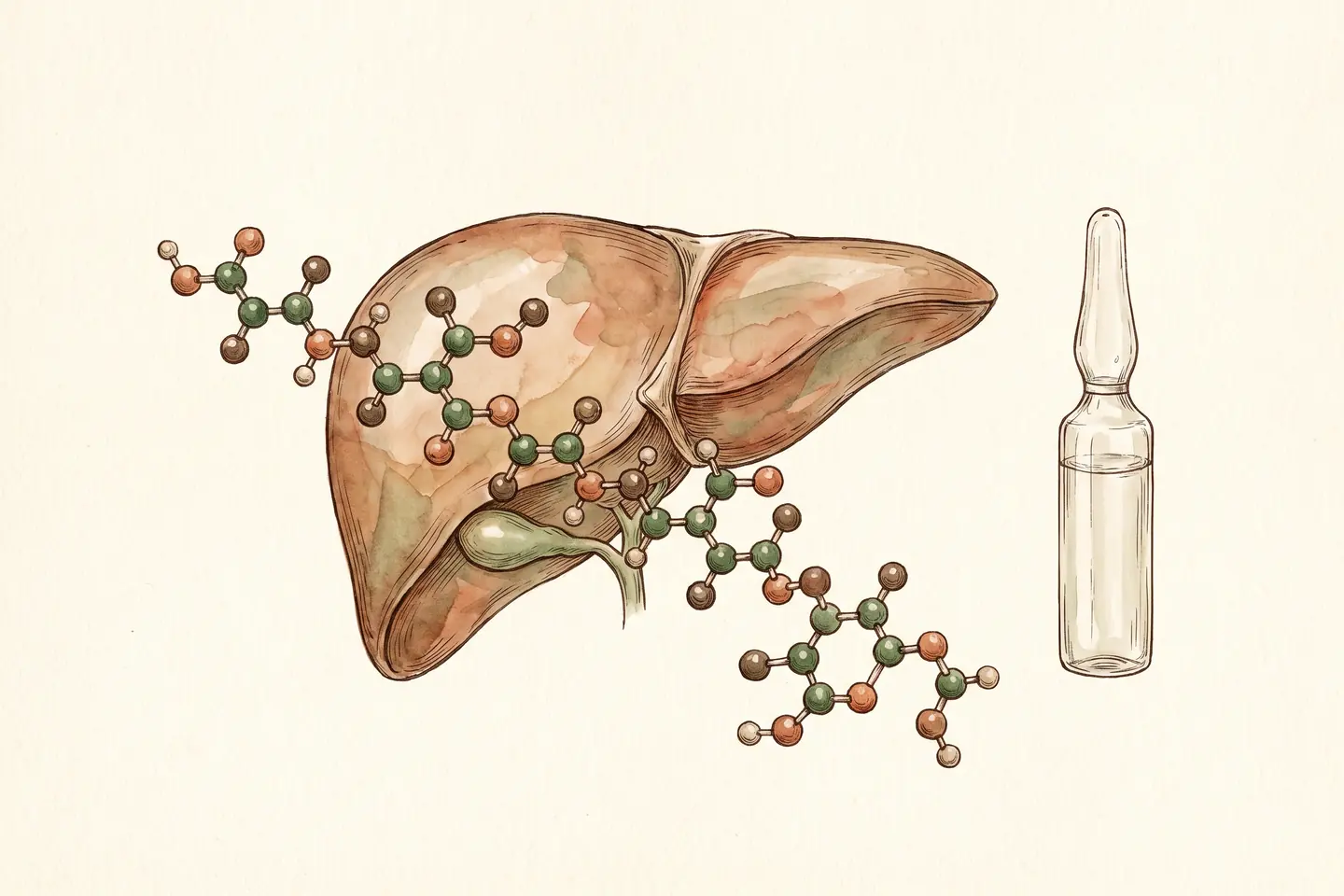
Survodutide is a cutting-edge dual agonist that activates both GLP-1 and glucagon receptors. This dual action may provide superior weight loss compared to GLP-1-only drugs like Semaglutide, while also improving liver health and metabolic markers. It's currently in late-stage clinical trials and showing very promising results for both obesity and fatty liver disease.
Survodutide Evidence Snapshot
How these guides are reviewed- Regulatory status
- Not FDA approved · research use only
- Dosing guidance
- Reviewed by our clinical team
- Linked evidence
- 6 research sources
- Content updated
- Jul 15, 2026
Dose and schedule recommendations shown below come from The Peptide App Clinical Team. Research links are provided so readers can inspect the supporting evidence directly. Review the sources.
Quick Answers About Survodutide
Is Survodutide FDA approved?
No. This profile records Survodutide as not FDA approved and for research use only.
More context
Review the regulatory and source details on this page for the current context.
What dose does The Peptide App Clinical Team recommend for Survodutide?
Dose: 0.6mg to 4.8mg weekly (dose escalation).
More context
Schedule: daily. Cycle: Weekly injection, continuous use. This is clinical-team guidance for reference and does not replace individualized instructions from a licensed clinician.
What research supports this Survodutide guide?
This guide links to 6 curated or current research sources.
More context
Open the research section to inspect the source titles, publication details, study types, and available abstracts directly.
Review the Survodutide research sourcesClinical & Research Context
Those seeking maximum weight loss potential · People with fatty liver disease (NASH/MAFLD) · Individuals who plateau on single-agonist GLP-1s · Early adopters of next-gen metabolic therapies
Research-Market Price Snapshot
A compact market signal for this profile. The dedicated pricing page owns vendor, vial-size, and price-per-mg comparisons.
Live pricing
The live pricing feed did not return ready in-stock rows for this peptide.
Open the dedicated pricing page →Survodutide Research
Live PubMed intelligence from the research crawler
Dose-response effects on HbA1c and bodyweight reduction of survodutide, a dual glucagon/GLP-1 receptor agonist, compared with placebo and open-label semaglutide in people with type 2 diabetes: a randomised clinical trial.
Diabetologia · Mar 1, 2024
AIMS/HYPOTHESIS: The aim of this study was to assess the dose-response effects of the subcutaneous glucagon receptor/glucagon-like peptide-1 receptor dual agonist survodutide (BI 456906) on HbA1c levels and bodyweight reduction. METHODS: This Phase II, multicentre, randomised, double-blind, parallel-group, placebo-controlled study, conducted in clinical research centres, assessed survodutide in participants aged 18-75 years with type 2 diabetes, an HbA1c level of 53-86 mmol/mol (7.0-10.0%) and a BMI of 25-50 kg/m2 on a background of metformin therapy. Participants were randomised via interactive response technology to receive survodutide (up to 0.3, 0.9, 1.8 or 2.7 mg once weekly [qw; dose group (DG) 1-4, respectively] or 1.2 or 1.8 mg twice weekly [DG 5 and 6, respectively]), placebo or semaglutide (up to 1.0 mg qw). Participants and all those involved in the trial conduct/analysis were blinded; the semaglutide arm was open-label. The primary endpoint was absolute change from baseline in HbA1c after 16 weeks' treatment. The key secondary endpoint was relative change from baseline in bodyweight after 16 weeks' treatment. RESULTS: A total of 413 participants were randomised (DG1, n=50; DG2, n=50; DG3, n=52; DG4, n=50; DG5, n=51; DG6, n=50; semaglutide, n=50; placebo, n=60). The full analysis set comprised 411 treated participants (DG6, n=49; placebo, n=59). Adjusted mean (95% CI) HbA1c decreased from baseline (mean ± SD 64.7±9.2 mmol/mol [8.07±0.84%] after 16 weeks' treatment: DG1 (n=41), -9.92 mmol/mol (-12.27, -7.56; -0.91% [-1.12, -0.69]); DG2 (n=46), -15.95 mmol/mol (-18.27, -13.63; -1.46% [-1.67, -1.25]); DG3 (n=36), -18.72 mmol/mol (-21.15, -16.29; -1.71% [-1.94, -1.49]); DG4 (n=33), -17.01 mmol/mol (-19.59, -14.43; -1.56% [-1.79, -1.32]); DG5 (n=44), -17.84 mmol/mol (-20.18, -15.51; -1.63% [-1.85, -1.42]); DG6 (n=36), -18.38 mmol/mol (-20.90, -15.87; -1.68% [-1.91, -1.45]). The mean reduction in HbA1c was similar with low-dose survodutide (DG2: -15.95 mmol/mol [-1.46%]; n=46) and semaglutide (-16.07 mmol/mol [-1.47%]; n=45). Mean (95% CI) bodyweight decreased dose-dependently up to -8.7% (-10.1, -7.3; DG6, n=37); survodutide ≥1.8 mg qw produced greater bodyweight reductions than semaglutide (-5.3% [-6.6, -4.1]; n=45). Adverse events (AEs) were reported for 77.8% of survodutide-treated participants (mainly gastrointestinal), 52.5% receiving placebo and 52.0% receiving semaglutide. CONCLUSIONS/INTERPRETATION: Survodutide reduced HbA1c levels and bodyweight after 16 weeks' treatment in participants with type 2 diabetes. Dose-related gastrointestinal AEs could be mitigated with slower dose escalations. TRIAL REGISTRATION: ClinicalTrials.gov NCT04153929 and EudraCT 2019-002390-60. FUNDING: Boehringer Ingelheim Pharma GmbH & Co. KG, Ingelheim, Germany.
Harnessing GLP-1 Receptor Agonists for Obesity Treatment: Prospects and Obstacles on the Horizon.
Journal of obesity · Jan 1, 2025
BACKGROUND: Obesity has emerged as a pressing global health challenge, and therapies based on glucagon-like Peptide 1 receptor agonists (GLP-1RAs) have transformed its management. Currently, liraglutide, semaglutide, and tirzepatide are FDA-approved for obesity treatment, while other agents are used off-label. These drugs not only provide unprecedented efficacy and acceptable safety in weight reduction and glycemic control for patients with obesity and Type 2 diabetes but also hold promise in broader indications, including neurodegenerative disorders, fatty liver disease, dyslipidemia, atherosclerosis, and cardiovascular conditions. METHODS: This narrative review examined the therapeutic applications of GLP-1RAs for obesity, emphasizing their efficacy, safety profile, challenges with patient adherence, and limitations. The review also explored emerging innovations such as ultralong-acting formulations, combination therapies, and the integration of digital health and artificial intelligence in advancing antiobesity drug development. RESULTS: GLP-1RAs represent a paradigm shift in the treatment of obesity and metabolic diseases, with rapidly expanding indications and global uptake. Recent evidence highlights improvements in tolerability, global accessibility, and the potential of novel technologies to optimize patient outcomes. By 2025, GLP-1RAs are anticipated to receive FDA approval for new indications, such as chronic kidney disease, heart failure with preserved ejection fraction, and metabolic dysfunction-associated steatohepatitis. Novel agents including CagriSema and higher dose oral semaglutide are advancing through clinical trials, while pivotal trial results for orforglipron, mazdutide, retatrutide, and survodutide are anticipated to further expand the therapeutic landscape. At the same time, the arrival of generic liraglutide and evolving insurance coverage are reshaping access and affordability. CONCLUSION: The convergence of pharmacological innovation, digital health strategies, and equitable care initiatives is expected to revolutionize obesity therapeutics in the coming decade. Priorities for future research include sustaining long-term weight loss, establishing disease-modifying potential in nonmetabolic disorders, and addressing health equity concerns to ensure broader global benefit.
Oral glucagon-like peptide-1 receptor agonists and combinations of entero-pancreatic hormones as treatments for adults with type 2 diabetes: where are we now?
Expert opinion on pharmacotherapy · May 1, 2024
INTRODUCTION: Glucagon-like peptide-1 (GLP-1) receptor agonists (RAs) have changed the landscape of type 2 diabetes (T2D) management due to their cardio-renal benefits, their glucose-lowering efficacy and weight loss (WL) maintenance. However, the response to GLP-1 RA monotherapy is heterogeneous. Additionally, the majority of GLP-1 RAs are injectable treatments. Oral GLP-1 RAs and injectable combinations of GLP-1 with other entero-pancreatic hormones (glucose-dependent insulinotropic polypeptide (GIP), glucagon and amylin) are under development for T2D and obesity management. AREAS COVERED: Herein, we review the data on (i) oral GLP-1 RAs (oral semaglutide 25/50 mg and orforglipron) and (ii) dual/triple agonists (tirzepatide, cagrilintide 2.4 mg/semaglutide 2.4 mg, survodutide, mazdutide, retatrutide) that have recently completed phase 3 trials for T2D or are currently in phase 3 clinical trials. Tirzepatide is the first approved dual agonist (GLP-1/GIP) for T2D and obesity management. EXPERT OPINION: We are in a new era in T2D management where entero-pancreatic hormone-based treatments can result in ≥15% WL and euglycemia for many people with T2D. Multiple molecules with different mechanisms of action are under development for T2D, obesity and other metabolic complications. Data on their cardio-renal benefits, long-term efficacy and safety as well as their cost-effectiveness will better inform their position in treatment algorithms.
The dual GCGR/GLP-1R agonist survodutide: Biomarkers and pharmacological profiling for clinical candidate selection.
Diabetes, obesity & metabolism · Jun 1, 2024
AIM: To describe the biomarker strategy that was applied to select survodutide (BI 456906), BI 456908 and BI 456897 from 19 dual glucagon receptor (GCGR)/ glucagon-like peptide-1 receptor (GLP-1R) agonists for in-depth pharmacological profiling, which led to the qualification of survodutide as the clinical development candidate. MATERIALS AND METHODS: Potencies to increase cyclic adenosine monophosphate (cAMP) were determined in Chinese hamster ovary (CHO)-K1 cells stably expressing human GCGR and GLP-1R. Agonism for endogenously expressed receptors was investigated in insulinoma cells (MIN6) for mouse GLP-1R, and in rat primary hepatocytes for the GCGR. In vivo potencies to engage the GLP-1R or GCGR were determined, measuring improvement in oral glucose tolerance (30 nmol/kg) and increase in plasma fibroblast growth factor-21 (FGF21) and liver nicotinamide N-methyltransferase (NNMT) mRNA expression (100 nmol/kg), respectively. Body weight- and glucose-lowering efficacies were investigated in diet-induced obese (DIO) mice and diabetic db/db mice, respectively. RESULTS: Upon acute dosing in lean mice, target engagement biomarkers for the GCGR and GLP-1R demonstrated a significant correlation (Spearman correlation coefficient with p < 0.05) to the in vitro GCGR and GLP-1R potencies for the 19 dual agonists investigated. Survodutide, BI 456908 and BI 456897 were selected for in-depth pharmacological profiling based on the significant improvement in acute oral glucose tolerance achieved (area under the curve [AUC] of 54%, 57% and 60% vs. vehicle) that was comparable to semaglutide (AUC of 45% vs. vehicle), while showing different degrees of in vivo GCGR engagement, as determined by hepatic NNMT mRNA expression (increased by 15- to 17-fold vs. vehicle) and plasma FGF21 concentrations (increased by up to sevenfold vs. vehicle). In DIO mice, survodutide (30 nmol/kg/once daily), BI 456908 (30 nmol/kg/once daily) and BI 456897 (10 nmol/kg/once daily) achieved a body weight-lowering efficacy from baseline of 25%, 27% and 26%, respectively. In db/db mice, survodutide and BI 456908 (10 and 20 nmol/kg/once daily) significantly lowered glycated haemoglobin (0.4%-0.6%); no significant effect was observed for BI 456897 (3 and 7 nmol/kg/once daily). CONCLUSIONS: Survodutide was selected as the clinical candidate based on its balanced dual GCGR/GLP-1R pharmacology, engaging the GCGR for robust body weight-lowering efficacy exceeding that of selective GLP-1R agonists, while achieving antidiabetic efficacy that was comparable to selective GLP-1R agonism. Survodutide is currently being investigated in Phase 3 clinical trials in people living with obesity.
Approved and Emerging Hormone-Based Anti-Obesity Medications: A Review Article.
Indian journal of endocrinology and metabolism · Jan 1, 2024
Obesity is a heterogeneous, complex, and chronic disease that has a detrimental impact on disability-adjusted life years across the globe. Recent advancements in our understanding of gut-brain communication at the molecular level have driven the development of next-generation anti-obesity medications (AOMs). Glucagon-like peptide-1 receptor agonists (GLP1RAs) remain the front-runners in this rapidly evolving landscape of hormone-based AOMs. Two GLP1RAs, namely Liraglutide and Semaglutide, have been approved by the Food and Drug Administration (FDA) and European Medicine Agency (EMA) for use in clinical practice for weight loss. Three oral GLP1RAs, namely Semaglutide, Danuglipron, and Orforglipron, are undergoing advanced clinical trials in individuals with obesity. Amylin receptor agonist (AMYRA) Cagrilintide, when used alone or in combination with Semaglutide, has demonstrated substantial weight reduction in clinical trials. Tirzepatide, a dual agonist for the glucose-dependent insulinotropic polypeptide (GIP) and GLP-1 receptors, has been observed to be associated with a significant placebo-subtracted weight reduction of 17.8% in a 72-week randomized controlled trial. Novel approaches targeting glucagon signalling have also yielded promising preliminary results. Three long-acting GLP1R/glucagon receptor (GCGR) dual agonists, namely Survodutide, Mazdutide, and Pemvidutide, exhibited significant weight loss in clinical trials. Retatrutide, a GLP1R/GCGR/GIPR tri-agonist, has been associated with a placebo-subtracted weight reduction of -22.1% in a 48-week phase-II trial. As a note of caution, long-term data on such medications' safety and cardiovascular benefits is yet to be ascertained. Our review provides a comprehensive overview of the approved and emerging hormone-based AOMs, highlighting the diversity of options that might become available in the near future.
Future is Brighter: New Potential Paradigm-Shifting Medications and Regimens for Diabetes and Obesity.
Current diabetes reviews · Jan 1, 2024
Diabetes is a chronic illness that can become debilitating owing to its microvascular and macrovascular complications. Its prevalence is increasing and so is its cost. Diabetes, particularly type 2, appears to have a very close relationship with obesity. While lifestyle modifications, exercises, and current therapeutics have substantially improved clinical outcomes, the need for new therapeutics and regimens continue to exist. Several new medications and regimens for diabetes, obesity, and diabesity are showing promising results in advanced clinical trials. For type 1 diabetes mellitus (T1DM), they include teplizumab, ustekinumab, jakinibs, and cell therapies, whereas for type 2 diabetes mellitus (T2DM), they include once-weakly insulin, tirzepatide, high oral dose of semaglutide, orforglipron, retatrutide, CagriSema, and survodutide. Given their structural and mechanistic diversity as well as their substantial efficacy and safety profiles, these medications and regimens are paradigm shifting and promise a brighter future. They will likely enable better disease prevention and management. This review will provide details about each of the above strategies to keep the scientific community up to date about progress in the fields of diabetes and obesity.
Related Peptides
Liraglutide
THE DAILYAHighWeight Loss · Metabolic HealthMetabolic · Weight LossDose0.6 mg▲↻CycleContinuous use with medical supervision◷Kicks inSee guideFDA-approved GLP-1 for weight loss and blood sugar control with daily dosing.
Full profileNº 004 / 006Adipotide
THE FAT BURNERCModerateWeight Loss · Fat LossMetabolic · Weight LossDoseSee guide↻Cycle4 weeks on, extended break required◷Kicks inSee guideTargets and destroys fat cells by cutting off their blood supply.
from $7.40/mg · 15 vendorsNº 001 / 006CJC-1295 (no DAC)
THE GH SUSTAINERBGoodGrowth Hormone & Musculoskeletal Support · Anti-Aging & LongevityHealing · Growth Hormone & Musculoskeletal SupportDose100 mcg↻Cycle8 weeks on, 8 weeks off◷Kicks inSleep improvements within 1-2 weeks; body...Long-acting growth hormone releaser for muscle, recovery and anti-aging
from $3/mg · 74 vendorsNº 003 / 006BPC-157
THE HEALERAHighAccelerated Healing · Neurological SupportHealing · Accelerated HealingDose250 mcg↻Cycle4-8 weeks on, then equal break◷Kicks inGut issues often improve faster - many...Accelerates healing of tendons, ligaments, gut, and muscles throughout your body.
from $1.99/mg · 122 vendorsNº 002 / 006Melanotan II
THE TANNING PEPTIDECModerateSkin Pigmentation · Sexual & Reproductive HealthMetabolic · Skin PigmentationDose250 mcg↻CycleLoading phase: daily for 2-3 weeks....◷Kicks inTanning typically visible within 1-2 weeks.Develop a natural-looking tan with minimal sun exposure
from $1.36/mg · 56 vendorsNº 005 / 006MOTS-c
THE METABOLIC MESSENGERBGoodMetabolic Modulator · Mitochondrial SupportMetabolic · Metabolic ModulatorDose5 mg↻Cycle8-12 weeks on, 4 weeks off◷Kicks inMetabolic improvements may be measurable...Exercise in a peptide - boost metabolism without the treadmill
from $0.75/mg · 110 vendorsNº 006 / 006