The Peptide AppThe Peptide App

The Peptide AppField Guide · Metabolic SeriesField Specimen

Metabolic Category

Melanotan II

THE TANNING PEPTIDE

Melanotan I-II, MT-II, MT-2, Melanotan-2, Melanotan II

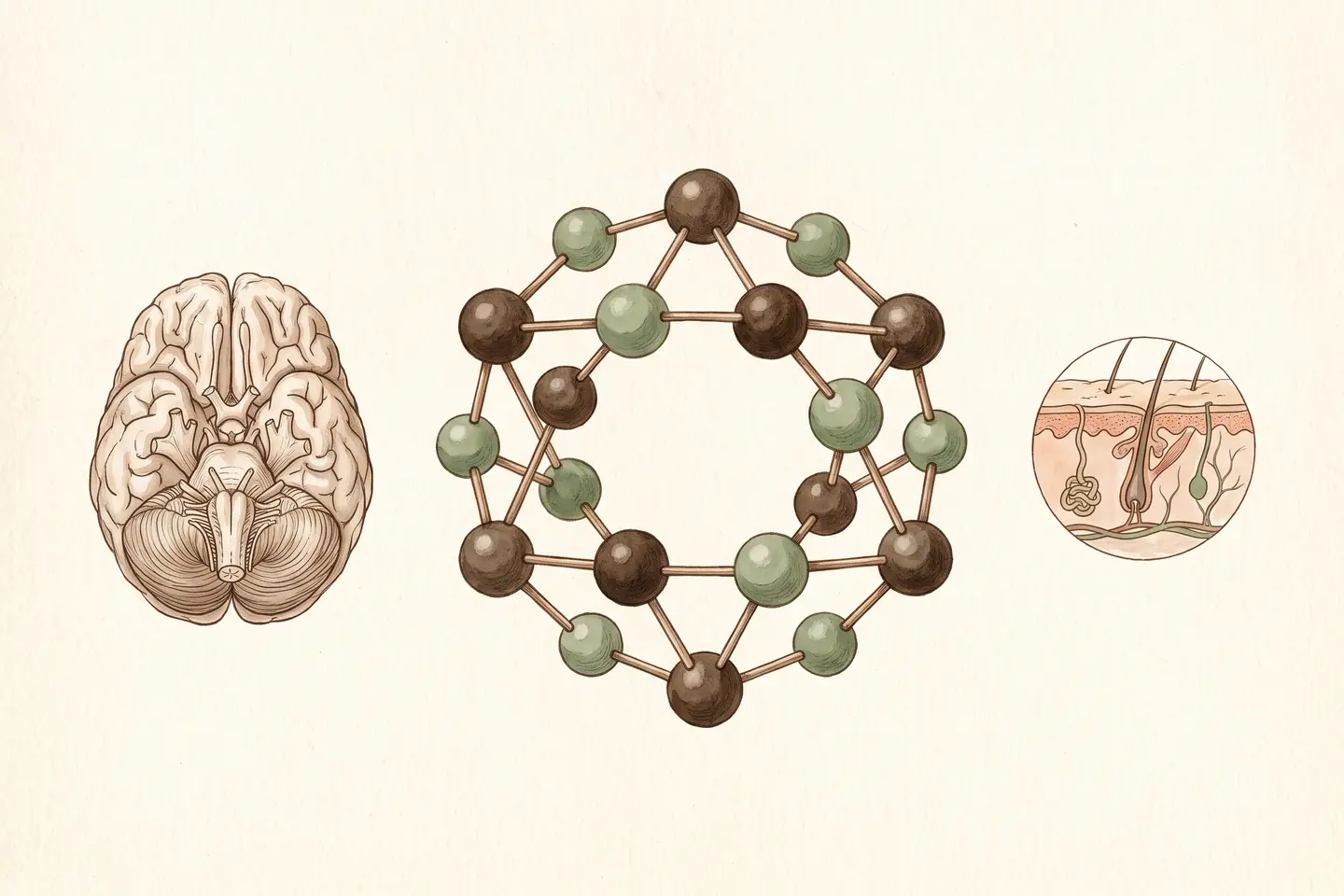
Melanotan II stimulates melanin production by activating melanocortin receptors in the skin. It allows you to develop a tan with minimal UV exposure, providing some protection against sunburn. MT-II also crosses the blood-brain barrier, which can affect appetite and libido as secondary effects.

Melanotan II
Melanotan II
Melanotan II

Melanotan II Evidence Snapshot

How these guides are reviewed
Regulatory status
Not FDA approved · research use only
Dosing guidance
Reviewed by our clinical team
Linked evidence
10 research sources
Content updated
Jun 13, 2026

Dose and schedule recommendations shown below come from The Peptide App Clinical Team. Research links are provided so readers can inspect the supporting evidence directly. Review the sources.

Quick Answers About Melanotan II

Is Melanotan II FDA approved?

No. This profile records Melanotan II as not FDA approved and for research use only.

More context

Review the regulatory and source details on this page for the current context.

What dose does The Peptide App Clinical Team recommend for Melanotan II?

Dose: Start at 0.25mg, increase to 0.5-1mg per injection.

More context

Schedule: daily. Cycle: Loading phase: daily for 2-3 weeks. Maintenance: 1-2x per week. This is clinical-team guidance for reference and does not replace individualized instructions from a licensed clinician.

What research supports this Melanotan II guide?

This guide links to 10 curated or current research sources.

More context

Open the research section to inspect the source titles, publication details, study types, and available abstracts directly.

Review the Melanotan II research sources

Studied Effects & Mechanisms

Melanin Production

Activates MC1R receptors to boost natural melanin in skin

Sunburn Protection

Increased melanin helps absorb UV and reduce burning

Libido Enhancement

Activates MC4R in the brain, often increasing sex drive

Appetite Effects

May reduce appetite through central nervous system activity

Origin and history

Melanotan II is a synthetic, cyclic analog of alpha-melanocyte-stimulating hormone (alpha-MSH), a small peptide the body uses to signal pigment production. It was developed in the 1980s by researchers at the University of Arizona who were looking for a way to induce a protective tan without heavy sun exposure, on the theory that darker skin might lower skin cancer risk. Chemists there re-engineered the natural alpha-MSH sequence into a more stable, longer-lasting molecule that resists the rapid breakdown the natural hormone undergoes. That same research program later produced two better-known descendants: afamelanotide (a linear analog marketed as Scenesse), and bremelanotide, also called PT-141, which was pursued for sexual dysfunction after tanning studies noticed unexpected arousal effects. Melanotan II itself was never brought to market as an approved drug and instead spread through the gray market as a self-injected tanning and libido product.

What people use it for

The headline reason people seek out Melanotan II is cosmetic tanning: it darkens the skin without requiring time in the sun or a tanning bed, which is why it is sometimes nicknamed the "Barbie peptide." Users often report that the color develops on its own and can be held with occasional maintenance dosing once the desired shade is reached. A second, well-documented effect is on sexual function; because the melanocortin system also influences arousal, many users notice increased libido and erections, the same property that led to PT-141 being developed as a separate drug. Some also cite appetite suppression, since melanocortin signaling touches hunger pathways. Within bodybuilding and physique circles it is popular around competitions for stage-ready color, and it is often discussed as part of a broader "stack" of unregulated peptides rather than used alone.

How it works

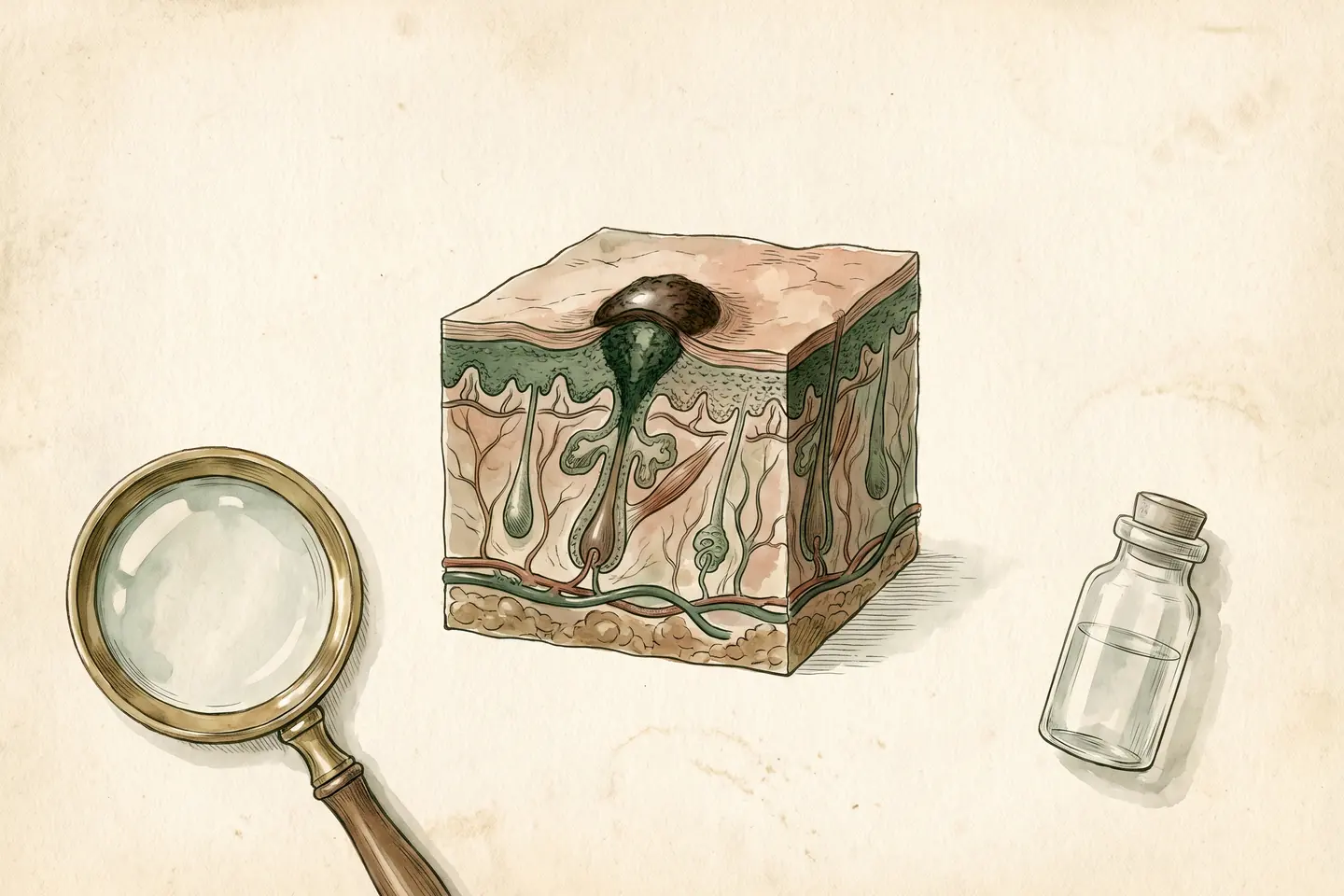
Melanotan II is a non-selective agonist at the melanocortin receptors, meaning it activates several of them (including MC1R, MC3R, and MC4R) rather than targeting just one. Activating MC1R on pigment cells drives melanocytes to produce more melanin, which is what darkens the skin, and this happens systemically, so pigmentation increases everywhere rather than in one spot. Its non-selective reach is exactly why the effects spill beyond tanning: MC4R activity in the brain influences sexual arousal and appetite, which accounts for the libido and appetite changes users describe. This lack of selectivity is the distinguishing feature versus its descendants, which were engineered to be narrower. Because melanin production is stimulated indiscriminately, existing freckles and moles darken along with the surrounding skin, a point that becomes important when evaluating its risks.

How it is administered

Melanotan II is most commonly self-administered by subcutaneous injection using an insulin-style syringe, typically after reconstituting a lyophilized powder with bacteriostatic water. A nasal spray form also circulates and is used by people who want to avoid needles, though dosing by that route is harder to control. Users generally describe an initial loading period to build up color, followed by less frequent maintenance dosing once the desired tone is reached. Because the peptide acts on receptors throughout the body, its effects are systemic rather than confined to any injection site. None of this reflects an approved or standardized protocol; the cadences people describe come from anecdote and community sharing, not clinical dosing guidance.

Clinical & Research Context

Fair-skinned people who burn easily
Those wanting a tan without excessive UV exposure
People looking to reduce sunburn risk
Those interested in the libido-enhancing side effects

State of the evidence

The evidence base for Melanotan II itself is thin and dominated by early pharmacology studies and small human experiments rather than large controlled trials, and it was never carried through formal approval. Its ability to increase pigmentation and to affect sexual arousal is reasonably well established from that early work, but rigorous long-term safety data in humans is lacking. The safety concerns are not merely theoretical: dermatologists report seeing patients develop atypical, unusual-looking moles while using it, and there are published case reports in the scientific literature linking Melanotan II to melanoma, though a causal relationship has not been proven. A further, practical evidence gap is product quality, because material sold online comes from unregulated labs and may be impure or contaminated. Common reported side effects include nausea, facial flushing, appetite loss, yawning and stretching, and darkening of moles and freckles.

Legal and regulatory status

Melanotan II is not approved by the FDA for any use and is sold only as a research chemical, not as a medicine, so it carries no regulated manufacturing or quality oversight. Regulators internationally treat it as an unapproved substance: Australia's Therapeutic Goods Administration and border authorities, for example, actively try to intercept it and curb its advertising. It is worth separating it from its approved relatives, since the names are easy to confuse: afamelanotide (Scenesse) is approved for a rare light-sensitivity disorder, and bremelanotide (Vyleesi, the PT-141 derivative) is approved for a form of sexual dysfunction, but neither of those approvals extends to Melanotan II. It circulates under aliases including MT-II and MT-2. Enforcement and legal status vary by country and change quickly, so current local rules should always be checked.

Further listening

3 recordings

Research-Market Price Snapshot

A compact market signal for this profile. The dedicated pricing page owns vendor, vial-size, and price-per-mg comparisons.

Updated Jul 16, 2026

Vendors
50
Listings
51
Observed range
$20$97
Compare all Melanotan II prices →

Melanotan II Research

Live PubMed intelligence from the research crawler

PMID 38253222HumanRelevance 84Extracted

Social deficits are debilitating features of many psychiatric disorders, including autism. While time-intensive behavioral therapy is moderately effective, there are no pharmacological interventions for social deficits in autism. Many studies have attempted to treat social deficits using the neuropeptide oxytocin for its powerful neuromodulatory abilities and influence on social behaviors and cognition. However, clinical trials utilizing supplementation paradigms in which exogenous oxytocin is chronically administered independent of context have failed. An alternative treatment paradigm suggests pharmacologically activating the endogenous oxytocin system during behavioral therapy to enhance the efficacy of therapy by facilitating social learning. To this end, melanocortin receptor agonists like Melanotan II (MTII), which induces central oxytocin release and accelerates formation of partner preference, a form of social learning, in prairie voles, are promising pharmacological tools. To model pharmacological activation of the endogenous oxytocin system during behavioral therapy, we administered MTII prior to social interactions between male and female voles. We assessed its effect on oxytocin-dependent activity in brain regions subserving social learning using Fos expression as a proxy for neuronal activation. In non-social contexts, MTII only activated hypothalamic paraventricular nucleus, a primary site of oxytocin synthesis. However, during social interactions, MTII selectively increased oxytocin-dependent activation of nucleus accumbens, a site critical for social learning. These results suggest a mechanism for the MTII-induced acceleration of partner preference formation observed in previous studies. Moreover, they are consistent with the hypothesis that pharmacologically activating the endogenous oxytocin system with a melanocortin agonist during behavioral therapy has potential to facilitate social learning.

Efficacy evidence
PMID 39442746AnimalRelevance 74

Current antidepressant therapy shows substantial limitations, and there is an urgent need for the development of new treatment strategies for depression. Stressful events and hyperactivity of the hypothalamic-pituitary-adrenal (HPA) axis play an important role in the pathogenesis of depression. HPA axis activity is self-regulated by negative feedback at several levels including adrenocorticotropic hormone (ACTH)-mediated feedback. Here, we investigated whether noncorticotropic synthetic analogs of the ACTH(4-10) fragment, ACTH(4-7)-Pro-Gly-Pro (Semax) and Ac-Nle4-cyclo[Asp5-His6-D-Phe7-Arg8-Trp9-Lys10]ACTH(4-10)-NH2 (Melanotan II (MTII), a potent agonist of melanocortin receptors), have potential antidepressant activity in a chronic unpredictable stress (CUS) rat model of depression. Stressed and control male adult Sprague-Dawley rats received daily intraperitoneal injections of saline or a low dose (60 nmol/kg of body weight (BW)) of Semax or MTII. Rats were monitored for BW and hedonic status, as measured in the sucrose preference test. We found that chronic treatment with Semax and MTII reversed or substantially attenuated CUS-induced anhedonia, BW gain suppression, adrenal hypertrophy and a decrease in the hippocampal levels of BDNF. In the forced swim test, no effects of the CUS procedure or peptides on the duration of rat immobility were detected. Our findings show that in the CUS paradigm, systemically administered ACTH(4-10) analogs Semax and MTII exert antidepressant-like effects on anhedonia and hippocampal BDNF levels, and attenuate markers of chronic stress load, at least in male rats. The results support the argument that ACTH(4-10) analogs and other noncorticotropic melanocortins may have promising therapeutic potential for the treatment and prevention of depression and other stress-related pathologies.

PMID 34464955HumanRelevance 60Extracted

BACKGROUND: Melanotan II (MT II) is a synthetic analogue of α-melanocyte-stimulating hormone that, via interaction with the melanocortin 1 receptor, induces skin hyperpigmentation. The unregulated acquisition of MT II injections via the internet and other outlets has become popular over the last decades in order to exploit its properties for use as a tanning agent. Due to the covert nature of MT II use, it is difficult to assess the extent of its use among the general population and to characterise any associated side effects. OBJECTIVES: The aim of this study was to qualitatively examine MT II use, as portrayed on online forums, and to explore the motivations for its use and side effect profile. METHODS: Data were extracted retrospectively from UK and Ireland online chatrooms and forums from January 2016 to October 2017. Inclusion criteria were active MT II chatrooms and forums considered to be within the public domain. An inductive thematic analysis identified themes within discussion threads. RESULTS: A total of 623 discussion entries were extracted; 205 participants contributed to these entries. Emergent themes included motivation for MT II use, misinformation in the context of using an unregulated product, product preparation and administration, dosing regimens, sunbed use, side effects and concerning practices associated with MT II use. CONCLUSION: Motivations for MT II use included the pursuit of a tanned appearance, often in anticipation of sun holidays and fitness/body building competitions. Clinicians should be aware not only of the potential risks in relation to pigmented skin lesions, but also remain cognisant of the other medical hazards associated with the use of this substance, namely transmission of infectious diseases, use of potentially contaminated products, polypharmacy, and sunbed exposure.

Safety evidenceEfficacy evidence
PMID 34440144HumanRelevance 57

The functions of anorexigenic neurons secreting proopiomelanocortin (POMC)/alpha-melanocyte-stimulating hormone (α-MSH) of the melanocortin system in the hypothalamus in vertebrates are energy homeostasis, food intake, and body weight regulation. However, the mechanisms remain elusive. This article reports on zebrafish that have been genetically engineered to produce α-MSH mutants, α-MSH-7aa and α-MSH-8aa, selectively lacking 7 and 8 amino acids within the α-MSH region, but retaining most of the other normal melanocortin-signaling (Pomc-derived) peptides. The α-MSH mutants exhibited hyperphagic phenotypes leading to body weight gain, as observed in human patients and mammalian models. The actions of several genes regulating appetite in zebrafish are similar to those in mammals when analyzed using gene expression analysis. These include four selected orexigenic genes: Promelanin-concentrating hormone (pmch), agouti-related protein 2 (agrp2), neuropeptide Y (npy), and hypothalamic hypocretin/orexin (hcrt). We also study five selected anorexigenic genes: Brain-derived neurotrophic factor (bdnf), single-minded homolog 1-a (sim1a), corticotropin-releasing hormone b (crhb), thyrotropin-releasing hormone (trh), and prohormone convertase 2 (pcsk2). The orexigenic actions of α-MSH mutants are rescued completely after hindbrain ventricle injection with a synthetic analog of α-MSH and a melanocortin receptor agonist, Melanotan II. We evaluate the adverse effects of MSH depletion on energy balance using the Alamar Blue metabolic rate assay. Our results show that α-MSH is a key regulator of POMC signaling in appetite regulation and energy expenditure, suggesting that it might be a potential therapeutic target for treating human obesity.

PMID 11035391HumanRelevance 57

We review our experience with Melanotan II, a non-selective melanocortin receptor agonist, in human subjects with erectile dysfunction (ED). Melanotan II was administered to 20 men with psychogenic and organic ED using a double-blind placebo-controlled crossover design. Penile rigidity was monitored for 6 h using RigiScan. Level of sexual desire and side effects were reported with a questionnaire. In the absence of sexual stimulation, Melanotan II led to penile erection in 17 of 20 men. Subjects experienced a mean of 41 min Rigiscan tip rigidity>80%. Increased sexual desire was reported after 13/19 (68%) doses of Melanotan II vs 4/21 (19%) of placebo (P<0.01). Nausea and yawning were frequently reported side effects due to Melanotan II; at a dose of 0.025 mg/kg, 12.9% of subjects had severe nausea. We conclude that Melanotan II is a potent initiator of penile erection in men with erectile dysfunction. Our findings warrant further investigation of melanocortin agonists and antagonists on penile erection. International Journal of Impotence Research (2000) 12, Suppl 4, S74-S79.

PMID 16412534HumanRelevance 55

The melanocortins (MCs) are a family of multifunctional peptidergic hormones. Several superpotent, prolonged acting, enzymatically resistant, MC analogs have been designed and synthesized to help clarify the nature and role of MCs and their receptors (MCRs) in physiological functions. Two of these analogs, a linear peptide, melanotan I, and a cyclic truncated peptide, melanotan II (MTI and MTII, respectively) have been patented and tested clinically for studies on tanning of the skin (MTI) and for diagnosis and treatment of male erectile dysfunction (MTII). A new MTII analog, PT-141 (Palatin Technologies) has initial phase I/II trials and is scheduled to enter pivotal stage III clinical trials leading to commercialization. MTI may provide a therapeutic tan with the potential to lower the risk of skin cancer. PT-141 may improve sexual functionality in both males and females.

Related Peptides

PT-141

THE DESIRE ACTIVATOR
CModerate
Neurological Support · Sexual & Reproductive HealthHealing · Neurological SupportDose1.5 mgCycleAs needed, max 1 dose per 24 hours, max 8...Kicks inEffects typically begin 45-60 minutes after...

FDA-approved desire enhancement that works through the brain

from $1.85/mg · 65 vendorsNº 004 / 006

Kisspeptin-10

THE FERTILITY IGNITER
BGood
Sexual & Reproductive Health · Hormonal RegulationHealing · Sexual & Reproductive HealthDoseSee guideCycleAcute dosing for hormone stimulationKicks inHormone response within minutes to hours of...

Master hormone regulator for fertility and libido

from $3/mg · 49 vendorsNº 001 / 006

Libidon

THE PROSTATE PROTECTOR
AHigh
Hormonal Regulation · Sexual & Reproductive HealthLongevity · Hormonal RegulationDoseSee guideCycle10-20 days on, 3-6 months breakKicks inHormone balance improvements may take 2-4...

Support prostate health and hormone balance naturally

Full profileNº 002 / 006

Oxytocin

THE BONDING HORMONE
BGood
Mood Regulation · Anxiety ManagementCognitive · Mood RegulationDoseSee guideCycle4 weeks on, 4 weeks offKicks inCalming effects often felt within 20-30...

The bonding hormone for connection, trust, and calm

from $3/mg · 40 vendorsNº 003 / 006

Testagen

THE HORMONAL OPTIMIZER
AHigh
Hormonal Regulation · Sexual & Reproductive HealthMetabolic · Hormonal RegulationDoseSee guideCycle4 weeks on, 12 weeks offKicks inHormonal changes may be measurable within...

Optimize your pituitary for testosterone and thyroid support

from $1.60/mg · 13 vendorsNº 005 / 006

Testoluten

THE TESTOSTERONE RESTORER
AHigh
Sexual & Reproductive Health · Hormonal RegulationHealing · Sexual & Reproductive HealthDoseSee guideCycle4 weeks on, 12 weeks off (repeat every 3-6...Kicks inTestosterone improvements may be noticeable...

Restore testicular function and natural testosterone

Full profileNº 006 / 006