
Slower titration eased GLP-1 nausea; BPC-157's gut data come from rats
Slower titration reduced GLP-1 side effects in trials, and BPC-157's gut data come from rodent injury models. No trial has tested BPC-157 with a GLP-1 drug.

By Jay Spall, chemist and biochemist
Disclosure: Jay is a co-founder of The Peptide App. This review discusses the studies cited below; it is not a comprehensive live trial registry or treatment recommendation. Development and regulatory status can change. The app’s tools organize records and arithmetic and do not validate a research product.
On this page
- What causes nausea on GLP-1 drugs like semaglutide?
- Does slower titration reduce GLP-1 nausea?
- Why is BPC-157 called a gut peptide?
- What human studies of BPC-157 exist?
- Does BPC-157's healing mechanism apply to GLP-1 nausea?
- Where does the 250 to 500 mcg BPC-157 dose come from?
- What is still unknown about combining BPC-157 with a GLP-1 drug?
- Sources
Key facts
| Question | Direct answer |
|---|---|
| Does BPC-157 reduce the nausea and gut side effects of GLP-1 drugs? | Untested. No trial in any species has tested BPC-157 alongside a GLP-1 agonist, for nausea or for any other endpoint. |
| What causes GLP-1 nausea? | The drugs' own mechanism. Slowed gastric emptying and central appetite signaling are part of how GLP-1 drugs work, and gastrointestinal adverse events are the dominant tolerability finding across the large randomized trials [1][2][5]. |
| What human evidence exists for BPC-157? | Three small pilot studies, in intra-articular knee pain, interstitial cystitis, and intravenous safety and pharmacokinetics. None involved GLP-1 co-administration or gastric motility. |
| Was BPC-157 ever tested for a gut condition in humans? | Yes, in a Phase 2 ulcerative colitis program, PL-14736, presented at a conference in 2005. Its results were never published in a peer-reviewed journal. |
| Does the "250-500 mcg/day" BPC-157 dose come from human data? | No. The figure circulates in forum protocols and does not trace to any human dosing study. |
| What happens if someone stacks them anyway? | They become an uncontrolled, unmonitored data point on a combination nobody has measured, not a person following an established protocol. |
6 sources cited. View sources
What causes nausea on GLP-1 drugs like semaglutide?
GLP-1 nausea comes from the drugs' intended mechanism, not from an unrelated side effect. Slowed gastric emptying and reduced appetite are part of how these drugs produce weight loss.
Gastrointestinal side effects are not a side plot in the GLP-1 trial literature; they are the headline safety finding. Across the STEP program of semaglutide trials, gastrointestinal adverse events were the most commonly reported category: generally mild to moderate, but common enough to be the leading cause of discontinuation in some analyses [1][5].
Does slower titration reduce GLP-1 nausea?
Yes: trials that compared titration schedules found that a slower dose ramp reduced tolerability problems [4]. The STEP 8 trial used a 16-week escalation for once-weekly semaglutide versus a 4-week escalation for daily liraglutide, and the two dosing arms differed in how participants tolerated the drug [4].
GLP-1 nausea tracks with dose and with the speed of titration. That is why the standard clinical answer to nausea is to slow the ramp, not to add a second, unrelated peptide. The reasons titration is paced the way it is are covered in using GLP-1 medications well.
The GLP-1 dosing numbers are well characterized. Trials have tested semaglutide at doses up to 2.4 mg weekly for standard obesity indications, including STEP 2 in adults with type 2 diabetes [1][2][3]. The phase 3b STEP UP trial tested 7.2 mg weekly, with gastrointestinal tolerability tracked alongside efficacy [6]. Some trial designs used slower escalation over roughly 16 weeks specifically to manage GI symptoms [4].
Why is BPC-157 called a gut peptide?
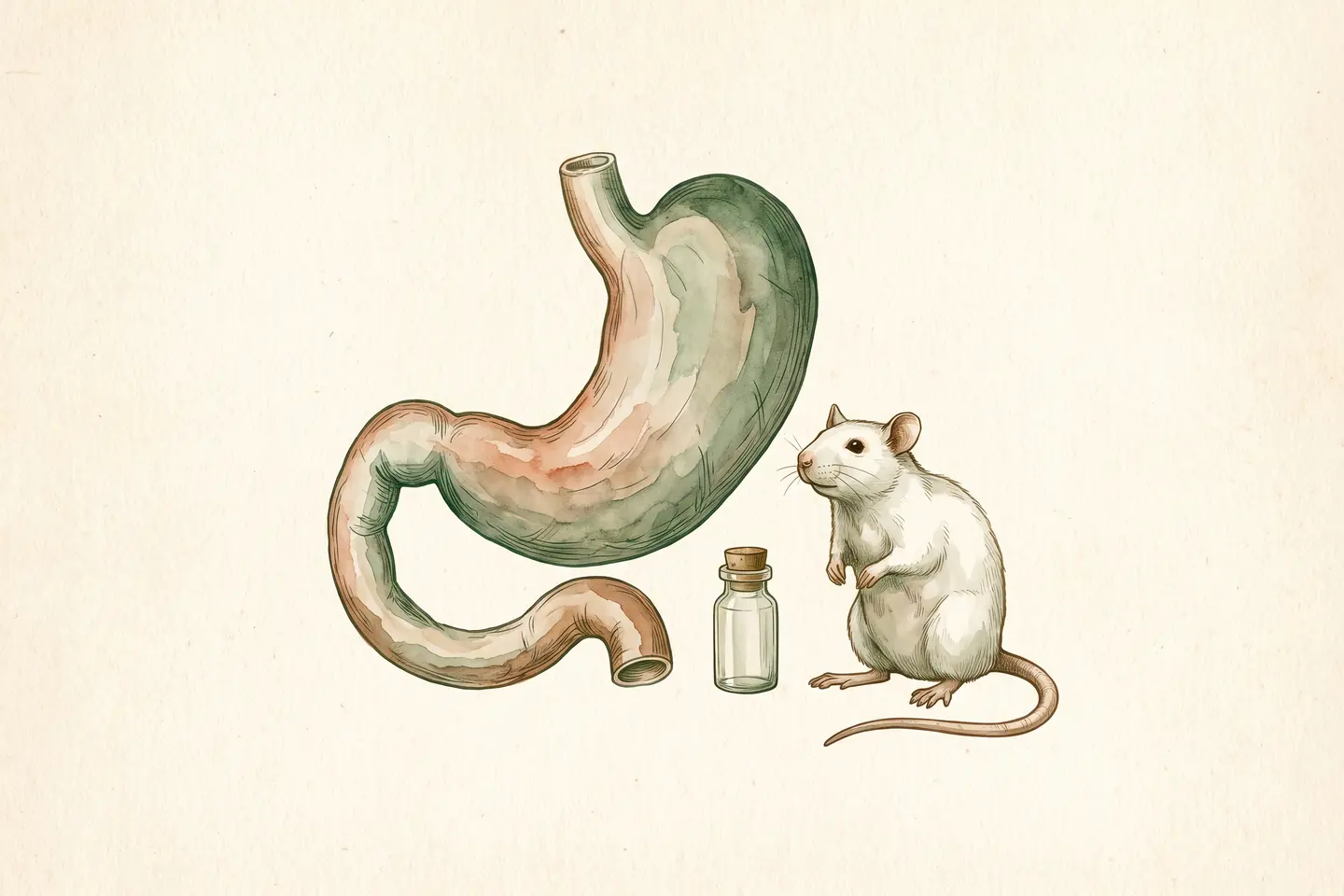
BPC-157's reputation as a "gut peptide" comes almost entirely from rodent work: gastric ulcer models, colitis models, and tendon or ligament injury models. In those studies, a synthetic peptide fragment is given to rats with a chemically induced lesion, and healing markers are measured afterward.
That animal research is real and published, and it answers a narrow question: whether BPC-157 speeds repair of a specific induced injury in a rodent. It says nothing by itself about a GLP-1 receptor agonist's effect on gastric motility in a human being.
What human studies of BPC-157 exist?
Three small pilot studies make up BPC-157's human evidence, according to a 2025 review: one in intra-articular knee pain, one in interstitial cystitis, and one intravenous safety and pharmacokinetics study. A separate 2025 review identified 36 BPC-157 studies in total, of which 35 were preclinical.
The GLP-1 side of the ledger is on a different scale. Semaglutide has multiple randomized, double-blind, placebo-controlled trials enrolling from several hundred to nearly 2,000 participants each, with prespecified adverse-event tables, published in peer-reviewed journals [1][2][3].
BPC-157's most advanced attempt at a gut-specific human indication, the PL-14736 Phase 2 ulcerative colitis program, was presented at a conference in 2005. Two decades later, it has no peer-reviewed publication of results, a gap that rarely makes it into the forum posts that cite BPC-157 as "gut healing." The full BPC-157 human evidence record covers each of those studies.
Does BPC-157's healing mechanism apply to GLP-1 nausea?
No shared mechanism has been demonstrated: BPC-157's animal studies test repair of a lesion, and GLP-1 nausea is not caused by a lesion. Those studies model chemically burned stomach tissue, a severed tendon or an inflamed colon wall.
GLP-1 nausea comes from the drug intentionally slowing gastric emptying and altering appetite signaling, which is the mechanism the drug is designed to produce. Trials document GI adverse events alongside meaningful weight change. In a 2021 trial of once-weekly semaglutide, mean body-weight change was -14.9% versus -2.4% with placebo [1].
A peptide studied for healing tissue damage answers a different question from whether anything can reduce delayed gastric emptying in someone taking a drug engineered to delay gastric emptying. Nothing in the rodent ulcer literature or the three human pilot studies tests gastric emptying rate, nausea scores or any pharmacodynamic interaction with a GLP-1 receptor agonist. The claim that BPC-157 "protects the stomach lining" against GLP-1 side effects assumes a shared mechanism that has not been demonstrated to exist.
Where does the 250 to 500 mcg BPC-157 dose come from?
Forum protocols, not a human study. The commonly cited dose of 250 to 500 mcg per day, subcutaneous, sometimes split into two doses and timed relative to a GLP-1 injection, does not trace to any human pharmacokinetic or dose-ranging study.
Those figures read like clinical dosing because they are specific and confidently stated. Specificity is not evidence, and BPC-157 has no dataset equivalent to the GLP-1 trials.
BPC-157 remains an unapproved research compound with no established human pharmacokinetic profile. Basic questions have no established answers: how it is absorbed, how it is cleared, and whether its hepatic metabolism changes when a GLP-1 drug alters gastric emptying and gut transit. Claims about how long BPC-157 lasts in the body run into the same missing data.
What is still unknown about combining BPC-157 with a GLP-1 drug?
The list of unknowns is short, and it covers the whole stack:
- Co-administration. No published trial, in humans or animals, has given BPC-157 with a GLP-1 receptor agonist for any outcome, nausea included.
- BPC-157 safety. BPC-157's human safety record is limited to three small, short pilot studies in unrelated indications, none examining gastric motility.
- The colitis program. BPC-157's best-developed gut-specific human program has no peer-reviewed published outcome data two decades after it was presented.
- Dose, timing and outcome. None of the three has any human record to compare against for a BPC-157 and GLP-1 stack.
GLP-1 gastrointestinal effects, by contrast, are well documented in scale and detail, including their relationship to dosing and titration speed [1][2][4][5][6]. One side of this stack is measured in thousands of randomized patients, the other in animal models and a handful of unrelated human pilot studies. Someone combining the two on the strength of a forum protocol is not following a tested regimen. That person is generating the first data point on a question nobody has asked in a controlled setting.
Sources
Last updated

Written by
Chemist and biochemist. Co-founder and author, The Peptide App.
Jay is a chemist, biochemist and entrepreneur whose work connects scientific research with consumer health products. He has held Chief Science Officer and product development leadership roles and previously served as Chief Revenue Officer at Minicircle.
Keep reading

BPC-157 and TB-500
BPC-157's half-life is under 30 minutes in rats and dogs
BPC-157's elimination half-life is under 30 minutes in rats and dogs, the only species measured. The 4 to 6 hour figure online doesn't trace to a study.
BPC-157 and TB-500
BPC-157 healed tendons in rats; human data are three small pilots
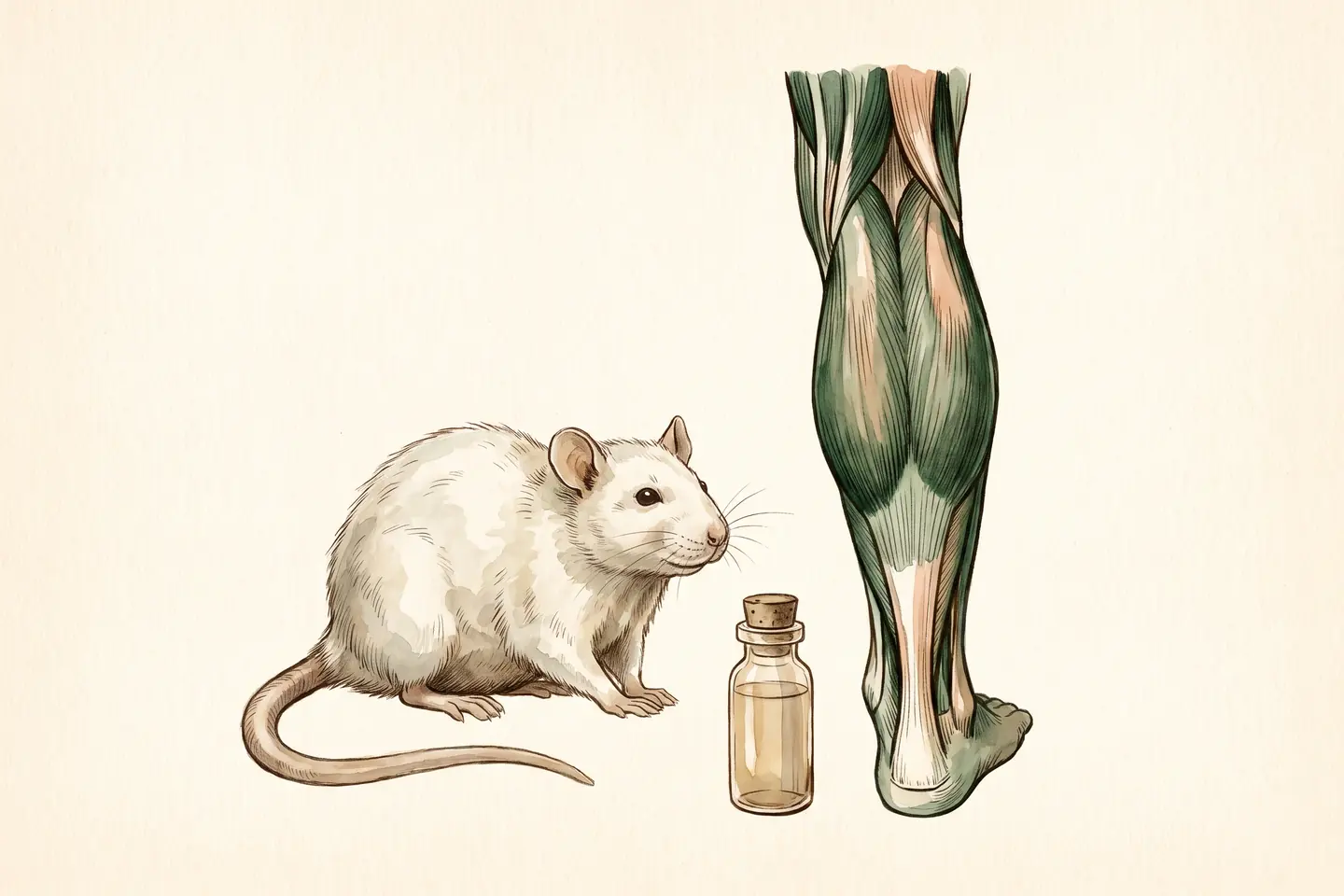
BPC-157 improved strength and collagen organization in cut rat Achilles tendons in a 2003 study. Human data are three small pilots, none in tendon patients.

BPC-157 and TB-500
BPC-157 has 100-plus studies, nearly all from one Zagreb group
The Zagreb group behind most BPC-157 papers reports gut, tendon and vascular effects in animals. Independent replication by other labs is scarce.
Profiles and tools

The Peptide App
Track protocols, doses, and reconstitution in one place.
Save your calculations, set reminders, log doses, and keep outcome notes — free to start.
 or scan the QR code →