
Nasal orexin-A changed REM sleep and smell in small narcolepsy trials
Intranasal orexin-A changes REM sleep, smell and sympathetic activity in small human trials. No trial has tested it for alertness during sleep loss.

By Jay Spall, chemist and biochemist
Disclosure: Jay is a co-founder of The Peptide App. This review discusses the studies cited below; it is not a comprehensive live trial registry or treatment recommendation. Development and regulatory status can change. The app’s tools organize records and arithmetic and do not validate a research product.

On this page
- What is orexin-A, and why give it through the nose?
- Has nasal orexin-A been shown to keep sleep-deprived people alert?
- What does nasal orexin-A do to sleep in narcolepsy?
- Does nasal orexin-A restore smell in narcolepsy?
- Does nasal orexin-A act on the brain in healthy people?
- Why did orexin drug development move to danavorexton?
- Does nose-to-brain delivery explain why nasal orexin-A stalled?
- What is still unknown about intranasal orexin-A?
- Sources
Key facts
| Question | Direct answer |
|---|---|
| Does nasal orexin-A do anything in the human brain? | Yes, within a narrow range. Small human trials show changed sleep architecture, restored odor detection and increased sympathetic nerve activity, not a demonstrated wakefulness boost in healthy people [1][5][6][7]. |
| Has a trial shown nasal orexin-A keeps sleep-deprived adults sharp? | No. Every human trial cited below enrolled narcolepsy patients, tested for sleep and smell, or healthy volunteers, tested for autonomic endpoints. None measured cognitive performance under sleep deprivation [1][5][6][7]. |
| How many people have received nasal orexin-A in trials? | Single digits to low teens per study: 7 to 14 narcolepsy patients [5][6][7] and 10 healthy men [1]. These are pilot-scale crossover trials. |
| Why did orexin drug development move away from the nasal peptide? | Resources moved to orally or intravenously dosed small-molecule orexin receptor agonists such as danavorexton, which show cleaner pharmacodynamics on standardized wakefulness tests [3][4]. |
| Did nose-to-brain delivery itself fail? | Not as a route. Nasal delivery of other neuropeptides still produces measurable central effects, but dose-response is unpredictable even with devices built for it [2]. The record fits a peptide-stability and pharmacokinetic problem better than a delivery failure. |
9 sources cited. View sources
What is orexin-A, and why give it through the nose?
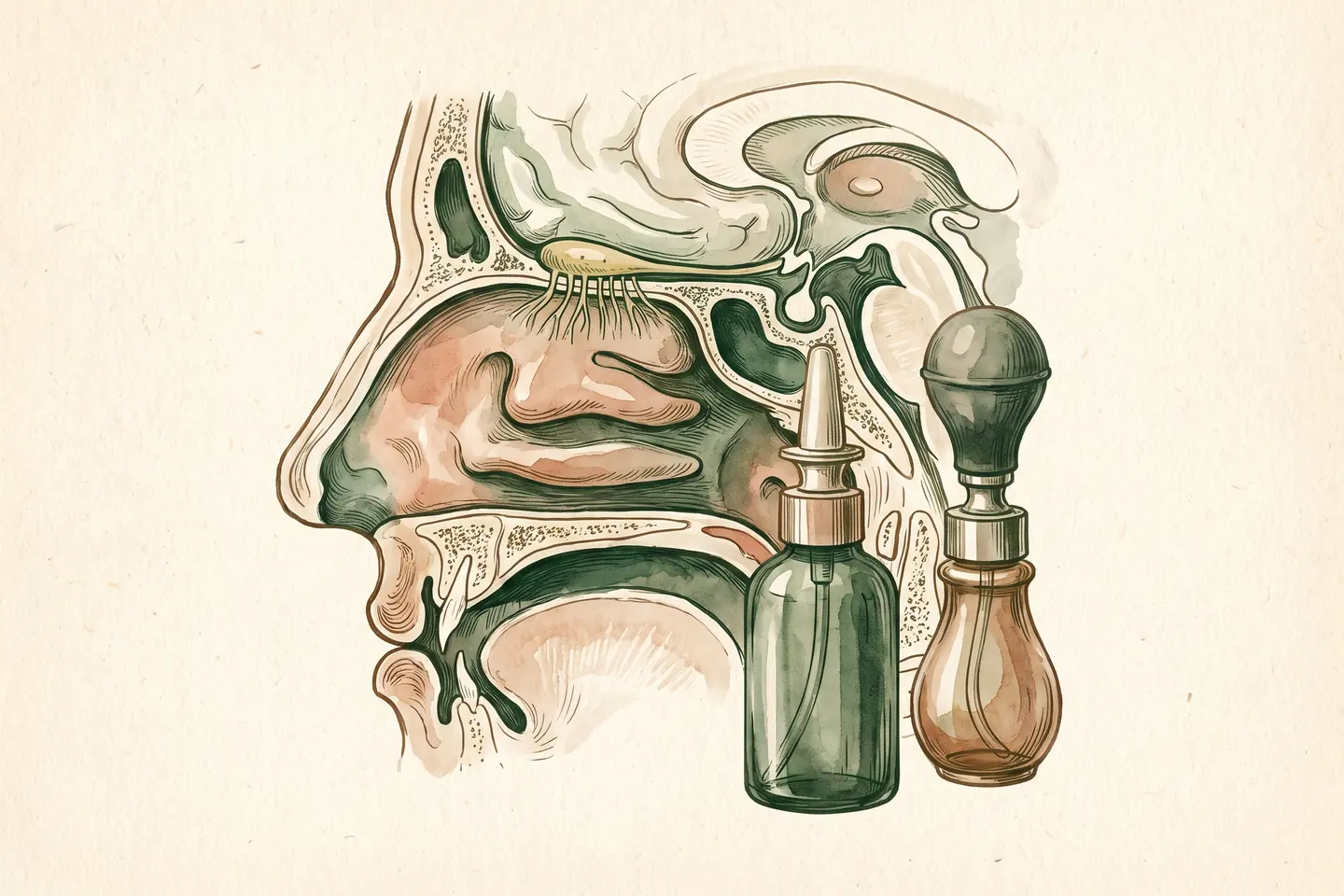
Orexin-A, also called hypocretin-1, is a hypothalamic neuropeptide that promotes wakefulness, and intranasal dosing was proposed because it crosses the blood-brain barrier poorly by other routes. Orexin-A binds OX1 and OX2 receptors across arousal-related circuits. Narcolepsy type 1 involves loss of the neurons that make it, which is the biological rationale for replacing orexin-A from outside the body, not a rationale for using it as a stimulant.
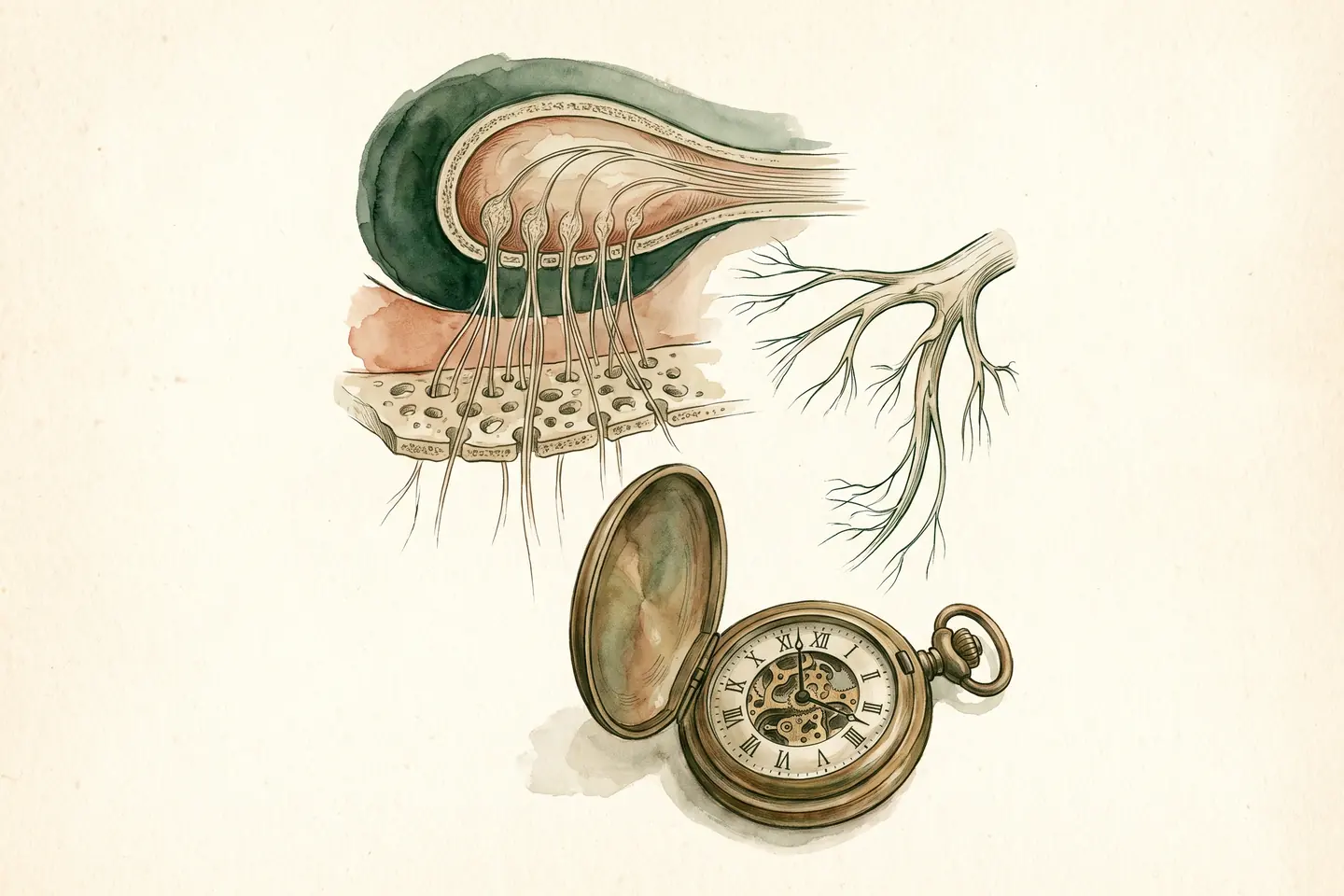
Swallowed or injected peripherally, orexin-A does not reach the brain well. Intranasal dosing aims for the central nervous system through perivascular and perineural channels around the olfactory and trigeminal nerves, bypassing systemic circulation [8][9]. Nose-to-brain delivery is a real, studied mechanism for neuropeptides generally, not a fringe idea, and how nasal peptides reach the brain explains those olfactory and trigeminal routes. The same logic underlies intranasal insulin research for cognitive aging [9].
Has nasal orexin-A been shown to keep sleep-deprived people alert?
No published trial has enrolled sleep-deprived healthy adults and tested intranasal orexin-A on wakefulness or cognitive performance as a primary outcome. The marketed claim that nasal orexin-A "keeps you sharp when sleep deprived" is untested in humans.
The human record splits into three separate strands: sleep architecture in narcolepsy, olfaction in narcolepsy, and autonomic function in healthy men. Online coverage conflates them, and the three are not interchangeable. None of them is a wakefulness trial in healthy people.
What does nasal orexin-A do to sleep in narcolepsy?
Intranasal orexin-A stabilized REM sleep in two small crossover trials of narcolepsy patients, and the REM effect was consistent across both. In a crossover trial of 14 people with narcolepsy with cataplexy, 435 nmol of intranasal orexin-A reduced REM sleep duration, reduced wake-to-REM transitions and produced fewer false reactions on a divided-attention task than placebo [5].
An earlier crossover study in 8 narcolepsy patients found the same REM-stabilizing pattern but no statistically significant change in nocturnal wakefulness itself [7]. Both trials are small and within-subject. Neither reports a wakefulness benefit as its headline positive finding.
Does nasal orexin-A restore smell in narcolepsy?
Intranasal orexin-A improved odor detection thresholds toward normal in 7 narcolepsy patients [6]. The same trial found that people with narcolepsy have measurably worse odor threshold, discrimination and identification scores than matched controls [6].
The olfactory result is a real central effect, replicated within the study. It is a sensory finding, not evidence of cognitive enhancement.
Does nasal orexin-A act on the brain in healthy people?
Nasal orexin-A changed autonomic control in healthy people: 500 nmol raised muscle sympathetic nerve activity more than placebo in 10 lean men [1]. Burst rate rose significantly more than on placebo, by 5.8 versus 2.1 bursts per minute, and total sympathetic activity reached 169% of baseline versus 115% [1].
That result is evidence orexin-A engaged central autonomic control after nasal dosing in people without narcolepsy, which bears on whether the nasal peptide reaches the brain at all. It says nothing about alertness or cognition under sleep loss.
Why did orexin drug development move to danavorexton?
Orexin drug development moved to danavorexton, an intravenous small-molecule OX2R agonist, whose trials have what nasal orexin-A studies lack: standardized wakefulness endpoints, dose-ranging and predictable pharmacokinetics. Danavorexton's pharmacokinetics are predictable because it is not a peptide subject to enzymatic breakdown in the nasal mucosa. That contrast, not any single negative orexin-A result, is the strongest evidence for why the field's money moved from peptide replacement to receptor agonist chemistry.
In a phase 1b trial in 28 adults with idiopathic hypersomnia, a single danavorexton infusion improved maintenance-of-wakefulness test latency, Karolinska Sleepiness Scale scores and psychomotor vigilance task performance compared with placebo [3]. About 44% of participants reported a treatment-related adverse event, mostly mild or moderate [3].
A second trial enrolled 25 people with obstructive sleep apnea and residual daytime sleepiness despite CPAP use. IV doses of 44 mg and 112 mg improved the same three endpoints [4]. About 64% of participants reported treatment-emergent adverse events [4].
Two reviews of intranasal orexin research frame it as a promising strategy, still preclinical to early clinical, limited by "the paucity of orexin agonists" available for study, not by proof that the receptor target is wrong [8][9].
Does nose-to-brain delivery explain why nasal orexin-A stalled?
Nose-to-brain delivery is only part of the problem: other neuropeptides still produce measurable central effects by that route, but dose-response is unpredictable even with devices built for it [2]. An intranasal oxytocin trial using a device engineered to improve nose-to-brain transfer found that 8 IU produced a significant effect on emotion-related ratings and 24 IU did not [2]. Blood oxytocin showed no significant rise at either dose [2].
Intranasal peptide dosing does not behave like oral small-molecule dosing. Its effects can be non-monotonic and decoupled from blood levels. That inconsistency makes an unstable, short-half-life peptide like orexin-A difficult to develop into a reliable product, whether or not the receptor target is correct.
The record fits a peptide-stability and pharmacokinetic problem better than a failure of the nasal route. What nasal oxytocin trials show covers that peptide's wider clinical record.
What is still unknown about intranasal orexin-A?
The human trials leave the practical questions open:
- Brain exposure. The human studies infer central effects from physiological endpoints. None directly measured how much orexin-A reaches the brain.
- Clinical regimen. No study has established an effective clinical regimen, an optimal dose or a formulation.
- Larger samples. Whether the effects replicate in a larger sample, or in healthy sleep-deprived adults, is unaddressed.
- Receptor selectivity. Whether OX1R versus OX2R engagement differs meaningfully between the peptide and small-molecule agonists in humans is not established.
Sources
Last updated

Written by
Chemist and biochemist. Co-founder and author, The Peptide App.
Jay is a chemist, biochemist and entrepreneur whose work connects scientific research with consumer health products. He has held Chief Science Officer and product development leadership roles and previously served as Chief Revenue Officer at Minicircle.
Keep reading

Compound evidence
Nasal oxytocin matched placebo on sexual function in three trials
Nasal oxytocin did no better than placebo for sexual desire, arousal or function in three trials. One couples trial found a modest rise in orgasm intensity.
Compound evidence
Nasal peptides can reach the brain via two narrow neural pathways
Nasal peptides can reach the brain along olfactory and trigeminal nerves, but slowly. Oxytocin took up to 75 minutes to rise in human cerebrospinal fluid.
Compound evidence
Intranasal insulin matched placebo on cognition in five pooled trials
Intranasal insulin matched placebo on cognition and daily function across five pooled trials in MCI or Alzheimer's. A device switch clouds the largest trial.
Profiles and tools

The Peptide App
Track protocols, doses, and reconstitution in one place.
Save your calculations, set reminders, log doses, and keep outcome notes — free to start.
 or scan the QR code →