
Injection route matters for peptides, but effects vary by molecule
Route effects vary by molecule: glucagon peaked higher intramuscularly yet reached similar total exposure. Most peptides people inject lack human route data.

By Jay Spall, chemist and biochemist
Disclosure: Jay is a co-founder of The Peptide App. This review discusses the studies cited below; it is not a comprehensive live trial registry or treatment recommendation. Development and regulatory status can change. The app’s tools organize records and arithmetic and do not validate a research product.
On this page
- Why does the tissue you inject into change absorption?
- Does intramuscular injection deliver more peptide than subcutaneous?
- Does the injection site within subcutaneous fat matter?
- Is there a fixed ratio between subcutaneous and intramuscular delivery?
- Do these route studies apply to the peptides people inject?
- Why can't animal bioavailability data settle the question?
- Does injection site damage change absorption?
- What is still unknown about injection route for peptides?
- Sources
Key facts
| Question | Direct answer |
|---|---|
| Does injecting into fat or muscle change how much peptide you absorb? | Sometimes, sometimes barely. The effect is specific to the molecule, not a rule that applies to peptides as a class. |
| Does intramuscular injection always deliver more into blood? | No. For recombinant glucagon, total blood exposure was statistically similar between the two routes even though peak levels differed [4]. |
| Why do people say intramuscular injection "hits harder"? | Speed and amount are different questions. Intramuscular tissue often produces a faster, higher peak even when the total absorbed over time is close to subcutaneous [4]. |
| Should you change the dose when switching injection route? | No published human data compare the two routes for most peptides discussed in clinics and forums, so a route-based dose adjustment is a guess dressed up as a rule. |
| Does the subcutaneous site matter? | A measurable amount, mostly for timing rather than total absorbed. Insulin analog studies show skin thickness and location shift how fast a peptide appears in blood [2][3][5]. |
| Why do clinics hand out one blanket routing rule? | The rule is borrowed from insulin and a handful of well-characterized hormones, not derived from a study of the peptide being injected. |
7 sources cited. View sources
Why does the tissue you inject into change absorption?
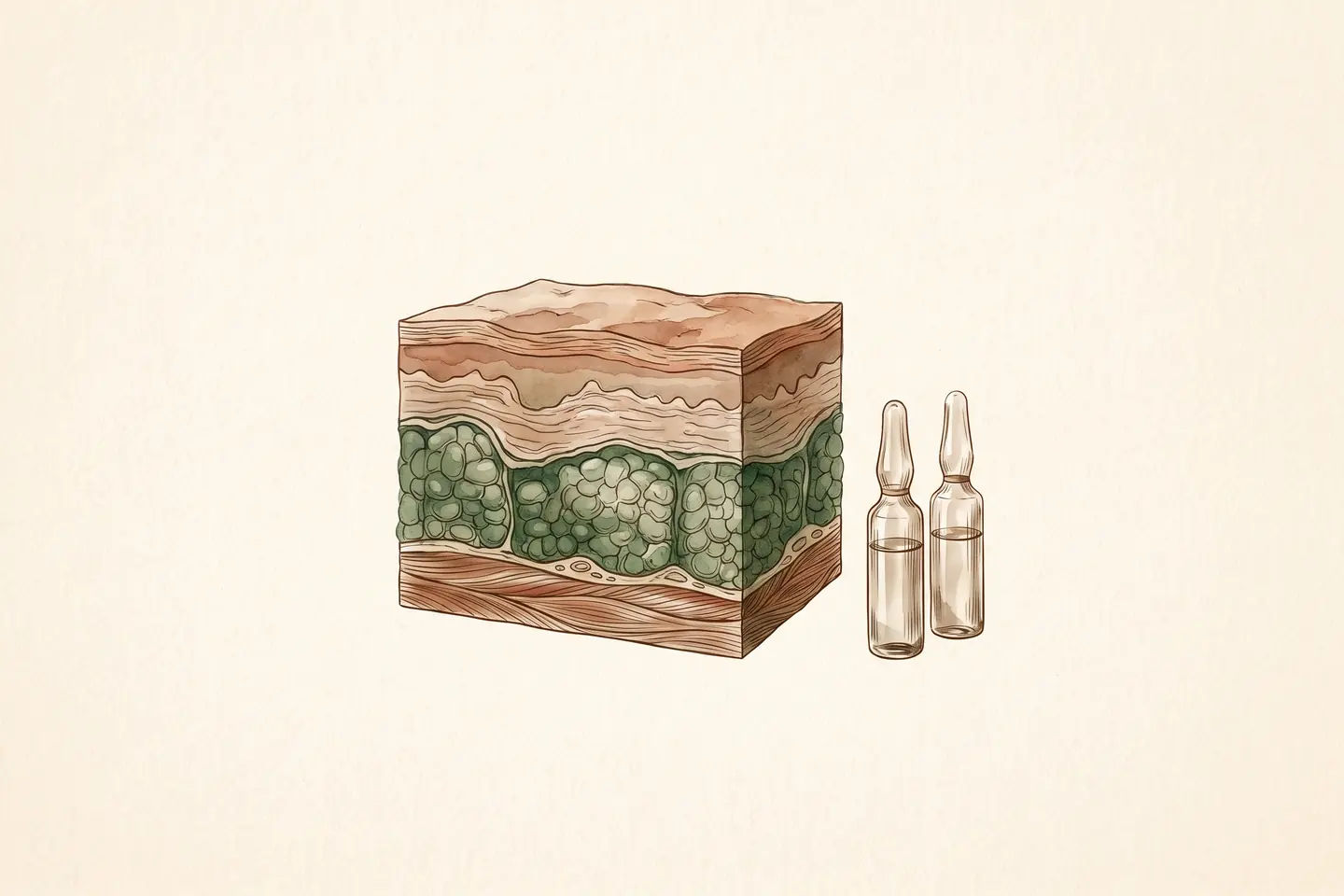
Fat and muscle differ in blood flow, capillary density, and how much of their fluid drainage runs through blood vessels rather than lymphatic vessels.
Muscle is heavily perfused with blood and drains largely into local capillaries. Fat has lower blood flow and a proportionally larger role for lymphatic drainage. That slower vessel network, in other tissues, preferentially picks up larger particles that blood capillary walls tend to exclude by size, as seen with dietary fat absorption in the gut [7].
A small peptide that diffuses easily into blood capillaries may not care much which tissue it lands in. A larger peptide, or one broken down by local enzymes before it clears the injection site, can behave very differently depending on whether it has to detour through lymph first.
Which absorption pathway a molecule is forced to use is the pharmacological reason route gets discussed at all. The pathway is set by the tissue's local blood flow and vessel permeability, not by comfort, needle length, or which method feels more serious. Needle length determines injection depth covers how the equipment decides which tissue a dose lands in.
Does intramuscular injection deliver more peptide than subcutaneous?
Not necessarily. In the clearest head-to-head comparison, recombinant glucagon reached similar total blood exposure by both routes while peaking higher intramuscularly [4].
In a randomized crossover study, total exposure measured as area under the concentration curve was 5.87 ng·h/mL subcutaneous versus 6.63 ng·h/mL intramuscular, a difference that did not reach statistical significance. Peak concentration did differ significantly, at 7.94 versus 9.12 ng/mL (p < 0.05) [4].
The glucagon study is the clearest illustration of the rate-versus-extent distinction. Both routes got a similar total amount of hormone into blood over time, and intramuscular got there faster and higher. Intramuscular versus subcutaneous peptide injection works through what that distinction means in practice.
Does the injection site within subcutaneous fat matter?
Site changes timing more than total absorption, judging by insulin analog research, which mostly compares subcutaneous sites against each other rather than against intramuscular.
Ultra rapid lispro showed roughly 65% absolute bioavailability whether it was injected into abdomen, upper arm or thigh fat, with time to half-maximal concentration around 10 minutes at all three sites [2].
A needle-free jet injector study of insulin aspart found measurable differences in skin thickness by site, abdomen 2.45 mm versus thigh 1.93 mm (p = 0.014), that tracked with differences in absorption curves [3].
Insulin aspart injected into deltoid, abdomen and thigh produced faster peak glucose infusion rates than regular human insulin at every site, showing that formulation and site both move the curve, independent of each other [5].
Is there a fixed ratio between subcutaneous and intramuscular delivery?
No. Pasireotide shows the ratio moving with dose and formulation, not just route.
A subcutaneous depot version compared against an intramuscular long-acting release version produced relative bioavailability estimates ranging from 0.517 to 1.15 depending on dose. Against an immediate-release subcutaneous comparator, the range was 0.752 to 1.68 [1].
No single "subcutaneous delivers X% of intramuscular" figure holds even within one peptide across its different preparations.
Do these route studies apply to the peptides people inject?
No. The studied molecules are insulin analogs, glucagon and pasireotide, not the peptides most commonly discussed outside a pharmaceutical trial setting.
Those molecules are either small hormones with decades of regulatory-grade study behind them or engineered depot formulations built specifically to control their own release. They establish the mechanism and the range of possible outcomes, from no meaningful difference to meaningfully different depending on dose and formulation. They do not establish a number for any specific unstudied peptide.
Why can't animal bioavailability data settle the question?
Species alone can move a bioavailability figure threefold. A widely cited pharmacokinetics paper on BPC-157 reported absolute intramuscular bioavailability of roughly 14% to 19% in rats versus roughly 45% to 51% in beagle dogs, for the identical peptide given by the identical route.
No human bioavailability figure for BPC-157 by any route is established. If species alone can move a number that much, extrapolating an animal figure to a human dosing decision is not a conservative assumption, and extrapolating a route effect measured in one peptide onto an unrelated one is less conservative still. It is an unverified guess with a number attached to make it look verified. BPC-157 half-life claims trace the same extrapolation problem through a different parameter.
Does injection site damage change absorption?
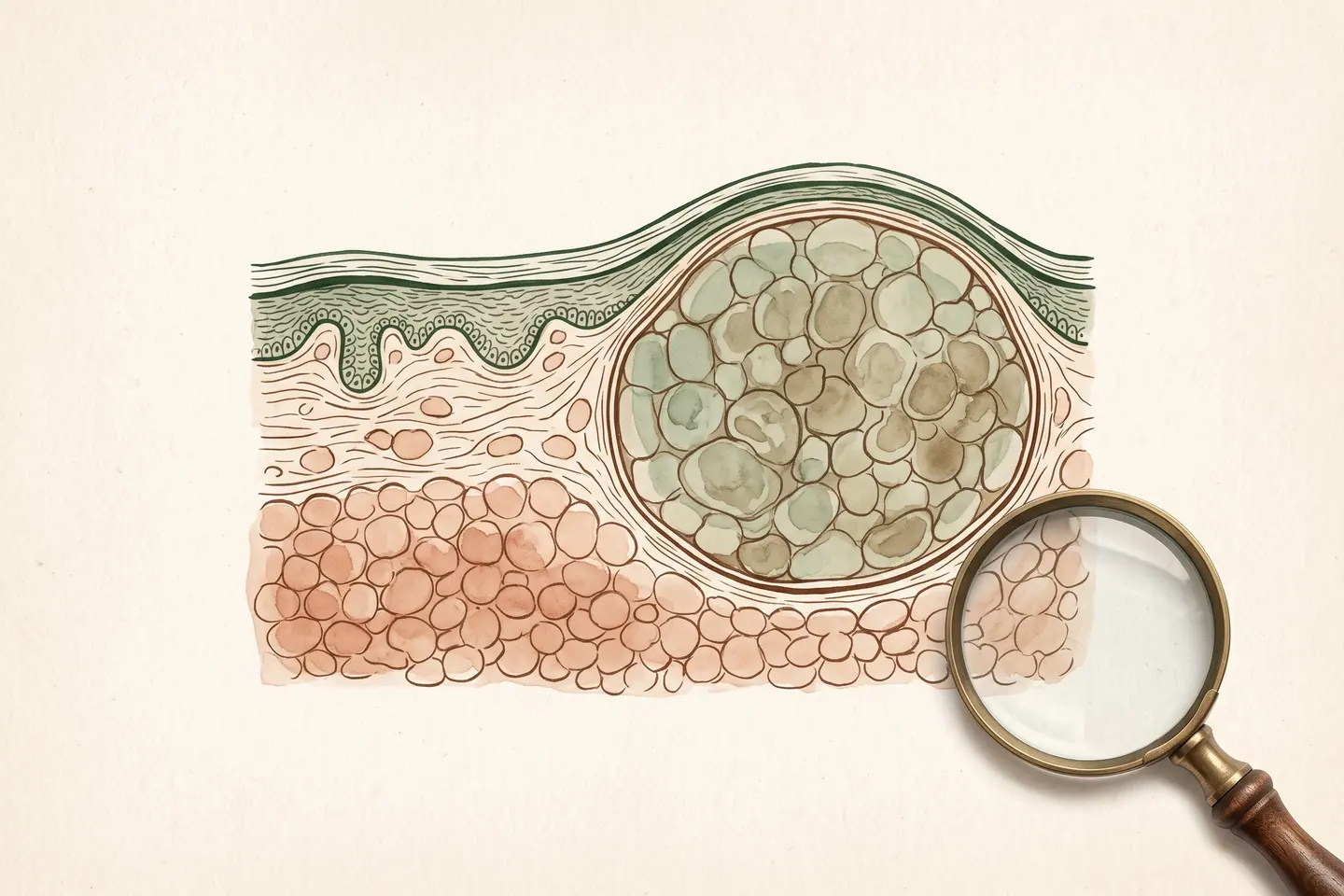
Repeated injection into the same fat site is associated with lipohypertrophy, a buildup of fat and fibrous tissue linked to unpredictable insulin release from that site [6].
One large cohort found lipohypertrophy in 59% of insulin-treated patients with type 2 diabetes [6]. A route effect measured in healthy, untreated tissue in a trial may not hold in someone's actual, repeatedly injected fat. Injection site lumps and rotation covers how that tissue change develops.
What is still unknown about injection route for peptides?
For the great majority of peptides discussed in clinics and online communities, nobody has published a controlled subcutaneous-versus-intramuscular comparison in humans.
No general rule says intramuscular delivers more peptide into blood than subcutaneous. The relationship is true for some molecules, roughly equal for others, and reversed by dose or formulation in at least one studied case [1][4].
Changing injection route without a peptide-specific human pharmacokinetic study means changing an unmeasured variable and hoping the dose still means the same thing. Route matters, sometimes a lot, and for most peptides discussed outside a trial, the size and direction of that effect has never been measured.
Sources
-
Johnsson M, Pedroncelli AM, Hansson A (2024). Pharmacokinetics and pharmacodynamics of a pasireotide subcutaneous depot (CAM4071) and comparison with immediate and long-acting release pasireotide. Endocrine. PMID 38421556. pubmed.ncbi.nlm.nih.gov/38421556
-
Leohr JK, Dellva MA, LaBell E (2022). Evaluation of the Pharmacokinetic Profile of Ultra Rapid Lispro Administered Subcutaneously at Different Injection Sites. Clin Ther. PMID 35577602. pubmed.ncbi.nlm.nih.gov/35577602
-
Pan Q, Zhang L, Gu A (2022). The Absorption of Needle-Free Insulin Aspart Through Jet Injector in Different Body Parts of Healthy Individuals. Front Endocrinol (Lausanne). PMID 35574009. pubmed.ncbi.nlm.nih.gov/35574009
-
Graf CJ, Woodworth JR, Seger ME (1999). Pharmacokinetic and glucodynamic comparisons of recombinant and animal-source glucagon after IV, IM, and SC injection in healthy volunteers. J Pharm Sci. PMID 10514345. pubmed.ncbi.nlm.nih.gov/10514345
-
Mudaliar SR, Lindberg FA, Joyce M (1999). Insulin aspart (B28 asp-insulin): a fast-acting analog of human insulin: absorption kinetics and action profile compared with regular human insulin in healthy nondiabetic subjects. Diabetes Care. PMID 10480516. pubmed.ncbi.nlm.nih.gov/10480516
-
Gentile S, Guarino G, Della Corte T (2021). Lipohypertrophy in Elderly Insulin-Treated Patients With Type 2 Diabetes. Diabetes Ther. PMID 33219928. pubmed.ncbi.nlm.nih.gov/33219928
-
Cifarelli V, Eichmann A (2019). The Intestinal Lymphatic System: Functions and Metabolic Implications. Cell Mol Gastroenterol Hepatol. PMID 30557701. pubmed.ncbi.nlm.nih.gov/30557701
Last updated

Written by
Chemist and biochemist. Co-founder and author, The Peptide App.
Jay is a chemist, biochemist and entrepreneur whose work connects scientific research with consumer health products. He has held Chief Science Officer and product development leadership roles and previously served as Chief Revenue Officer at Minicircle.
Keep reading
Handling and product records
Poor site rotation is the top risk factor for insulin injection lumps
Lipohypertrophy affects about 42% to 59% of long-term insulin users, and poor rotation is its top risk factor. The data come from insulin, not other peptides.
Handling and product records
FSH absorbed alike from muscle and under the skin in a 19-woman trial
In a randomized crossover trial, FSH reached matching peak, timing and total exposure by intramuscular and subcutaneous injection. Most peptides lack such data.

Handling and product records
Needle length determines injection depth, not gauge
Needle length, not gauge, decides which tissue layer an injection reaches. Gauge measures tube diameter and has small, inconsistent effects on pain.
Profiles and tools

The Peptide App
Track protocols, doses, and reconstitution in one place.
Save your calculations, set reminders, log doses, and keep outcome notes — free to start.
 or scan the QR code →