
Linaclotide works as a pill because its receptor faces into the gut
Linaclotide acts on receptors facing the inside of the gut, so it never needs absorption. Trials show strong constipation benefit and weaker pain evidence.

By Jay Spall, chemist and biochemist
Disclosure: Jay is a co-founder of The Peptide App. This review discusses the studies cited below; it is not a comprehensive live trial registry or treatment recommendation. Development and regulatory status can change. The app’s tools organize records and arithmetic and do not validate a research product.
On this page
- Why does linaclotide work as a pill when other oral peptides are destroyed?
- What happens after linaclotide binds its receptor?
- Is linaclotide really not absorbed at all?
- Does linaclotide improve constipation?
- Does linaclotide work in other populations?
- Does linaclotide relieve abdominal pain and bloating?
- What doses of linaclotide do trials use?
- What are linaclotide's side effects?
- What do the linaclotide trials leave unanswered?
- Sources
Key facts
| Question | Direct answer |
|---|---|
| How does a 14-amino-acid peptide work as a pill? | It never needs to reach the bloodstream. Its target, guanylate cyclase-C, sits on intestinal cells facing the gut's interior, so linaclotide acts on contact where it lands [2]. |
| Does linaclotide improve constipation? | Yes, at a solid evidence grade. Randomized trials and meta-analyses across chronic idiopathic constipation and IBS-C consistently show more responders on linaclotide than placebo by the FDA composite endpoint [1][2][3]. |
| Does linaclotide reduce abdominal pain? | Partially, on thinner evidence than the constipation effect. IBS-C trials show real improvement in abdominal pain and discomfort as a co-primary endpoint [9], but the pain mechanism is less firmly established than the secretory one. |
| Is "not absorbed" literal? | No. It is a pharmacokinetic finding bounded by assay sensitivity: plasma levels are typically undetectable at approved doses, which is not a guarantee that no molecule ever crosses into blood under any condition. |
| Is linaclotide appropriate for children? | It depends on age. A dedicated trial in children aged 6 to 17 found benefit for functional constipation [4]. Children under two are a separate, much higher-risk group not represented in that trial. |
| What is the most common problem on linaclotide? | Diarrhea. It is the dominant adverse event across nearly every trial and sometimes causes people to stop the drug [2][3][5][6]. |
9 sources cited. View sources
Why does linaclotide work as a pill when other oral peptides are destroyed?
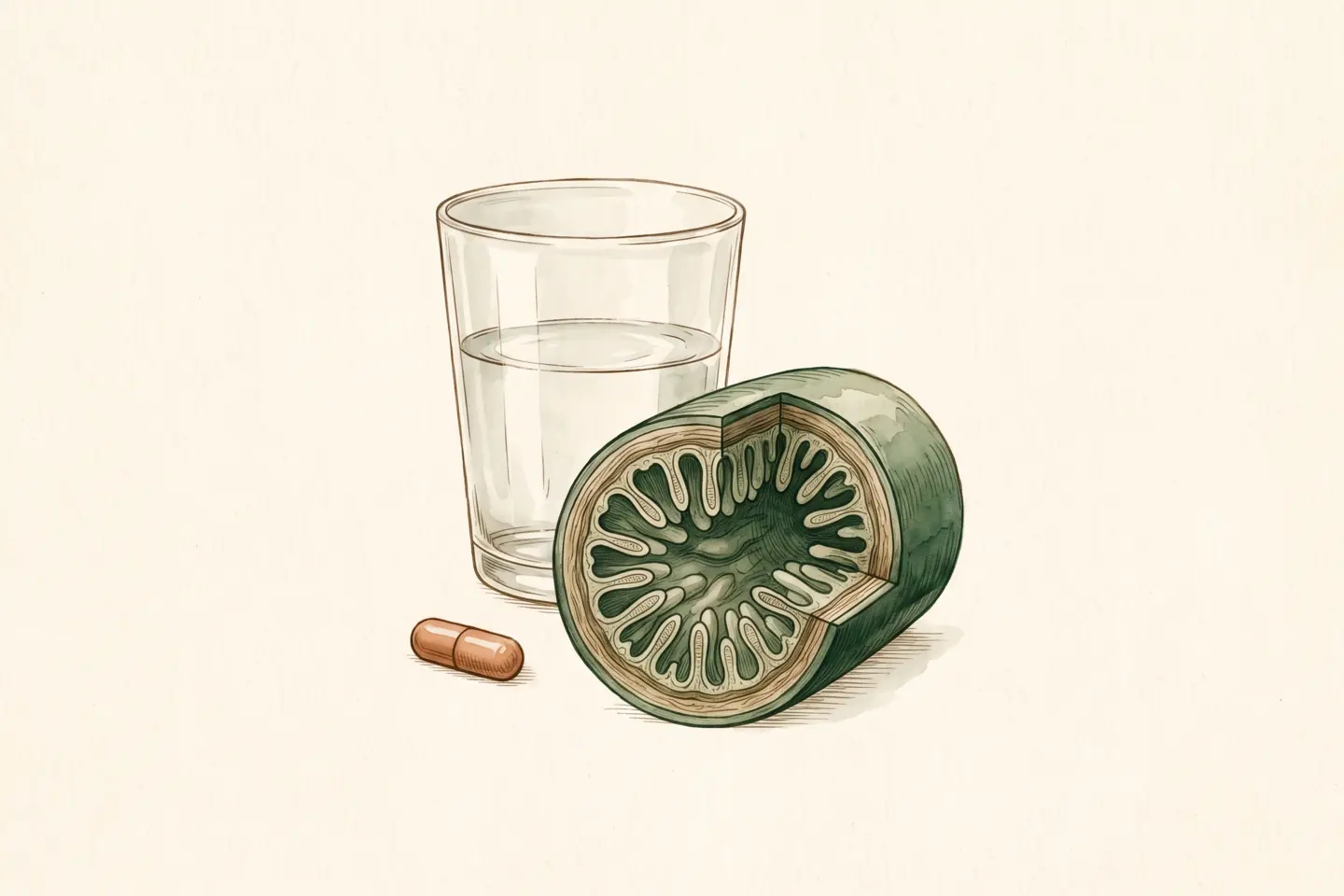
Linaclotide's target faces into the gut, so a swallowed capsule dissolves in the same compartment where the receptor lives. Linaclotide is a synthetic 14-amino-acid peptide that acts as an agonist of guanylate cyclase-C, a receptor expressed on intestinal epithelial cells [2].
The distinction most consumer content skips is anatomical. GC-C sits on the apical, luminal-facing surface of those cells, so the receptor faces into the gut, not into the bloodstream. Linaclotide never has to cross the intestinal wall, evade first-pass liver metabolism, or reach systemic circulation to do its job.
That makes linaclotide mechanistically distinct from oral insulin, which fails precisely because its target is inside the body, on the other side of a barrier that peptides do not cross intact. Why peptides can't be swallowed covers the general rule that linaclotide sidesteps, and why oral semaglutide needs such large doses shows what it costs to push a peptide into the bloodstream by mouth.
What happens after linaclotide binds its receptor?
Binding GC-C triggers a cascade. Intracellular cyclic GMP rises, which activates the CFTR chloride channel, which drives chloride and bicarbonate secretion into the gut lumen. The secreted ions pull water with them, softening stool and speeding transit.
That downstream chain is well described mechanistically. The trials measured the clinical output, bowel movement frequency and stool consistency, rather than tracking cGMP or CFTR activity directly, so the clinical evidence confirms the effect rather than each molecular step.
Is linaclotide really not absorbed at all?
"Not absorbed" describes plasma concentrations falling below what standard assays can quantify at approved doses, not literal zero systemic presence under every physiological condition.
Linaclotide itself is largely degraded within the gastrointestinal lumen, and its active metabolite behaves similarly, which is the basis for calling it not absorbed. The difference between undetectable and absent is subtle and real, and it matters more than marketing copy suggests once dehydration or renal handling enters the picture.
Does linaclotide improve constipation?
Yes. The constipation effect is linaclotide's best-supported claim, and it clears a high bar across randomized trials and meta-analyses [1][2][3].
A meta-analysis pooling 11 randomized controlled trials across chronic constipation and IBS-C found linaclotide met the FDA composite endpoint at more than triple the relative rate of placebo in chronic constipation (RR 3.26) and more than double in IBS-C (RR 2.26) [2].
A Bayesian network meta-analysis comparing pharmacotherapies for chronic idiopathic constipation, drawing on 21 randomized trials and over 9,000 patients, included three linaclotide trials among the pooled evidence for that condition [1].
A focused meta-analysis of three IBS-C trials totaling 1,773 patients rated the quality of evidence for the FDA endpoint and adequate relief response as moderate, using GRADE methodology. The same analysis rated diarrhea-related discontinuation as high-quality evidence [3]. That grading split is worth sitting with: moderate confidence in the benefit, high confidence in the main downside.
Does linaclotide work in other populations?
Regional and subpopulation trials reproduce linaclotide's core secretory effect without expanding its approved indications.
A Chinese sub-cohort of a phase III trial (n=659) found the abdominal pain and discomfort endpoint met in 62.1% of linaclotide patients versus 53.3% on placebo. Time to first bowel movement roughly halved, at 23.6 hours versus 43.7 hours [9].
A Japanese phase II dose-finding study across five dose levels found weekly spontaneous bowel movement increases significantly above placebo at every dose tested, down to 0.0625 mg [6].
A phase 2 trial in opioid-induced constipation among chronic noncancer pain patients found that linaclotide at 145 µg and at 290 µg both significantly increased bowel movement frequency over placebo [5].
Does linaclotide relieve abdominal pain and bloating?
Linaclotide's pain benefit is real in the trial data but sits on a different evidence tier from the constipation effect. IBS-C trials build abdominal pain and discomfort into a co-primary endpoint, and that endpoint has been met in multiple trials [3][9].
Meeting a pain endpoint in a trial where the drug also normalizes bowel habit does not cleanly separate a distinct analgesic mechanism from pain relief that follows from less straining, less bloating and more predictable bowel movements [7].
A dedicated bloating trial found significant improvement in bloating scores at both approved doses versus placebo [7]. That result strengthens the case that symptomatic relief tracks the secretory and motility mechanism closely, rather than confirming an independent visceral pain pathway. The mechanistic story sometimes offered for a separate pain effect, involving changes in visceral afferent signaling, is plausible, and the trials were not designed to isolate it. Another gut peptide's record appears in the teduglutide evidence review.
What doses of linaclotide do trials use?
Approved adult doses include 145 µg and 290 µg once daily, with the higher dose used more consistently in chronic idiopathic constipation and IBS-C trials [2][3]. The pediatric phase 3 trial in children aged 6 to 17 used 72 µg once daily and showed significant improvement in weekly spontaneous bowel movement frequency [4].
What are linaclotide's side effects?
Diarrhea is the dominant adverse event across essentially every linaclotide trial, sometimes severe enough to drive discontinuation. One meta-analysis found a markedly elevated risk ratio for diarrhea-related treatment discontinuation on linaclotide versus placebo [3].
Real-world context frames that tradeoff. A screening survey of patients considering a linaclotide trial found that most had already tried over-the-counter options such as bisacodyl or polyethylene glycol and reported low satisfaction with them, commonly citing insufficient relief as the reason for stopping [8]. A prescription option with trial-grade evidence has a place even though it carries its own tradeoffs.
What do the linaclotide trials leave unanswered?
Three questions sit outside what the linaclotide trials measured:
- Renal handling and interactions. How linaclotide behaves in renal impairment, and its potential for drug-drug interactions, have documented answers outside the efficacy trials, which do not address them.
- Children under two. Children younger than two are a separate, much higher-risk group, not represented in the pediatric trial, which enrolled children aged 6 to 17 [4]. The regulatory history behind linaclotide's pediatric contraindication in children younger than two also has documented answers outside the trials.
- An independent pain pathway. Whether the visceral pain-modulating effect operates through a mechanism independent of the secretory effect remains mechanistically plausible and clinically unproven.
Sources
-
Nelson AD, Camilleri M, Chirapongsathorn S (2017). Comparison of efficacy of pharmacological treatments for chronic idiopathic constipation: a systematic review and network meta-analysis. Gut. pubmed.ncbi.nlm.nih.gov/27287486
-
Zhao Q, Fang Y, Yan C (2022). Effects of linaclotide in the treatment of chronic constipation and irritable bowel syndrome with constipation: a meta-analysis. Z Gastroenterol. pubmed.ncbi.nlm.nih.gov/34215016
-
Atluri DK, Chandar AK, Bharucha AE (2014). Effect of linaclotide in irritable bowel syndrome with constipation (IBS-C): a systematic review and meta-analysis. Neurogastroenterol Motil. pubmed.ncbi.nlm.nih.gov/24351035
-
Di Lorenzo C, Khlevner J, Rodriguez-Araujo G (2024). Efficacy and safety of linaclotide in treating functional constipation in paediatric patients. Lancet Gastroenterol Hepatol. pubmed.ncbi.nlm.nih.gov/38211604
-
Brenner DM, Argoff CE, Fox SM (2020). Efficacy and safety of linaclotide for opioid-induced constipation in patients with chronic noncancer pain syndromes from a phase 2 randomized study. Pain. pubmed.ncbi.nlm.nih.gov/32310620
-
Fukudo S, Miwa H, Nakajima A (2018). Dose-finding study of linaclotide in Japanese patients with chronic constipation. Neurogastroenterol Motil. pubmed.ncbi.nlm.nih.gov/30084233
-
Lacy BE, Schey R, Shiff SJ (2015). Linaclotide in Chronic Idiopathic Constipation Patients with Moderate to Severe Abdominal Bloating: A Randomized, Controlled Trial. PLoS One. pubmed.ncbi.nlm.nih.gov/26222318
-
Lacy BE, Shea EP, Manuel M (2021). Lessons learned: Chronic idiopathic constipation patient experiences with over-the-counter medications. PLoS One. pubmed.ncbi.nlm.nih.gov/33428631
-
Peng LH, Fang JY, Dai N (2022). Efficacy and safety of linaclotide in patients with irritable bowel syndrome with constipation: Chinese sub-cohort analysis of a phase III trial. J Dig Dis. pubmed.ncbi.nlm.nih.gov/35019221
Last updated

Written by
Chemist and biochemist. Co-founder and author, The Peptide App.
Jay is a chemist, biochemist and entrepreneur whose work connects scientific research with consumer health products. He has held Chief Science Officer and product development leadership roles and previously served as Chief Revenue Officer at Minicircle.
Keep reading
Compound evidence
Teduglutide grows gut lining in short bowel syndrome, its approved use
Teduglutide grows intestinal lining and cuts IV nutrition needs in short bowel syndrome trials. No trial has tested it for leaky gut or IBS.
Compound evidence
Swallowed peptides rarely survive; oral semaglutide is an exception
Swallowed peptides face stomach enzymes, intestinal enzymes, and gut-wall and liver barriers. Oral semaglutide is the clearest documented exception.

GLP-1 and metabolic peptides
Oral semaglutide is about 1% absorbed, so tablet doses run high
Oral semaglutide reaches the blood at about 1% bioavailability through the absorption enhancer SNAC, so tablets need 3 to 14 mg. PIONEER trials show it works.
Profiles and tools

The Peptide App
Track protocols, doses, and reconstitution in one place.
Save your calculations, set reminders, log doses, and keep outcome notes — free to start.
 or scan the QR code →