
Cartalax was associated with cartilage gene changes in cell studies
Cartalax was associated with changes in cartilage-related genes in cell models. No human trial has tested it, and one lab produced all the research.

By Jay Spall, chemist and biochemist
Disclosure: Jay is a co-founder of The Peptide App. This review discusses the studies cited below; it is not a comprehensive live trial registry or treatment recommendation. Development and regulatory status can change. The app’s tools organize records and arithmetic and do not validate a research product.
On this page
- What is Cartalax?
- How is Cartalax supposed to work?
- Does Cartalax improve joints or cartilage in humans?
- Has anyone replicated the Cartalax findings?
- Can Cartalax work as an oral tablet?
- Is vendor Cartalax the same compound that was studied?
- Is there a tested Cartalax dose for humans?
- Is Cartalax safe?
- What is still unknown about Cartalax?
- Sources
Key facts
| Question | Direct answer |
|---|---|
| Does Cartalax have human trial evidence for joints or cartilage? | No. All four cited papers on the AED tripeptide are preclinical or reviews of preclinical work: cell culture, rat fibroblast models, and molecular docking simulations. None reports a human clinical trial [1][2][3][4]. |
| How is Cartalax supposed to work? | AED is proposed to enter the nucleus and bind DNA, at an ACCT sequence in docking models, altering genes tied to chondrocyte and fibroblast activity such as NFkB, IGF1, Ki-67, CD98hc, caspase-3, and MMP9 [1][2][3]. That mechanism comes from in vitro and computational modeling, not a demonstrated in-body effect. |
| Who produced the Cartalax evidence? | One research lineage: Khavinson and colleagues at the St. Petersburg Institute of Bioregulation and Gerontology. Every paper traces back to that group's own publications or reviews of its prior work [1][2][3][4], and no independent lab has replicated the findings. |
| Do oral Cartalax tablets make sense? | Untested. The mechanism requires an intact peptide reaching the nucleus of target cells [2][3], and no study tests oral delivery, absorption, or bioavailability. |
| Is vendor Cartalax the same compound that was studied? | Unknown. The AED in the papers was synthesized and tested in a single academic setting, and nothing in the papers establishes the identity, purity, or chain of custody of any commercial product sold as Cartalax. |
| What is the Cartalax evidence grade? | E, minimal: mechanistically plausible, preclinical only, single-source, unreplicated, with no human efficacy or safety data. |
4 sources cited. View sources
What is Cartalax?
Cartalax is the trade name for AED, a synthetic tripeptide of alanine, glutamate, and aspartate developed within the Khavinson school of "bioregulator" peptides. The research on AED comes from Khavinson and colleagues at the St. Petersburg Institute of Bioregulation and Gerontology [1][2][3][4]. Research-peptide vendors sell Cartalax as an oral tablet and as an injectable.
How is Cartalax supposed to work?
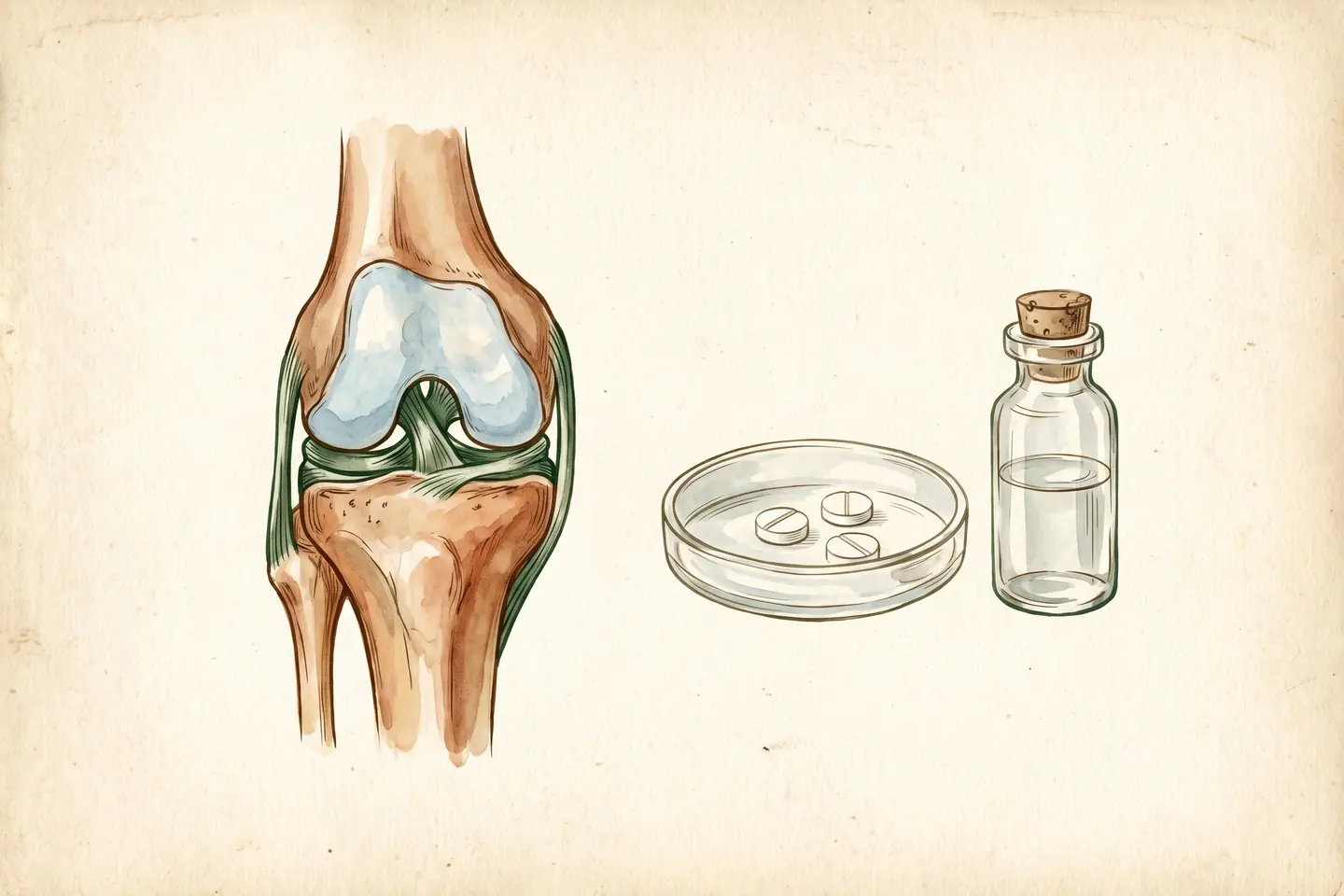
Cartalax's AED tripeptide is proposed to enter the cell nucleus and act as a tissue-specific regulator of gene transcription [2][3]. The framework behind the whole Khavinson peptide class holds that very short peptides can penetrate the nucleus and interact directly with DNA or histones [2][3]. For AED, molecular docking models suggest binding to an ACCT DNA sequence, offered as the structural basis for its downstream effects on gene expression [3].
In cell-based and animal models, AED exposure has been associated with changes in genes and proteins relevant to cartilage and connective tissue turnover: NFkB and IGF1 in models of mesenchymal stem cell aging, and Ki-67, CD98hc, caspase-3, and MMP9 in rat fibroblast aging models [1]. Broader reviews of the Khavinson peptide class describe AED as activating chondrocyte, immune, and neural differentiation pathways through the same proposed epigenetic mechanisms [4].
The hypothesis is coherent and internally consistent. It is not evidence that injecting or swallowing AED changes cartilage biology in a living human. Docking simulations show that a molecule can plausibly bind a DNA sequence. They do not show that it does so at a meaningful concentration inside an intact organism, let alone that the binding produces a clinically relevant change in joint tissue.
Does Cartalax improve joints or cartilage in humans?
No human study has tested whether Cartalax improves joints or cartilage. The four cited papers on AED converge on one underlying evidence base rather than offering four independent lines of confirmation.
Two are systematic or narrative reviews that summarize the Khavinson group's own prior work on short-peptide gene regulation, with AED among a larger family of tissue-specific bioregulators [2][4]. One is a review on chondrogenic differentiation that positions AED as a candidate for osteoarthritis-related cartilage research and explicitly notes that no human trial evidence exists for it [1]. The fourth is the original preclinical paper establishing the DNA-docking mechanism that underlies the whole theoretical model [3].
None of the four reports a randomized controlled trial, a Phase I study, or a Phase II study. Cartalax does not have "promising but small" human data. It has no human efficacy data at all, positive or negative.
Forum threads and vendor pages that cite "studies" on Cartalax are, at best, citing this literature: animal and cell-culture work from one lab, presented without saying that it stops there. Calling that body of work "clinical studies" is a category error, not a summary.
Has anyone replicated the Cartalax findings?
No lab outside the originating group has replicated the Cartalax findings. Every paper traces back to Khavinson's group or to reviews of that group's own work, and none involves an outside institution [1][2][3][4].
A plausible mechanism, preclinical-only support, single-source origin, and zero independent replication is the combination an E grade (Minimal evidence) is built to flag. An E grade does not mean Cartalax is inert or fraudulent. It means that, on what has been published and independently checked, the answer to "does Cartalax work in people" is: unstudied. The same grading logic runs through the Cardiogen evidence review.
Can Cartalax work as an oral tablet?
No study has tested whether oral Cartalax delivers intact AED to chondrocytes or fibroblasts, and the proposed mechanism depends on exactly that [2][3]. A meaningful share of Cartalax sold through research-peptide channels is marketed as an oral tablet with a cycling protocol. No Cartalax study supports those cycling schedules, and the wider evidence on peptide cycling is covered separately.
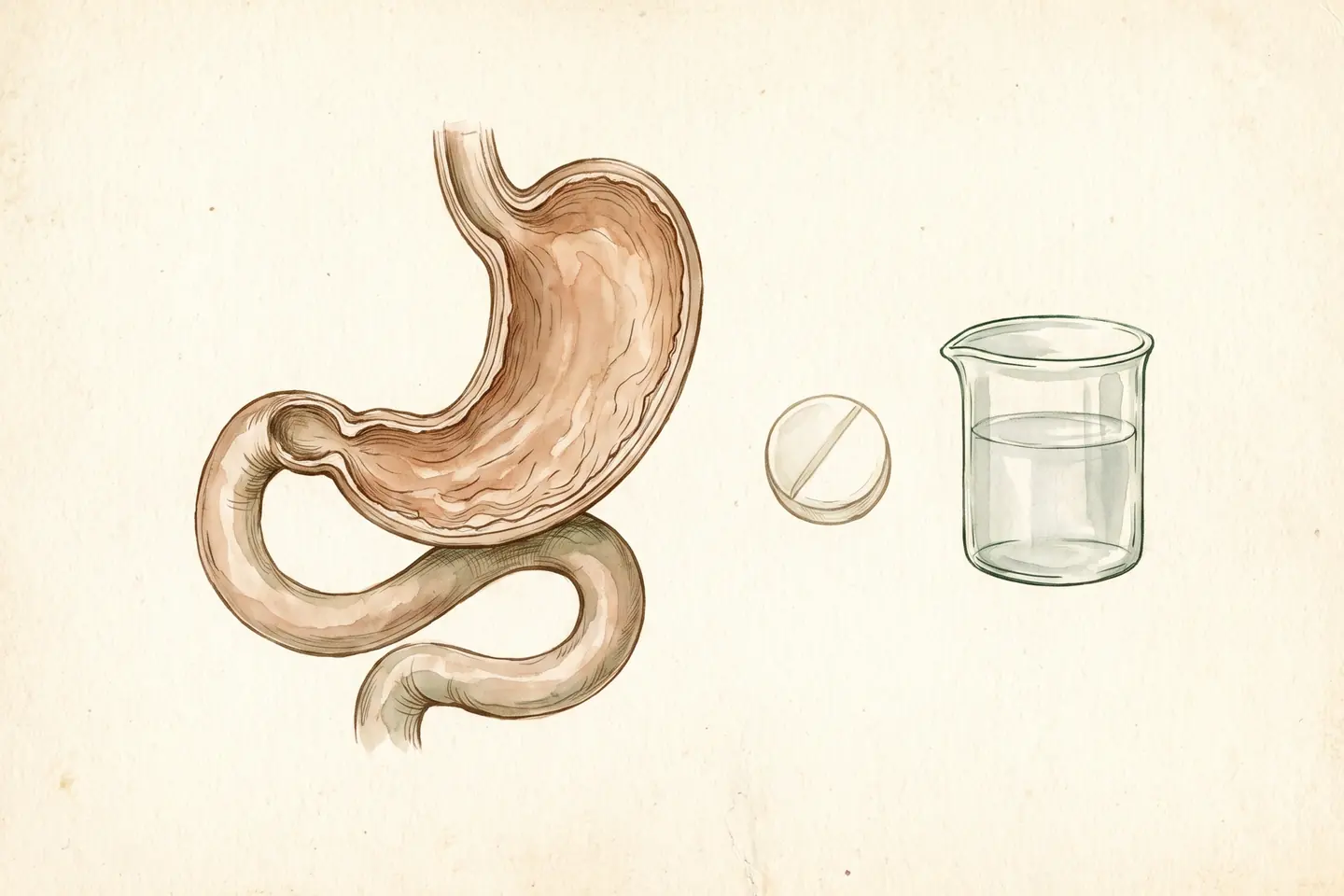
The mechanism requires an intact tripeptide to reach the nucleus of target cells and interact with DNA [2][3]. Short peptides taken by mouth face the obstacle every oral peptide faces: the gastrointestinal tract is built to break peptide bonds. Stomach acid, pancreatic proteases, and intestinal brush-border enzymes are highly effective at degrading small peptides into individual amino acids before they reach systemic circulation intact. Why peptides can't be swallowed covers that barrier in detail.
None of the four papers tests oral administration, oral bioavailability, or whether any measurable amount of intact AED survives digestion to reach target tissue. The tablet, the format most buyers take, rests on a mechanism studied through other administration routes. Injection bypasses first-pass gastrointestinal degradation and is closer to how AED was delivered in the cell and animal work, though injectable use has no human trial data behind it either. An oral tablet asks the buyer to accept that a peptide-signaling mechanism survives a route the evidence never tested.
Is vendor Cartalax the same compound that was studied?
The research papers cannot establish that vendor Cartalax is the AED tripeptide they describe. The papers describe laboratory synthesis and testing within one academic institution, not commercial manufacturing.
Nothing in that literature establishes the identity, purity, or manufacturing chain of custody of any commercial product sold under the Cartalax name. How to read peptide product documentation covers what a buyer can and cannot check from the paperwork.
Is there a tested Cartalax dose for humans?
No human dose, route, or frequency for Cartalax has been tested. The papers report cell-culture concentrations and animal-model exposures, not human dosing data.
No dosing figure from that evidence can be responsibly translated into a human protocol. What dose would reproduce the preclinical effects in people, if those effects translate at all, is unknown.
Is Cartalax safe?
No study has characterized Cartalax's human safety or side-effect risks. Reports of injection-site irritation are anecdotal, not derived from a study, and they should be labeled that way rather than treated as an established safety profile.
Long-term effects, interaction risk, and appropriate contraindications remain entirely undocumented in controlled human research.
What is still unknown about Cartalax?
The core questions about Cartalax remain open:
- Effect in a human joint. No human trial, controlled or otherwise, shows that AED does anything measurable in a living human joint.
- Dose translation. No dose, route, or frequency has been shown to reproduce the preclinical effects in people.
- Product identity. The papers cannot show whether any commercial Cartalax matches the AED tripeptide they describe.
- Safety. Human side effects, long-term effects, and interactions are uncharacterized.
- Independent replication. No lab outside the originating group has repeated the work.
A decision to use Cartalax rests on a mechanistic story and animal data from one research group, not on demonstrated human efficacy. It most often involves a delivery format, the oral tablet, that the underlying mechanism does not obviously support.
Sources
-
Linkova N et al. (2023). Peptide Regulation of Chondrogenic Stem Cell Differentiation. Int J Mol Sci. PMID: 37176122. pubmed.ncbi.nlm.nih.gov/37176122
-
Khavinson VK et al. (2021). Peptide Regulation of Gene Expression: A Systematic Review. Molecules. PMID: 34834147. pubmed.ncbi.nlm.nih.gov/34834147
-
Khavinson VK et al. (2016). Short Peptides Regulate Gene Expression. Bull Exp Biol Med. PMID: 27909961. pubmed.ncbi.nlm.nih.gov/27909961
-
Khavinson V et al. (2020). Peptide Regulation of Cell Differentiation. Stem Cell Rev Rep. PMID: 31808038. pubmed.ncbi.nlm.nih.gov/31808038
Last updated

Written by
Chemist and biochemist. Co-founder and author, The Peptide App.
Jay is a chemist, biochemist and entrepreneur whose work connects scientific research with consumer health products. He has held Chief Science Officer and product development leadership roles and previously served as Chief Revenue Officer at Minicircle.
Keep reading

Compound evidence
Cardiogen stimulated heart-cell growth in rat tissue studies
Cardiogen stimulated heart-cell proliferation in young and aged rat tissue cultures. Every study is preclinical and traces to one research group.

Compound evidence
Peptide cycling is a convention borrowed from steroid and SARM culture
Peptide cycling began in steroid culture, and daily MK-677 kept IGF-1 up in older adults for two years. Popular peptides have no cycled-versus-continuous trial.
Compound evidence
Swallowed peptides rarely survive; oral semaglutide is an exception
Swallowed peptides face stomach enzymes, intestinal enzymes, and gut-wall and liver barriers. Oral semaglutide is the clearest documented exception.
Profiles and tools

The Peptide App
Track protocols, doses, and reconstitution in one place.
Save your calculations, set reminders, log doses, and keep outcome notes — free to start.
 or scan the QR code →