
BDNF infusions triggered dose-limiting side effects in an ALS trial
Recombinant BDNF infused into the spinal fluid of ALS patients caused dose-related side effects that capped the dose. Exercise raises blood BDNF reliably.

By Jay Spall, chemist and biochemist
Disclosure: Jay is a co-founder of The Peptide App. This review discusses the studies cited below; it is not a comprehensive live trial registry or treatment recommendation. Development and regulatory status can change. The app’s tools organize records and arithmetic and do not validate a research product.

On this page
- What happened when BDNF was injected into ALS patients?
- Did subcutaneous BDNF work in ALS?
- Why does injecting BDNF not help the brain?
- Why do growth-factor drugs keep failing in neurodegenerative disease?
- What replaced injectable BDNF?
- Does exercise raise BDNF?
- Does a blood BDNF level tell you anything about your brain?
- What is still unknown about BDNF?
- Sources
Key facts
| Question | Direct answer |
|---|---|
| Has recombinant human BDNF been injected into people? | Yes. BDNF was infused intrathecally by implanted pump in a randomized, placebo-controlled dose-escalation trial in ALS patients, at doses from 25 to 1000 µg/day [3]. |
| Did injected BDNF work? | No benefit was demonstrated, and the trial was not designed to show one. The intrathecal trial tested safety and tolerability, and it found dose-related side effects, including sensory symptoms, sleep disturbance, and dry mouth, within days at the higher doses [3]. |
| Does a blood BDNF test tell you about your brain? | Unresolved. The exercise studies measured circulating BDNF only, and no cited study establishes serum BDNF as a proxy for brain BDNF signaling. |
| Does exercise raise BDNF? | Yes, in blood, reliably. Meta-analyses show measurable rises in circulating BDNF after single sessions and after training programs of aerobic or interval exercise [1][2], and a wheelchair half marathon raised serum BDNF in people with spinal cord injury before it returned to baseline within an hour [4]. |
| Should you try to raise your BDNF? | The injected route already failed on tolerability in a clinical population [3]. The exercise-driven rise in circulating BDNF is real and reproducible, and no cited study connects that rise to a measured change in memory, mood, or cognition. |
| What replaced injectable BDNF? | Small molecules. Microneurotrophins retain high-affinity Trk receptor binding and are designed to cross artificial membranes that model the blood-brain barrier and to resist degradation, and they remain preclinical [5]. |
7 sources cited. View sources
What happened when BDNF was injected into ALS patients?
Most ALS patients receiving intrathecal BDNF developed sensory symptoms, paraesthesias, or a sense of warmth in the lower limbs within days of starting infusion, along with sleep disturbance and dry mouth. Those effects were dose-related, and they limited how high the dose could go [3].
The trial delivered recombinant methionyl human BDNF directly into cerebrospinal fluid through an implanted pump, bypassing the blood-brain barrier entirely. Doses escalated from 25 to 1000 µg/day across 25 patients in a Phase I/II study built to establish safety and tolerability [3].
That is a different situation from an untested idea. The trial ran in the target patient population, using a route designed to solve the delivery problem, and it still hit a ceiling on tolerability before central benefit could be demonstrated.
Did subcutaneous BDNF work in ALS?
A larger trial of subcutaneous recombinant BDNF in ALS patients is frequently cited in the neurology literature as failing to show benefit on its primary endpoint. No published citation accompanies that claim, and its figures are unverified.
The direction of the finding, no demonstrated efficacy from peripheral dosing, matches what the delivery problem predicts.
Why does injecting BDNF not help the brain?
A protein injected under the skin or into the bloodstream has to survive circulation, cross the blood-brain barrier, and reach the right receptors at a sufficient concentration to do anything centrally. That is a pharmacokinetic problem, not a biological one, and it is the problem the human trials ran into.
BDNF is a signaling protein that acts on the TrkB receptor and is involved in neuronal survival and plasticity pathways in preclinical models. That biology is not in dispute, and it is why BDNF became a target of interest for neurodegenerative disease, including motor neuron disease.
Biohacking content makes a short leap from there: BDNF matters for neurons, so more circulating BDNF, from a needle, a nasal spray, or a supplement, should mean more of that benefit centrally. The step skipped is delivery. Even nasal routes reach the brain through two narrow neural pathways, not through free passage.
Why do growth-factor drugs keep failing in neurodegenerative disease?
BDNF's clinical disappointment is not an isolated case. A review of glial-targeted and growth-factor approaches in neurodegenerative disease describes a recurring pattern across conditions: compelling preclinical signal followed by limited translational success, driven by delivery barriers and by the difficulty of getting the right concentration to the right cells in the human nervous system [7].
That review cites glial cell line-derived neurotrophic factor trials in Parkinson's disease as a parallel example [7]. BDNF's failure as an injectable drug fits the pattern rather than standing apart from it. Intranasal insulin's pooled null result is another case of a central target that a delivery route did not reach.
What replaced injectable BDNF?
The field abandoned peripheral protein injection in favor of small molecules built to solve the delivery problem. Microneurotrophins are small-molecule derivatives that retain high-affinity binding to Trk receptors, the same receptor family BDNF acts on, and are designed to cross artificial membranes that model the blood-brain barrier and to resist the metabolic degradation that limits protein-based drugs [5].
That work is preclinical, tested in mouse brain penetration studies and in stem-cell-derived neuron models rather than in human trials [5]. It is the field's answer to why the injectable-protein approach stalled: the delivery vehicle was wrong, not the BDNF biology. A compound marketed as a BDNF mimetic can act on a different target altogether, as a peptide sold as a BDNF mimetic shows.
Does exercise raise BDNF?
Yes, in blood. High-intensity aerobic exercise raises circulating BDNF after a single session and after a training program in stroke survivors, with meta-analytic mean differences of roughly 2.49 ng/mL after a single session and 3.42 ng/mL following a program of exercise [1].
Interval training produces a similar acute and chronic rise in healthy young adults. The acute effect, effect size 1.10, is larger than the chronic training effect, effect size 0.93, across pooled studies [2].
The rise also shows up outside the laboratory. In people with spinal cord injury, a wheelchair half marathon raised serum BDNF immediately after the race, and the increase returned to baseline within an hour [4].
None of those studies measured central signaling, cognition, or mood as an outcome tied to the BDNF change itself. They measured a blood number moving in response to exertion.
Does a blood BDNF level tell you anything about your brain?
Whether a circulating BDNF number reflects brain BDNF signaling is unresolved. Every cited human measurement is a blood measurement, and none links it to a central outcome.
Some reviews frame BDNF as one mechanistic mediator among several, alongside short-chain fatty acids and ketone bodies, in preclinical and early human work on intermittent fasting and neuroprotection. That evidence base is described as heterogeneous and early-stage rather than established [6].
What is still unknown about BDNF?
The established part of the BDNF record is narrower and less exciting than the claims built on it:
- Brain-level effect. Whether raising circulating BDNF through exercise, fasting, or any other lever changes brain-level BDNF signaling in a way that affects memory or mood is unanswered.
- Serum measurement. Other researchers describe platelet storage and assay variability as limits on serum BDNF. Whether those limits meaningfully constrain what a single blood test tells an individual is an open question.
- Dosing route. Whether any dose or route of exogenous BDNF delivers central benefit without dose-limiting effects is untested. The intrathecal trial reached its tolerability ceiling before central benefit could be assessed [3].
The injected route has been tried in a real clinical population, hit real tolerability limits, and pushed the field toward differently designed molecules rather than higher doses of the original protein.
Sources
Last updated

Written by
Chemist and biochemist. Co-founder and author, The Peptide App.
Jay is a chemist, biochemist and entrepreneur whose work connects scientific research with consumer health products. He has held Chief Science Officer and product development leadership roles and previously served as Chief Revenue Officer at Minicircle.
Keep reading
Compound evidence
PE-22-28 blocks TREK-1 and showed antidepressant-like effects in mice
PE-22-28 blocks the TREK-1 potassium channel and does not mimic BDNF. All of its evidence is preclinical, and no human trial or safety data exist.
Compound evidence
Intranasal insulin matched placebo on cognition in five pooled trials
Intranasal insulin matched placebo on cognition and daily function across five pooled trials in MCI or Alzheimer's. A device switch clouds the largest trial.
Compound evidence
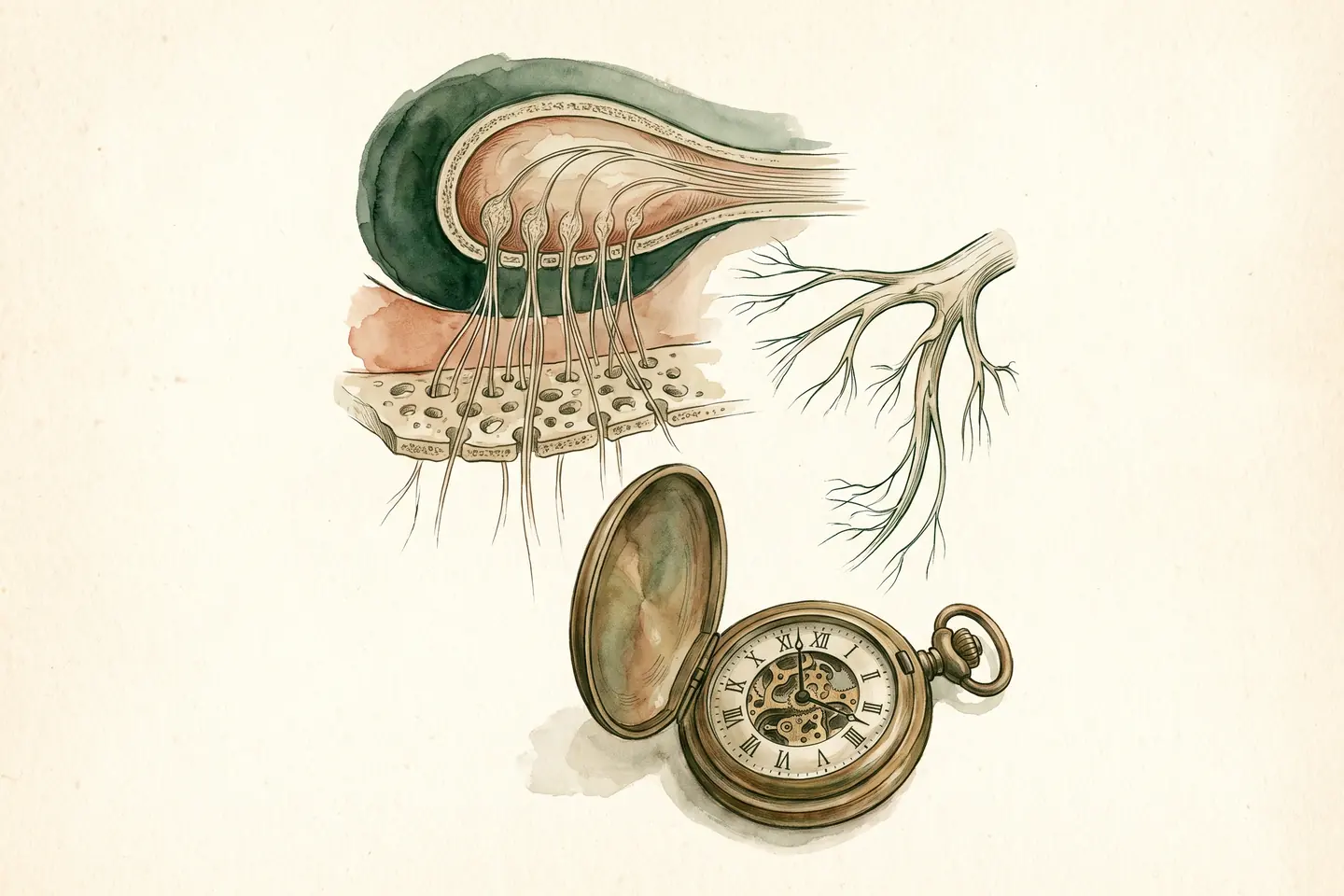
Nasal peptides can reach the brain via two narrow neural pathways
Nasal peptides can reach the brain along olfactory and trigeminal nerves, but slowly. Oxytocin took up to 75 minutes to rise in human cerebrospinal fluid.
Profiles and tools

The Peptide App
Track protocols, doses, and reconstitution in one place.
Save your calculations, set reminders, log doses, and keep outcome notes — free to start.
 or scan the QR code →