Healing Category
Larazotide
THE GUT SEALER
AT-1001; Larazotide Acetate
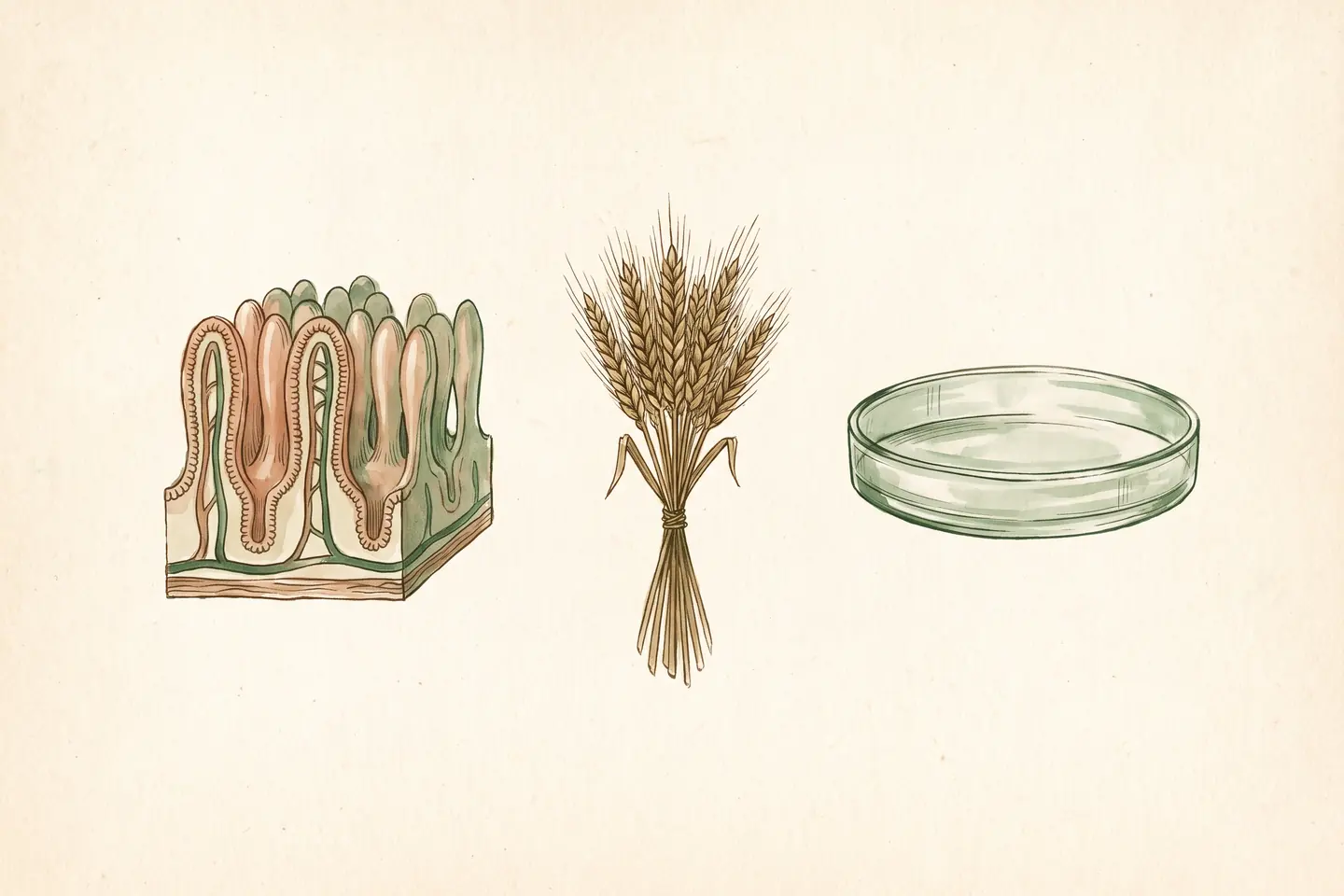
Larazotide is designed to close the gaps between intestinal cells that cause "leaky gut." It blocks zonulin, a protein that opens these gaps and allows food particles and bacteria to leak into your bloodstream. Originally developed for celiac disease, it may help anyone with intestinal permeability issues.
Larazotide Evidence Snapshot
How these guides are reviewed- Regulatory status
- Not FDA approved · research use only
- Dosing guidance
- Reviewed by our clinical team
- Linked evidence
- 7 research sources
- Content updated
- May 8, 2026
Dose and schedule recommendations shown below come from The Peptide App Clinical Team. Research links are provided so readers can inspect the supporting evidence directly. Review the sources.
Quick Answers About Larazotide
Is Larazotide FDA approved?
No. This profile records Larazotide as not FDA approved and for research use only.
More context
Review the regulatory and source details on this page for the current context.
What dose does The Peptide App Clinical Team recommend for Larazotide?
Dose: 0.5-1 mg three times daily before meals.
More context
Schedule: daily. Cycle: Ongoing for gut barrier support. This is clinical-team guidance for reference and does not replace individualized instructions from a licensed clinician.
What research supports this Larazotide guide?
This guide links to 7 curated or current research sources.
More context
Open the research section to inspect the source titles, publication details, study types, and available abstracts directly.
Review the Larazotide research sourcesStudied Effects & Mechanisms
Zonulin Blocker
Prevents zonulin from opening tight junctions
Barrier Restoration
Keeps intestinal cells tightly connected
Inflammation Reduction
Reduces immune activation from leaked antigens
Clinical & Research Context
People with celiac disease · Those with leaky gut syndrome · Crohn's disease patients · Anyone with food sensitivities · People with IBS
Research-Market Price Snapshot
A compact market signal for this profile. The dedicated pricing page owns vendor, vial-size, and price-per-mg comparisons.
Live pricing
The live pricing feed did not return ready in-stock rows for this peptide.
Open the dedicated pricing page →Larazotide Research
Live PubMed intelligence from the research crawler
Viral spike antigen clearance and augmented recovery in children with post-COVID multisystem inflammatory syndrome treated with larazotide.
Science translational medicine · Jul 30, 2025
Multisystem inflammatory syndrome (MIS) is a severe disease that occurs weeks to months after acute infection with SARS-CoV-2, often occurring in children (MISC). Symptoms include high fever, rash, nausea, diarrhea, and abdominal pain. Children with MISC can develop cardiovascular injury including ventricular failure, coronary artery aneurysms, or shock. Current treatment strategies for these postacute sequelae of COVID-19 primarily target the hyperinflammatory response. However, a potential role for viral spike protein translocated via zonulin-mediated trafficking from gastrointestinal reservoirs of SARS-CoV-2 into the circulation has been suggested. Here, we report results from a phase 2a randomized, double-blind, placebo-controlled clinical trial testing the zonulin antagonist larazotide in 12 children with MISC with a median age of 5.7 years. Children were enrolled during hospitalization for acute MISC and were treated with adjuvant larazotide therapy four times daily for 3 weeks. Patients were monitored for 24 weeks for safety follow-up. No larazotide-related adverse events were reported. The concentration of SARS-CoV-2 spike protein antigen in blood samples correlated with inflammatory markers, including interferon-γ (IFN-γ) (P = 0.004) and interleukin-6 (IL-6) (P < 0.0001), and with gastrointestinal symptoms as assessed by the PedsQL GI symptom score (P = 0.003). Children treated with larazotide displayed faster resolution of gastrointestinal symptoms, faster clearance of spike antigen, and a faster return to usual activities. Our findings suggest that larazotide treatment may be safe in children and may improve resolution of symptoms when used as an adjuvant therapy for MISC.
Zonulin Antagonist, Larazotide (AT1001), As an Adjuvant Treatment for Multisystem Inflammatory Syndrome in Children: A Case Series.
Critical care explorations · Feb 1, 2022
OBJECTIVES: A recent study suggests that Multisystem Inflammatory Syndrome in Children (MIS-C) is triggered by gastrointestinal breach of severe acute respiratory syndrome coronavirus 2 (SARS-CoV-2) viral particles from the gut lumen into systemic circulation. The virus remains in the gut weeks to months after respiratory infection, causing zonulin release from the intestinal epithelial cells. Zonulin loosens tight junctions, permitting trafficking of highly inflammatory viral particles into circulation. Current MIS-C treatments target the subsequent immune hyperactivation, not the causative loss of mucosal barrier integrity. Larazotide, a zonulin inhibitor, prevents breakdown of tight junctions, limiting antigen trafficking. DESIGN: Children with MIS-C were treated with larazotide as an adjuvant to steroid/intravenous immunoglobulin therapy. Clinical outcomes, SARS-CoV-2 antigenemia, and cytokine profiles are reported. Outcomes were compared with children with MIS-C receiving steroids and/or IVIG therapy alone. PATIENTS: Four children with MIS-C, ages 3-17 years, were enrolled. INTERVENTIONS: Patients were treated with open label larazotide 10 mcg/kg (maximum 500 mcg/dose) orally four times daily for 21 days. MEASUREMENTS AND MAIN RESULTS: All four patients tolerated larazotide without adverse effects and displayed reduction in Spike antigenemia to undetectable levels. When compared with 22 children with MIS-C receiving steroids and/or intravenous immunoglobulin therapy alone, larazotide-treated patients reported significantly improved time to resolution of gastrointestinal symptoms (p = 0.03), and time to clearance of Spike antigenemia (p = 0.04), plus a trend towards shorter length of stay. CONCLUSIONS: Larazotide appears safe and well-tolerated and may offer potential benefit as an adjuvant to immune-targeted therapies. Expansion of clinical trials is urgently needed to ascertain the clinical impact of larazotide on MIS-C.
Larazotide acetate induces recovery of ischemia-injured porcine jejunum via repair of tight junctions.
PloS one · Jan 1, 2021
Intestinal ischemia results in mucosal injury, including paracellular barrier loss due to disruption of tight junctions. Larazotide acetate (LA), a small peptide studied in Phase III clinical trials for treatment of celiac disease, regulates tight junctions (TJs). We hypothesized that LA would dose-dependently hasten recovery of intestinal ischemic injury via modulation of TJs. Ischemia-injured tissue from 6-8-week-old pigs was recovered in Ussing chambers for 240-minutes in the presence of LA. LA (1 μM but not 0.1 μM or 10 μM) significantly enhanced transepithelial electrical resistance (TER) above ischemic injured controls and significantly reduced serosal-to-mucosal flux LPS (P<0.05). LA (1 μM) enhanced localization of the sealing tight junction protein claudin-4 in repairing epithelium. To assess for the possibility of fragmentation of LA, an in vitro enzyme degradation assay using the brush border enzyme aminopeptidase M, revealed generation of peptide fragments. Western blot analysis of total protein isolated from uninjured and ischemia-injured porcine intestine showed aminopeptidase M enzyme presence in both tissue types, and mass spectrometry analysis of samples collected during ex vivo analysis confirmed formation of LA fragments. Treatment of tissues with LA fragments had no effect alone, but treatment with a fragment missing both amino-terminus glycines inhibited barrier recovery stimulated by 1 μM LA. To reduce potential LA inhibition by fragments, a D-amino acid analog of larazotide Analog #6, resulted in a significant recovery response at a 10-fold lower dose (0.1 μM) similar in magnitude to that of 1 μM LA. We conclude that LA stimulates repair of ischemic-injured epithelium at the level of the tight junctions, at an optimal dose of 1 μM LA. Higher doses were less effective because of inhibition by LA fragments, which could be subverted by chirally-modifying the molecule, or microdosing LA.
Larazotide acetate in patients with coeliac disease undergoing a gluten challenge: a randomised placebo-controlled study.
Alimentary pharmacology & therapeutics · Jan 1, 2013
BACKGROUND: Coeliac disease, an autoimmune disorder triggered by gluten ingestion, is managed by a gluten-free diet (GFD), which is difficult for many patients. Larazotide acetate is a first-in-class oral peptide that prevents tight junction opening, and may reduce gluten uptake and associated sequelae. AIM: To evaluate the efficacy and tolerability of larazotide acetate during gluten challenge. METHODS: This exploratory, double-blind, randomised, placebo-controlled study included 184 patients maintaining a GFD before and during the study. After a GFD run-in, patients were randomised to larazotide acetate (1, 4, or 8 mg three times daily) or placebo and received 2.7 grams of gluten daily for 6 weeks. Outcomes included an experimental biomarker of intestinal permeability, the lactulose-to-mannitol (LAMA) ratio and clinical symptoms assessed by Gastrointestinal Symptom Rating Scale (GSRS) and anti-transglutaminase antibody levels. RESULTS: No significant differences in LAMA ratios were observed between larazotide acetate and placebo groups. Larazotide acetate 1-mg limited gluten-induced symptoms measured by GSRS (P = 0.002 vs. placebo). Mean ratio of anti-tissue transglutaminase IgA levels over baseline was 19.0 in the placebo group compared with 5.78 (P = 0.010), 3.88 (P = 0.005) and 7.72 (P = 0.025) in the larazotide acetate 1-, 4-, and 8-mg groups, respectively. Adverse event rates were similar between larazotide acetate and placebo groups. CONCLUSIONS: Larazotide acetate reduced gluten-induced immune reactivity and symptoms in patients with coeliac disease undergoing gluten challenge and was generally well tolerated; however, no significant difference in LAMA ratios between larazotide acetate and placebo was observed. Results and design of this exploratory study can inform the design of future studies of pharmacological interventions in patients with coeliac disease.
A randomized, double-blind study of larazotide acetate to prevent the activation of celiac disease during gluten challenge.
The American journal of gastroenterology · Oct 1, 2012
OBJECTIVES: In patients with celiac disease, enteropathy is caused by the entry of gluten peptides into the lamina propria of the intestine, in which their immunogenicity is potentiated by tissue transglutaminase (tTG) and T-helper type 1-mediated immune responses are triggered. Tight junction disassembly and paracellular permeability are believed to have an important role in the transport of gluten peptides to the lamina propria. Larazotide acetate is a tight-junction regulator peptide that, in vitro, prevents the opening of intestinal epithelial tight junctions. The aim of this study was to evaluate the efficacy and tolerability of larazotide acetate in protecting against gluten-induced intestinal permeability and gastrointestinal symptom severity in patients with celiac disease. METHODS: In this dose-ranging, placebo-controlled study, 86 patients with celiac disease controlled through diet were randomly assigned to larazotide acetate (0.25, 1, 4, or 8 mg) or placebo three times per day with or without gluten challenge (2.4 g/day) for 14 days. The primary efficacy outcome was the urinary lactulose/mannitol (LAMA) fractional excretion ratio. Secondary endpoints included gastrointestinal symptom severity, quality-of-life measures, and antibodies to tTG. RESULTS: LAMA measurements were highly variable in the outpatient setting. The increase in LAMA ratio associated with the gluten challenge was not statistically significantly greater than the increase in the gluten-free control. Among patients receiving the gluten challenge, the difference in the LAMA ratios for the larazotide acetate and placebo groups was not statistically significant. However, larazotide acetate appeared to limit gluten-induced worsening of gastrointestinal symptom severity as measured by the Gastrointestinal Symptom Rating Scale at some lower doses but not at the higher dose. Symptoms worsened significantly in the gluten challenge-placebo arm compared with the placebo-placebo arm, suggesting that 2.4 g of gluten per day is sufficient to induce reproducible gluten toxicity. Larazotide acetate was generally well tolerated. No serious adverse events were observed. The most common adverse events were headache and urinary tract infection. CONCLUSIONS: LAMA variability in the outpatient setting precluded accurate assessment of the effect of larazotide acetate on intestinal permeability. However, some lower doses of larazotide acetate appeared to prevent the increase in gastrointestinal symptom severity induced by gluten challenge.
Ameliorative Effects of Larazotide Acetate on Intestinal Permeability and Bacterial Translocation in Acute Pancreatitis Model in Rats.
Digestive diseases and sciences · Apr 1, 2024
BACKGROUND: Intestinal barrier dysfunction in acute pancreatitis (AP) may progress to systemic inflammatory response syndrome (SIRS) and multi-organ failures by causing bacterial translocation. Larazotide acetate (LA) is a molecule that acts as a tight junction (TJ) regulator by blocking zonulin (Zo) receptors in the intestine. AIMS: In our study, we aimed to investigate the effects of LA on intestinal barrier dysfunction and bacterial translocation in the AP model in rats. METHODS: Thirty-two male Sprague-Dawley rats were divided into 4 groups; control, larazotide (LAR), AP, and AP + LAR. The AP model was created by administering 250 mg/100 g bm L-Arginine intraperitoneally 2 times with an hour interval. AP + LAR group received prophylactic 0.01 mg/mL LA orally for 7 days before the first dose of L-Arginine. For intestinal permeability analysis, fluorescein isothiocyanate-dextran (FITC-Dextran) was applied to rats by gavage. The positivity of any of the liver, small intestine mesentery, and spleen cultures were defined as bacterial translocation. Histopathologically damage and zonulin immunoreactivity in the intestine were investigated. RESULTS: Compared to the control group, the intestinal damage scores, anti-Zo-1 immunoreactivity H-Score, serum FITC-Dextran levels and bacterial translocation frequency (100% versus 0%) in the AP group were significantly higher (all p < 0.01). Intestinal damage scores, anti-Zo-1 immunoreactivity H-score, serum FITC-Dextran levels, and bacterial translocation frequency (50% versus 100%) were significantly lower in the AP + LAR group compared to the AP group (all p < 0.01). CONCLUSIONS: Our findings show that LA reduces the increased intestinal permeability and intestinal damage by its effect on Zo in the AP model in rats, and decreases the frequency of bacterial translocation as a result of these positive effects.
Research references
Related Peptides
Pancragen
THE PANCREAS PROTECTORAHighHormonal Regulation · Anti-InflammatoryHealing · Hormonal RegulationDoseSee guide↻Cycle10 days on, repeat every 4-6 months◷Kicks inBlood sugar improvements may be measurable...Restore pancreatic function and improve blood sugar control
from $1.60/mg · 8 vendorsNº 006 / 0065-Amino-1MQ
THE FAT BURNERBGoodMetabolic Modulator · Weight ManagementMetabolic · Metabolic ModulatorDose150 mcg↻Cycle3 weeks on, 1 week off◷Kicks inMost users notice energy improvements within...Boost metabolism and burn fat without changing your diet
from $0.68/mg · 69 vendorsNº 001 / 006BPC-157
THE HEALERAHighAccelerated Healing · Neurological SupportHealing · Accelerated HealingDose250 mcg↻Cycle4-8 weeks on, then equal break◷Kicks inGut issues often improve faster - many...Accelerates healing of tendons, ligaments, gut, and muscles throughout your body.
from $1.99/mg · 122 vendorsNº 002 / 006KPV
THE INFLAMMATION ERASERAHighAntimicrobial & Antiviral · Accelerated HealingHealing · Antimicrobial & AntiviralDose500 mcg↻Cycle4-8 weeks or as needed◷Kicks inInflammation reduction often noticed within...Anti-inflammatory tripeptide for gut healing and skin
from $1.60/mg · 73 vendorsNº 003 / 006MOTS-c
THE METABOLIC MESSENGERBGoodMetabolic Modulator · Mitochondrial SupportMetabolic · Metabolic ModulatorDose5 mg↻Cycle8-12 weeks on, 4 weeks off◷Kicks inMetabolic improvements may be measurable...Exercise in a peptide - boost metabolism without the treadmill
from $0.75/mg · 110 vendorsNº 004 / 006NAD+
THE ENERGIZERBGoodMetabolic Modulator · Mitochondrial SupportHealing · Metabolic ModulatorDose50 mg↻Cycle8 weeks on, 8 weeks off (for injections)◷Kicks inEnergy improvements often noticed within the...Get back the energy and mental clarity you had at 25.
from $0.03/mg · 62 vendorsNº 005 / 006