
Reconstitution / Updated July 20, 2026
How to Make Semax/Selank Nasal Spray: Safety Checklist
If you are trying to turn a Semax/Selank combo vial into a nasal spray, do not start with forum math or a random video. Start with the label, pharmacy or prescriber instructions, sterility questions, exact concentration records, and a written schedule. The Peptide App can help organize those details, but it cannot tell you how to compound a sterile product or what dose to use.
Educational, not medical advice. This checklist is for recordkeeping and questions to verify with a qualified professional before any preparation or use.
Short Answer
Treat the spray question as a safety and records workflow first.
A recent Reddit question asked for instructions to reconstitute a 10 mg/10 mg Semax/Selank combo vial into a nasal spray and how the math changes when two peptides are in the same vial. That is a real planning problem, but the safe public answer is not a recipe. It is a checklist for what must be known before someone relies on any calculation.
The key details are product identity, whether the product is meant for this route, what liquid is supposed to be used, final volume, concentration per spray, sterility and beyond-use date, schedule, and symptoms or outcomes worth tracking. If any of those are unclear, pause and ask the prescriber, pharmacist, or manufacturer.
Keep the two ingredients distinct in your source notes. Review the Semax reference profile and Selank reference profile before recording a combined product, and preserve the exact label wording.
If you are still sorting out diluent language, read the BAC water and reconstitution checklist. If your question is about timing multiple sprays rather than preparing the product, the protocol guide covers the reminder and logging workflow without substituting for prescriber instructions.
Calculation Worksheet
Calculate concentration only after the inputs are verified.
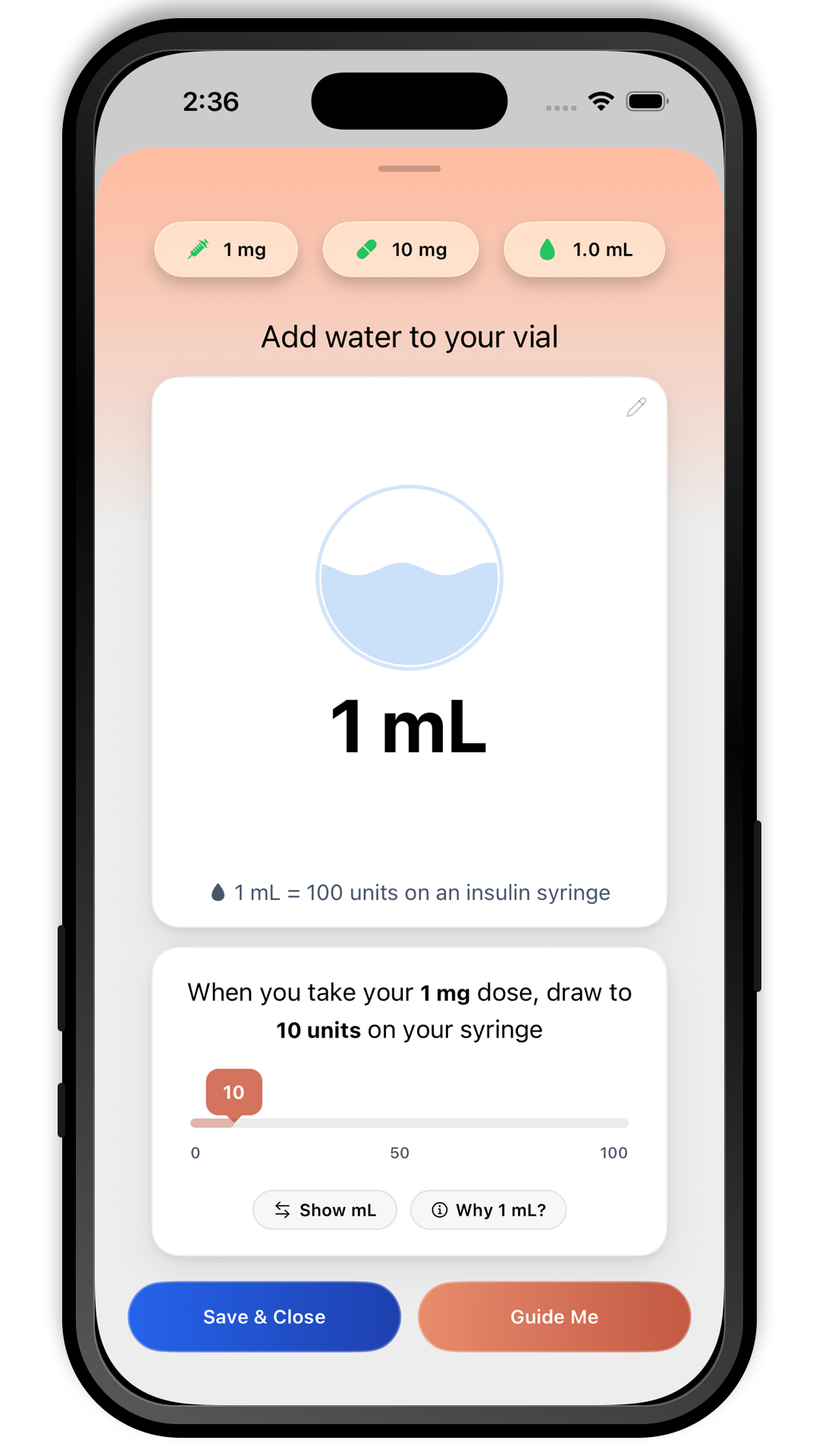
For a Semax/Selank combo vial, calculate each labeled ingredient separately. The arithmetic can organize a verified plan, but it cannot establish the correct liquid, final volume, device, or amount to use.
- Ingredient concentration
labeled ingredient amount (mg) / verified final volume (mL)Run this calculation once for Semax and once for Selank because a combo vial contains two ingredient amounts in the same final volume.
- Ingredient amount per spray
ingredient concentration (mg/mL) x verified pump output (mL/spray)Use only a pump-output value documented for the specific device. Do not assume that every nasal-spray pump dispenses the same volume.
These formulas are a recordkeeping worksheet, not a compounding recipe or dosing recommendation. If the route, liquid, final volume, device output, sterility, storage, or beyond-use date is unclear, stop and ask the prescriber, pharmacist, or manufacturer.
Keep the vial, math, and spray schedule connected
Save concentration records, reminders, dose logs, and open clinician questions in one workflow.
Preparation Record
What to capture before you trust any concentration math.
1. Exact product and route
Record the label name, whether it is Semax, Selank, or a combo product, the amount of each peptide, lot or batch details, and whether the label or prescriber specifically supports nasal use.2. Instructions and diluent
Save the written instructions for what liquid to use, how much to add, storage after mixing, and discard timing. Do not substitute a forum answer for missing sterile-preparation instructions.3. Final volume and concentration
Write down the final liquid volume and the amount of each peptide per milliliter. Combo vials require separate tracking for each ingredient because one spray may contain both.4. Device output
If a metered spray device is involved, verify the device's stated spray volume from its labeling or supplier documentation. Do not assume every pump dispenses the same amount.5. Professional questions
Keep a short list for a pharmacist or clinician: route, sterility, compounding, storage, beyond-use date, dose, missed sprays, and what changes if side effects or nasal irritation occur.
Safety Boundary
Reconstitution and repackaging are not just math problems.
CDC injection-safety guidance treats aseptic preparation, vial handling, sterility, and stability as patient-safety issues, not optional details. FDA guidance on compounding also warns that poor compounding practices can create contamination or incorrect active ingredient amounts. A consumer app should not replace that professional boundary.
The Peptide App is useful once the professional instructions are clear: save the record, connect it to a protocol, log each use, set reminders, and keep symptom or outcome notes. It is not a sterile compounding guide, a product validator, or a dose recommender.
For a broader framework, read the peptide protocol tracking guide. The same habit applies here: keep the decision source separate from the tracking system that records what happened.
If the preparation details are already verified and the open question is timing, use the separate intranasal peptide spray scheduling checklist to organize written instructions without inventing an interval.
App Workflow
How to organize a nasal-spray protocol without guessing.
Create the protocol before the first planned use. Add the compound name, route, source of instructions, preparation date, storage location, planned schedule, and the concentration fields you have verified. If the math changes because the final volume changes, create a new record rather than editing away the old one.
When the protocol starts, log each spray or dose event with the time, amount, and notes. If you notice nasal irritation, headaches, sleep changes, appetite changes, or anything else you planned to monitor, record it as an observation and bring the pattern back to the clinician instead of tuning the protocol from a comment thread.
Questions People Ask
Semax and Selank nasal-spray questions
How do you calculate Semax or Selank concentration in a nasal spray?
Divide the labeled amount of that ingredient in milligrams by the verified final liquid volume in milliliters. For a Semax/Selank combo vial, calculate Semax and Selank separately because both ingredients share the same final volume. This calculation does not determine the correct liquid, volume, or dose.
Can you assume how much liquid a nasal-spray pump dispenses?
No. Pump output varies by device, so use only the volume per spray documented by the device manufacturer, pharmacy, or other authoritative instructions. Without a verified mL-per-spray value, an amount-per-spray calculation is not reliable.
Can you assume bacteriostatic water is appropriate for Semax or Selank nasal spray?
No. The appropriate liquid, route, sterility process, storage conditions, and beyond-use date are product-specific questions. Follow written pharmacy, prescriber, or manufacturer instructions rather than substituting a generic reconstitution recipe.
How should a Semax/Selank combo vial be recorded?
Record the exact labeled amount of Semax and Selank separately, plus the verified final volume, documented pump output, preparation date, storage instructions, beyond-use date, and source of the instructions. Preserve the original label wording rather than combining both ingredients into one concentration value.

The Peptide App
Track protocols, doses, and reconstitution in one place.
Save your calculations, set reminders, log doses, and keep outcome notes — free to start.
 or scan the QR code →
Sources used for safety context