
IPP and VPP lowered systolic pressure by 1 to 6 mmHg in meta-analyses
IPP and VPP, fermented-milk tripeptides, cut systolic pressure by roughly 1 to 6 mmHg in pooled analyses. Stricter, double-blind trials found smaller effects.

By Jay Spall, chemist and biochemist
Disclosure: Jay is a co-founder of The Peptide App. This review discusses the studies cited below; it is not a comprehensive live trial registry or treatment recommendation. Development and regulatory status can change. The app’s tools organize records and arithmetic and do not validate a research product.

On this page
- How do IPP and VPP lower blood pressure?
- How much do IPP and VPP lower blood pressure?
- Why do Japanese trials of IPP and VPP show bigger effects than European trials?
- Do IPP and VPP work better in people with high blood pressure?
- What doses of IPP and VPP did the trials use?
- Did European regulators accept a health claim for IPP and VPP?
- Do other casein-derived peptides lower blood pressure more?
- What is still unknown about IPP and VPP?
- Sources
Key facts
| Question | Direct answer |
|---|---|
| Do IPP and VPP lower blood pressure? | Yes, on average, by a small amount that depends heavily on where and how the trial was run. Region-restricted meta-analyses put the pooled systolic effect between about -1.3 mmHg (European trials) and -5.6 mmHg (Japanese trials), a roughly fourfold spread [1][6]. |
| Why do Japanese trials show bigger effects than European ones? | Trial quality, at least as much as biology. Japanese-only meta-analyses report roughly -5.6 mmHg [1] and European-only meta-analyses roughly -1.3 mmHg [6], and subgroup analysis links the gap to baseline blood pressure, blinding quality, and trial design, not just ethnicity [4]. |
| Is ACE inhibition by IPP and VPP proven in the body, or only in a test tube? | Well established in vitro. In people, the blood pressure effect is real on average but small and inconsistent across independent replications [4][6][8]. |
| Who benefits most from IPP and VPP? | People with existing hypertension. Benefit was concentrated in hypertensive or diabetic subgroups across multiple analyses [1][3] and largely absent in normotensive subjects. |
| Did European regulators accept the IPP and VPP health claim? | No. The claim was not accepted for EU use, a decision that lines up with the weaker European trial data rather than the larger Japanese pooled effects. |
| Should someone take fermented milk specifically for blood pressure? | Evidence for a reliable, independently replicated effect is weak outside industry-associated, often unblinded or short Japanese trials. A Cochrane review of fermented milk concluded the data do not support an effect [8]. |
9 sources cited. View sources
How do IPP and VPP lower blood pressure?
IPP and VPP compete for the active site of angiotensin-converting enzyme (ACE), which converts angiotensin I into the vasoconstrictor angiotensin II. ACE inhibition is well documented and forms the basis of essentially every IPP and VPP trial, including the Japanese-population meta-analysis that pooled 18 randomized trials and reported an average systolic reduction of 5.63 mmHg [1].
Isoleucine-proline-proline (IPP) and valine-proline-proline (VPP) are casein-derived tripeptides released when milk is fermented, most commonly with Lactobacillus helveticus. Structurally, they resemble pharmaceutical ACE inhibitors.
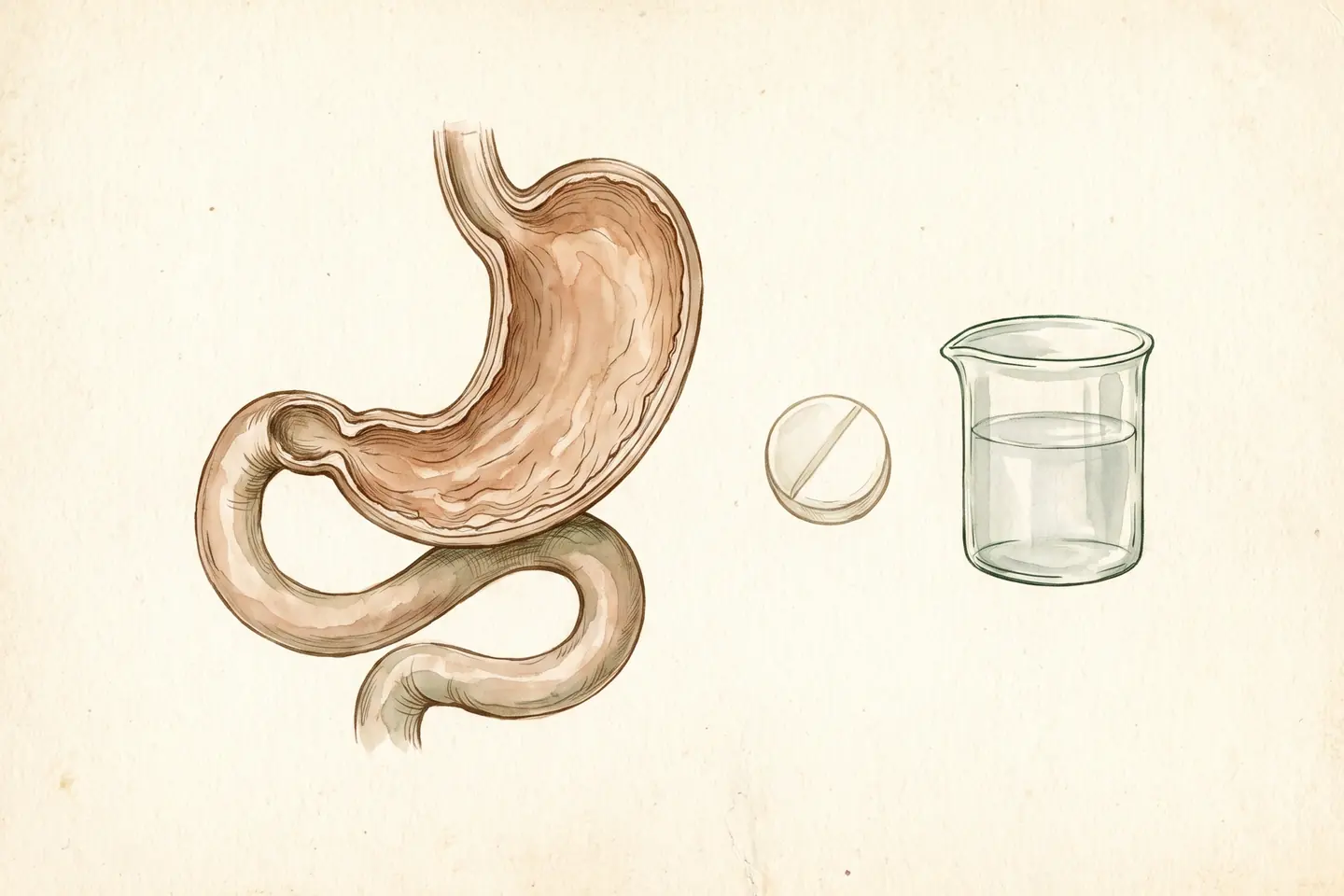
The mechanism is not in dispute. The open question is how much of that in vitro inhibitory potential survives digestion, absorption, and dilution in the human bloodstream at the doses people consume from a cup of fermented milk. The general problem of peptides surviving digestion is covered separately.
How much do IPP and VPP lower blood pressure?
IPP and VPP lower systolic blood pressure by roughly 1 to 6 mmHg in pooled analyses, and the pooled estimates disagree with each other by a factor of two to four. The pattern is not random:
| Meta-analysis | Systolic change | What it adds |
|---|---|---|
| Asian and Caucasian trials combined [5] | -3.73 mmHg overall | -6.93 mmHg in Asian subjects and a non-significant -1.17 mmHg in Caucasian subjects |
| Japanese trials only [1] | -5.63 mmHg | -8.35 mmHg in hypertensive subjects versus -3.42 mmHg in non-hypertensive ones |
| European trials only [6] | -1.28 mmHg | Not all individual European trials reached statistical significance on their own |
| 24 studies across regions [4] | -1.66 mmHg | Benefit tracked baseline blood pressure, ethnicity, treatment duration, and whether the trial was double-blind |
| Fermented milk products generally [7] | -6.12 mmHg in Japanese trials, -2.08 mmHg in European trials | The regional split reappears beyond isolated peptides |
| Cochrane review of fermented milk for hypertension [8] | -2.45 mmHg | No effect on diastolic pressure |
| Probiotic-fermented dairy [3] | -3.05 mmHg | Significant only in hypertensive or diabetic subgroups, and the effect did not reliably persist over longer follow-up |
The Cochrane review, generally treated as the most methodologically conservative synthesis in this space, concluded plainly that its findings do not support an effect [8].
Why do Japanese trials of IPP and VPP show bigger effects than European trials?
Japanese-only meta-analyses report roughly -5.6 mmHg [1] and European-only meta-analyses roughly -1.3 mmHg [6], a gap that tracks trial rigor and funding proximity at least as well as biology.
The strongest evidence comes from the subgroup analysis that isolated blinding quality and study design as significant modifiers of effect size [4]. As trials moved toward double-blind, longer-duration, independently conducted designs, the pooled effect shrank toward the low end of the range. It converged with the European-only estimate [6] rather than the Japanese-only one [1].
A network meta-analysis of dairy interventions with a stricter 12-week minimum duration across regions found no consistent systolic blood pressure signal for fermented milk products as a category, reinforcing that longer, better-controlled trial designs tend to produce smaller or null effects [2]. Lactoferrin's sepsis evidence shows a benefit shrinking as trial evidence grows, too.
Baseline blood pressure differences do not fully explain a roughly fourfold spread between regions when trial quality, blinding, and funding proximity move in the same direction as the geographic split. The most defensible conclusion is that the Japan-Europe difference is a quality and publication gradient that happens to correlate with geography, not evidence of a distinct population-level ACE physiology. Outside industry-associated, often unblinded or short Japanese trials, the evidence for a reliable, independently replicated effect is weak.
Do IPP and VPP work better in people with high blood pressure?
The IPP and VPP effect is most plausible in existing hypertension: benefit was concentrated in hypertensive or diabetic subgroups across multiple analyses [1][3] and largely absent in normotensive subjects.
Baseline blood pressure is a real, biologically sensible modifier. Peptide-based ACE inhibition has more room to act in hypertensive subjects than in normotensive ones, and the pattern holds within the Japanese trials themselves [1].
What doses of IPP and VPP did the trials use?
IPP and VPP trial doses generally reflect habitual daily consumption of fermented milk products rather than isolated high-dose extracts [1]. The Japanese meta-analysis noted that the effect remained significant when restricted to trials using the doses people consume [1].
Duration matters too. Effects reported in shorter trials did not reliably persist [3].
Did European regulators accept a health claim for IPP and VPP?
European regulators did not accept the IPP and VPP blood pressure health claim for EU use. The decision lines up with the weaker European trial data rather than the larger Japanese pooled effects.
The European-only meta-analysis pooled a systolic effect of just -1.28 mmHg, and not all individual European trials reached significance on their own [6].
Do other casein-derived peptides lower blood pressure more?
One unreplicated 2025 double-blind trial of different casein-derived ACE-inhibitory peptides, not IPP or VPP, reported much larger reductions: roughly 9% in both systolic and diastolic pressure over eight weeks [9].
The 2025 trial is a cautionary parallel, not supporting evidence for IPP and VPP. A single well-designed but industry-adjacent, unreplicated trial of a related but distinct peptide can generate an effect size well outside the range seen in the accumulated IPP and VPP literature.
What is still unknown about IPP and VPP?
The ACE genotype explanation for the regional gap remains untested, and the large Japanese effect remains unreplicated:
- ACE genotype. No study in the IPP and VPP literature tests whether ACE genotype frequency differs between Japanese and European populations in a way that would explain the split. The idea remains an untested hypothesis, not a demonstrated mechanism.
- IPP versus VPP. Differences in absorption or gut peptidase stability between IPP and VPP individually are plausible, but none of the studies cited below separates them out with numbers.
- Independent replication. No independent, long-duration, non-industry-funded European trial has replicated the large Japanese effect size at any dose.
Sources
Last updated

Written by
Chemist and biochemist. Co-founder and author, The Peptide App.
Jay is a chemist, biochemist and entrepreneur whose work connects scientific research with consumer health products. He has held Chief Science Officer and product development leadership roles and previously served as Chief Revenue Officer at Minicircle.
Keep reading

Compound evidence
Lactoferrin's sepsis benefit in preterm infants shrank as trials grew
Lactoferrin modestly cut late-onset sepsis in preterm infants, but less so as trials grew. Newer pooled data show no significant NEC or mortality benefit.
Compound evidence
Swallowed peptides rarely survive; oral semaglutide is an exception
Swallowed peptides face stomach enzymes, intestinal enzymes, and gut-wall and liver barriers. Oral semaglutide is the clearest documented exception.
Profiles and tools

The Peptide App
Track protocols, doses, and reconstitution in one place.
Save your calculations, set reminders, log doses, and keep outcome notes — free to start.
 or scan the QR code →