
Storage Tracking / June 25, 2026
Long-Term Peptide Storage: A Freezer Tracking Checklist
Long-term peptide storage is not a question to answer from a forum shortcut. If you are wondering whether a normal household freezer is enough, start with the label, pharmacy or manufacturer instructions, and the exact product form. Then build a written record: what arrived, when it arrived, where it was stored, whether it was mixed, and what questions need a pharmacist or clinician.
Educational, not medical advice. The Peptide App can organize storage records, dates, reminders, and notes, but it cannot decide whether a vial is stable, sterile, potent, legitimate, or safe to use.
Short Answer
Treat freezer storage as a records problem before it becomes a dosing problem.
A recent Reddit question asked whether a normal food freezer is okay for batch-freezing peptides, or whether a scientific freezer is needed. The safest public answer is not a temperature claim. It is a workflow: follow the label, ask the pharmacy or manufacturer when the label is unclear, and keep a record detailed enough that you can explain exactly what happened.
That matters because "peptides" can mean lyophilized powder, reconstituted liquid, compounded medication, branded medication, or research-labeled material. Each can come with different storage wording, expiration dates, beyond-use dates, and handling limits. A freezer log cannot make a questionable product safe, but it can keep your facts straight.
If the vial still needs to be mixed, pair this with our BAC water and reconstitution checklist. For the full routine after storage, use the peptide protocol tracking guide.
Build a storage record before you need it
Save vial details, storage location, freeze dates, prep dates, reminders, and open questions in one workflow.
Storage Log
What to record for every vial or batch.
1. Product identity
Record the exact label name, strength, form, lot or batch code, vendor or pharmacy, arrival date, and whether the product is dry powder, pre-mixed liquid, a pen, or another format.2. Label storage instructions
Copy the storage wording exactly. Do not translate "refrigerate," "freeze," "do not freeze," "protect from light," or "use by" into your own shorthand.3. Actual storage history
Log where the item was kept, when it entered the freezer or refrigerator, and any known excursions such as shipping delays, power outages, door-left-open events, or travel cooler issues.4. Reconstitution state
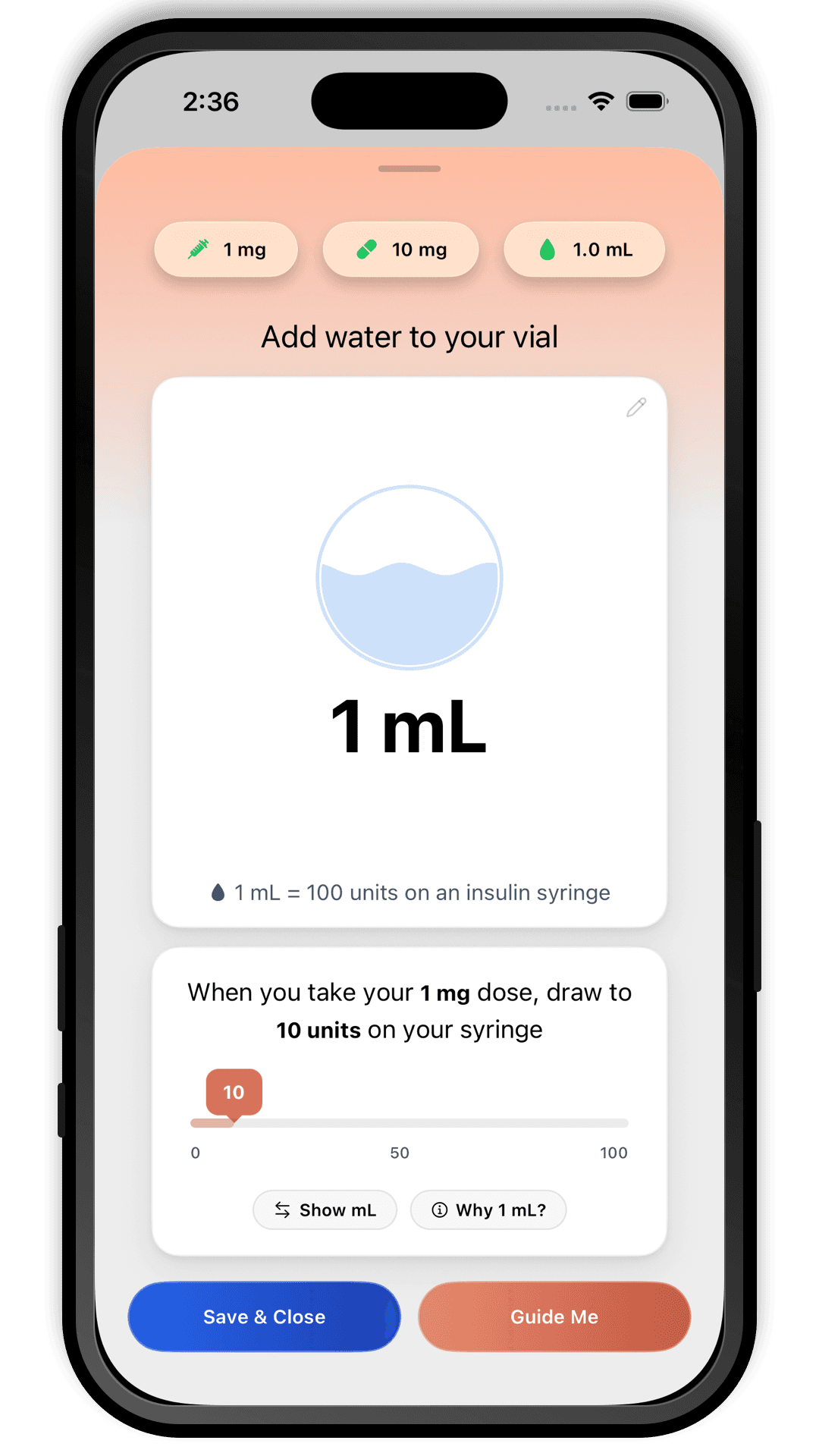
Separate unopened dry powder from reconstituted liquid. If a vial has been mixed, record the date, diluent volume, resulting concentration, and discard question before scheduling doses.5. Questions for a professional
Keep a short list for the pharmacist, prescriber, or manufacturer: storage range, freezer suitability, thawing instructions, beyond-use date, and what to do after a temperature excursion.
Safety Boundary
A freezer inventory is useful, but it is not a stability test.
Medication storage guidance from MedlinePlus emphasizes following specific storage instructions and asking a pharmacist when you need product-specific direction. CDC injection-safety guidance also treats vial type, preparation timing, sterility, and discard dates as real safety boundaries. Those are not details a generic app or comment thread can override.
The Peptide App is useful when you need an accurate operational trail: batch details, storage notes, reconstitution records, dose schedules, reminders, and outcome notes. It is not useful as a shortcut around missing labels, unclear sourcing, damaged packaging, or professional advice.
Start with the consolidated peptide storage and travel checklist. For mixed vials specifically, see the reconstituted peptide fridge life guide. If you are storing products before a trip, also read the peptide travel planning guide. Travel can add shipping, cooler, luggage, and time-zone problems to a storage plan that already needs clean records.
App Workflow
Turn the freezer shelf into a traceable protocol.
Start with an inventory entry for each vial or batch. Add the product form, lot details, arrival date, storage location, and the exact label wording. If the product later moves from freezer to refrigerator, or from unopened powder to reconstituted liquid, add a note with the date instead of editing away the history.
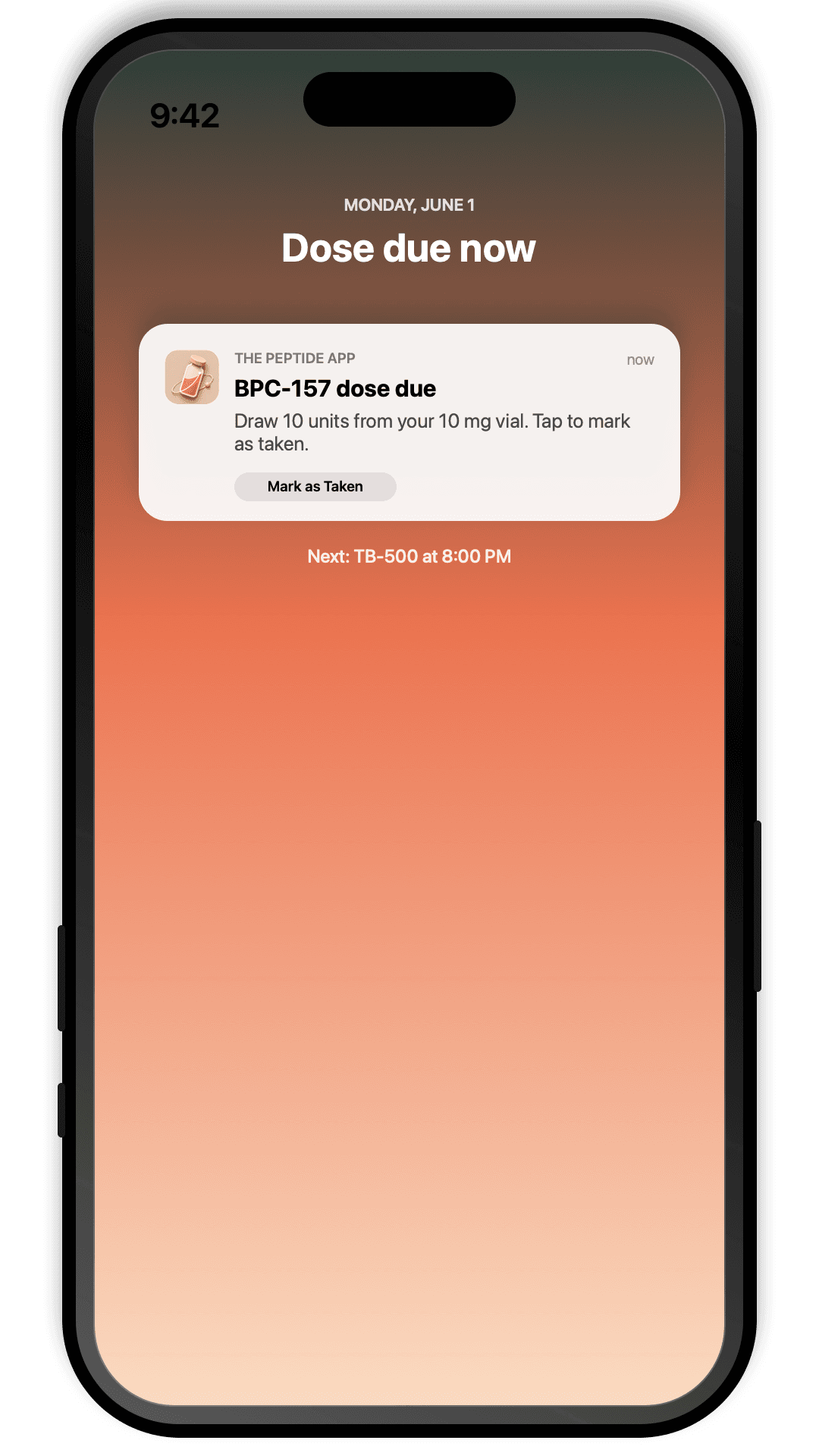
When you are ready to use a vial, connect the storage record to the reconstitution calculator and dose schedule. Then log each dose with the time, amount, and any relevant notes. If a clinician or pharmacist asks what happened, you should be able to answer from the record, not from memory.
Additional research context by Jay Spall
Why the dried formulation matters
Freeze-dried material can contain residual water and formulation ingredients. Research on proteins in solid form examines molecular mobility, glass transition and interactions within that dried matrix. Dry appearance alone is not a measured shelf life.
The practical record is still product-specific. Keep the label’s storage conditions, seal condition, lot and temperature history together. A study of a stabilized protein formulation does not validate a different peptide powder or establish what a warm shipping excursion did to it.

The Peptide App
Track protocols, doses, and reconstitution in one place.
Save your calculations, set reminders, log doses, and keep outcome notes — free to start.
 or scan the QR code →
Sources used for safety context